Light Requirements
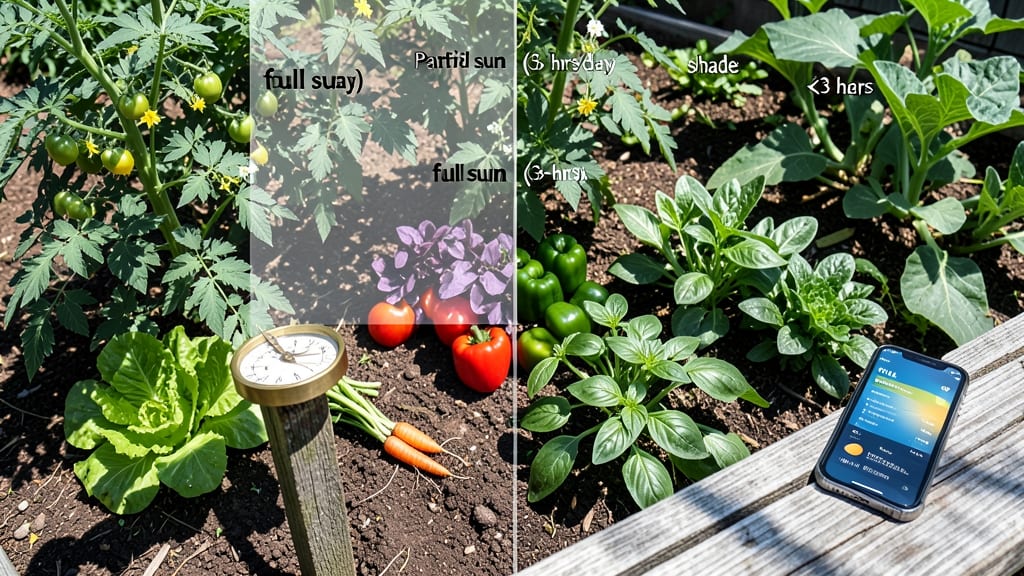
A vegetable garden needs 6 to 8 hours of sunlight daily 🥬 to grow strong, productive plants—too little and your harvest will suffer, even if you’re watering perfectly.
Struggling to decide where to plant your tomatoes or why your lettuce keeps bolting? Sunlight is the #1 factor determining whether your vegetable garden thrives or fails—yet most gardeners guess wrong about daily light requirements.
Some crops, like tomatoes and peppers, demand full sun, while leafy greens tolerate partial shade. Below, I’ll break down exactly how much light each type needs, how to measure sunlight in your yard, and what to do when your garden isn’t getting enough.
By the end, you’ll know how to position your plants for maximum yield and spot the warning signs of insufficient light before it’s too late.

Sunlight requirements by vegetable type: full sun vs partial shade guide
Understanding how much sunlight your vegetables need is the secret to a thriving garden. Full sun (6+ hours of direct light) is ideal for most vegetables, but some thrive in partial shade (3-6 hours).
Placing the wrong crop in the wrong spot leads to stunted growth, poor yields, or even plant death. Let’s break down the sunlight needs for 20+ common vegetables so you can maximize your harvest.
First, let’s clarify the terms: full sun means 6+ hours of direct sunlight daily, partial shade means 3-6 hours, and shade-tolerant crops can handle under 3 hours.
Most vegetables fall into the first two categories, but knowing the exceptions will help you make the most of your garden space, especially in shady areas.
Here’s a quick reference to help you visualize the differences. The table below categorizes vegetables by their sunlight needs, along with notes on their tolerance for less light.