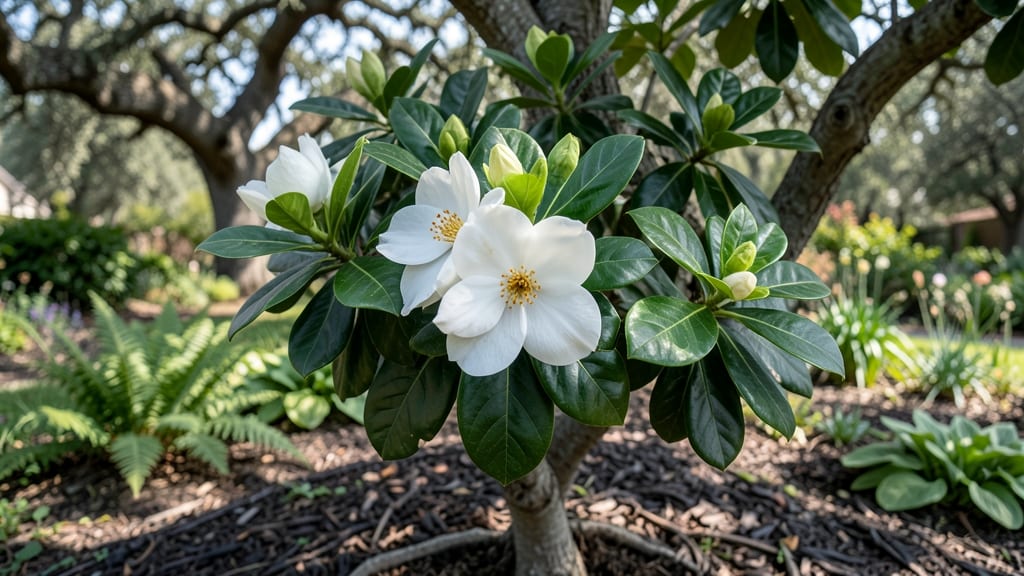
Gardenia trees grow anywhere from 3 feet to towering 15 feet, depending on the variety and how you prune them 🌸 — and picking the right size for your space starts with knowing what to expect.
If you're dreaming of fragrant blooms but worried about gardenia trees taking over your yard, understanding their mature size and growth habits is key—some varieties stay compact while others reach towering heights.
For example, a dwarf gardenia might max out at 4 feet, perfect for containers or small gardens, while a standard variety could stretch to 12 feet if left unchecked.
Below, I’ll break down the size differences by variety, how pruning shapes their growth, and the 5 signs your gardenia is outgrowing its space before it becomes a problem.
Dwarf
3-5 ft
Container friendly
Semi-Dwarf
5-8 ft
Most popular
Standard
8-15 ft
Full orchard size
Gardenia tree size by variety: from compact shrubs to towering specimens
Choosing a gardenia tree for your landscape means balancing dreamy fragrance with practical space needs. Some varieties stay as small as a dwarf shrub (just 3 feet tall), while others grow into towering specimens reaching 15 feet—like a small tree.
The key to happy gardenias lies in selecting the right variety for your space and understanding their growth habits from the start.
Gardenia trees grow at different rates depending on variety, soil conditions, and sunlight exposure. A standard gardenia might take 3-5 years to reach maturity, while dwarf varieties can stay manageable in just 2 years.
Proper spacing at planting time prevents overcrowding and ensures each plant gets the nutrients it needs to thrive.
Here’s how to visualize gardenia sizes: imagine a 'Radicans' variety as tall as a mailbox post (6 feet), while a 'Kleimschmidtiana' stretches toward a basketball hoop (10-12 feet). These comparisons help you plan your garden layout before planting.
For container gardeners, dwarf varieties like 'Dwarf Radicans' (3-4 feet) are perfect for patios or balconies, while larger varieties need ground planting. Always check the mature spread too—some gardenias grow wider than they do tall!
| Variety |
Mature Height |
Spread |
Growth Rate |
Size Comparison |
Ideal Spacing |
| 'Dwarf Radicans' |
3-4 ft |
3-4 ft |
Slow |
As tall as a kitchen counter |
3-4 ft apart |
| 'Radicans' |
6-8 ft |
5-7 ft |
Moderate |
Taller than a mailbox |
6-8 ft apart |
| 'Kleimschmidtiana' |
10-12 ft |
8-10 ft |
Fast |
Near a basketball hoop |
10-12 ft apart |
| 'Fortuniana' |
5-7 ft |
4-6 ft |
Moderate |
Taller than a door frame |
5-6 ft apart |
| 'Veitchii' |
12-15 ft |
10-12 ft |
Fast |
Taller than a garage door |
12-15 ft apart |
| 'Mystery' |
4-6 ft |
3-5 ft |
Slow |
As tall as a child's reach |
4-5 ft apart |
How pruning affects gardenia tree size: techniques for controlling growth
Pruning is the secret weapon for keeping your gardenia tree at your desired height while encouraging lush blooms. When done correctly, it can reduce a 10-foot standard variety to a manageable 5-foot shrub without sacrificing fragrance.
The key lies in understanding when and how to prune based on your gardenia's growth stage and variety type.
Dwarf varieties like Gardenia jasminoides 'Kleim's Hardy' naturally stay compact, but even they benefit from strategic pruning to maintain their shape. Meanwhile, standard varieties can grow aggressively if left unchecked, reaching heights that overwhelm small gardens. By mastering the timing and technique, you'll control both size and flowering potential.
When to prune is critical—spring pruning promotes new growth and blooms, while summer pruning can stimulate late-season flowers. Aggressive pruning in fall or winter stresses the plant and reduces next year's blooms. Let's break down the exact steps to maintain your gardenia's ideal size while keeping it healthy and vibrant.
Step-by-Step Pruning Guide for Gardenia Tree Size Control
-
Step 1: Choose the Right Time
Prune dwarf varieties in early spring (March-April) to shape growth. For standard trees, do light pruning in late spring after blooms fade.
-
Step 2: Gather Proper Tools
Use sterilized bypass pruners for small branches and loppers for thicker stems. Disinfect tools with rubbing alcohol to prevent disease.
-
Step 3: Remove Dead or Weak Wood
Cut out dead branches, crossing stems, and water sprouts first. These take up energy that could fuel blooms.
-
Step 4: Thin the Canopy
For size control, remove 1/3 of oldest growth from the inside of the plant to improve airflow. Focus on overcrowded areas first.
-
Step 5: Shape for Desired Height
To reduce height, cut backward-growing branches just above outward-facing buds. For dwarf varieties, limit cuts to 1/4 of new growth per year.
-
Step 6: Clean Up After Pruning
Remove all pruning debris and apply mulch around the base to retain moisture. Avoid heavy pruning in summer—it can delay blooming.
Aggressive pruning—cutting back more than 30% of the plant—can temporarily reduce size but often results in fewer blooms the following year. For dwarf varieties, gentle shaping in spring is ideal, while standard trees can handle more dramatic reductions in early spring.
Always prune just above a leaf node or bud to encourage new growth.
After pruning, your gardenia will focus energy on producing new branches and blooms. For container-grown gardenias, prune more frequently (every 6-8 weeks) to maintain compactness. Remember, the goal is to balance size control with flower production—never sacrifice one for the other.
With consistent pruning, you'll enjoy a well-proportioned gardenia that fits your space perfectly while filling your garden with intoxicating fragrance. Start with light pruning and adjust based on how your plant responds—each gardenia has its own growth rhythm.
★★★★★5.0(6 reviews)
|