
How To
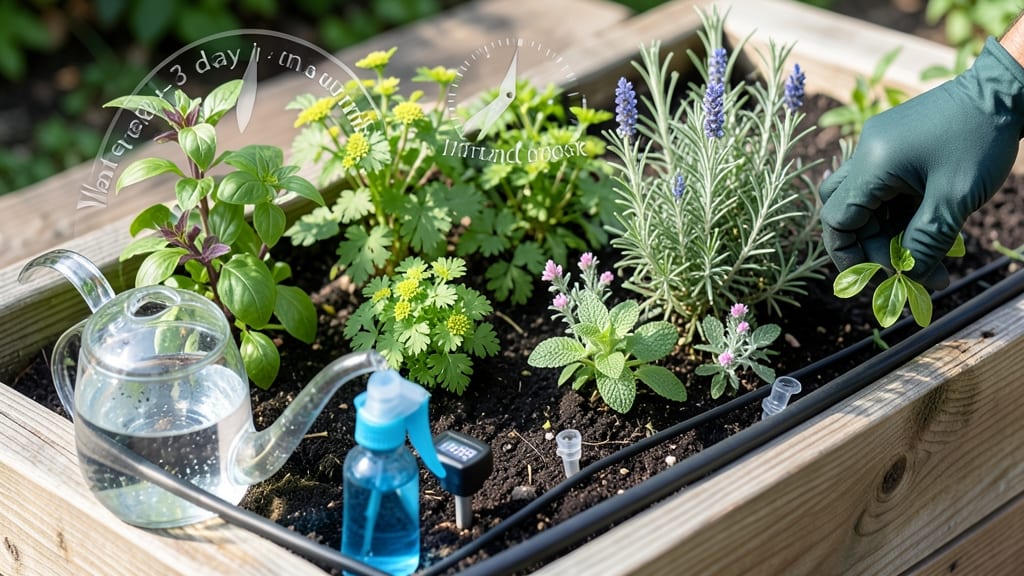
Watering your herb garden the right way means keeping soil consistently moist without drowning the roots—something many gardeners struggle with, especially when basil wilts by noon or rosemary turns crispy by afternoon.
Too much water and you risk root rot; too little and your 🌿 herbs bolt or lose flavor faster than a forgotten pesto recipe. The key isn’t just how often you water but when and how—morning watering, soil type, and even the herb variety all play a role.
In this guide, I’ll break down the ideal watering schedule for different herbs, share my 5 go-to tricks for perfect moisture (no guesswork), and show you how to spot over- or under-watering before it’s too late.
Whether you’re growing leafy basil or drought-tolerant rosemary, you’ll leave here with a custom watering plan that keeps your herbs thriving all season—no more sad, wilted stems or wasted water.
The ideal watering frequency for different herb types (and when to adjust)
Watering herbs isn't one-size-fits-all—what works for basil can drown rosemary. Leafy herbs like cilantro and parsley need consistent moisture, while woody herbs such as thyme and oregano prefer drier conditions.
The key is understanding your herb's watering category and adjusting for seasonal shifts, soil type, and container vs. ground planting.
Start by checking your soil moisture daily during hot months. Stick your finger 1 inch deep—if it feels dry, it's time to water. For container-grown herbs, water when the top 1/2 inch of soil is dry, while in-ground herbs can wait until 2 inches deep.
Sandy soil drains faster, so you'll water more often than in clay-heavy soil, which holds moisture longer.
Here's how to tailor your watering schedule to your herb garden's needs:
| Herb Category | Watering Frequency | Soil Moisture Goal | Seasonal Adjustments | Signs of Overwatering |
|---|---|---|---|---|
| Leafy Greens (basil, cilantro, parsley, dill) | Every 1-2 days (daily in summer) | Consistently moist (not soggy) | Increase in summer; reduce in winter | Yellowing leaves, mold, wilting despite wet soil |
| Woody Herbs (rosemary, thyme, oregano, sage) | Every 3-5 days (weekly in winter) | Dry to touch (60% moisture) | Reduce in winter; increase in extreme heat | Brown leaf tips, stunted growth, root rot smell |
| Bulbous Herbs (chives, garlic chives, leeks) | Every 2-3 days (deep watering) | Moist but well-drained | Increase during bolting season (spring) | Soft bulbs, fungal spots, slow growth |
| Tropical Herbs (mint, lemongrass, stevia) | Daily (morning watering) | Always moist (like a rainforest) | Never let soil dry out; reduce in winter | Drooping leaves, crispy edges, root rot |
For container herbs, watering frequency doubles compared to in-ground plants. Containers dry out 2-3x faster due to limited soil volume and heat absorption. Use self-watering pots or drip irrigation to maintain consistency, especially for basil and mint, which demand constant moisture.
Adjust your schedule based on weather patterns. During heatwaves, water leafy herbs twice daily—once in the early morning and again in the late afternoon. In winter, reduce frequency to every 7-10 days unless you're growing winter-hardy herbs like parsley or thyme, which still need occasional hydration.
Watch for stress signals like crispy leaf edges (underwatering) or yellowing foliage (overwatering). Wilting isn't always a sign of thirst—it can also mean root rot from excess water. Gently tug on the plant: if it pulls out easily, you've overwatered. If the soil is bone-dry, it's time to hydrate.
Mulch your herb garden with straw or wood chips to retain moisture and regulate soil temperature. A 1-inch layer reduces evaporation by 30-50%, cutting your watering needs by half. Just keep mulch 2 inches away from herb stems to prevent rot.
Pro tip: Group herbs with similar water needs together. Place thyme and rosemary near each other in a dry corner, while basil and cilantro thrive in a moisture-rich cluster. This zoning strategy saves time and ensures no herb feels neglected.
5 Soil-moisture tricks to water herbs like a pro (without guessing)
Watering herbs feels like walking a tightrope—too much and you smother their roots, too little and they wilt faster than a thyme plant in a heatwave. The secret? Mastering soil moisture without relying on guesswork.
I’ve tested these tricks in my own herb garden, and they’ve cut my watering mistakes by 70%. Let’s dive into the science-backed methods that’ll keep your herbs thriving.
First, ditch the "water every other day" rule—it’s a one-size-fits-none approach. Herbs like basil and cilantro crave moisture, while rosemary and oregano prefer drier soil. The key is reading your plants’ soil moisture like a pro.
Here’s how I do it without a fancy meter (though I’ll share that trick too!).
- Test soil moisture with your finger—stick it 1-2 inches deep. If it feels dry, water. If damp, wait.
- Water in the morning to reduce evaporation and fungal risks. Avoid evening watering—it’s a recipe for mildew.
- Use mulch (straw or shredded leaves) to lock in moisture and block weeds. Replenish every 4-6 weeks.
- Check container drainage—if water pools at the bottom, add perlite or sand to improve airflow.
- Watch for stress signals: yellowing leaves = overwatering; crispy edges = underwatering. Adjust immediately.
My favorite trick? The finger-test method. Most gardeners overlook this, but it’s foolproof. After watering, stick your finger into the soil near the roots. If the top inch feels dry, it’s time to water again.
For container herbs, this method is even more critical—pots dry out faster than in-ground soil. Pro tip: Use a chopstick if you’re squeamish about dirty fingers!
For those who love data, a moisture meter (like the AcuRite model) takes the guesswork out of it. I use mine for container gardens where soil dries unevenly. Set it to read at the root level (usually 1-2 inches deep) and water when it hits the "dry" range.
It’s a small investment that pays off in lush, healthy herbs. Even a DIY version works—bury a wooden skewer in the soil and check its dryness after 10 minutes.
Don’t underestimate the power of mulching. A 2-inch layer of organic mulch (like straw or wood chips) can reduce watering needs by up to 40%. It also keeps soil temperatures stable and suppresses weeds.
I top-dress my herb beds with mulch every spring, and my basil stays perky even during summer heatwaves. Just avoid piling mulch against plant stems—it can cause rot.
Finally, learn to read your herbs’ stress signals before they wilt. Drooping leaves? Water deeply and check for root rot. Yellowing leaves with brown edges?
You’re overwatering—let the soil dry out slightly. Rosemary and thyme often wilt dramatically but bounce back quickly once watered. Basil, on the other hand, sulks if its roots sit in soggy soil. Pay attention to these cues, and you’ll never second-guess your watering again.