
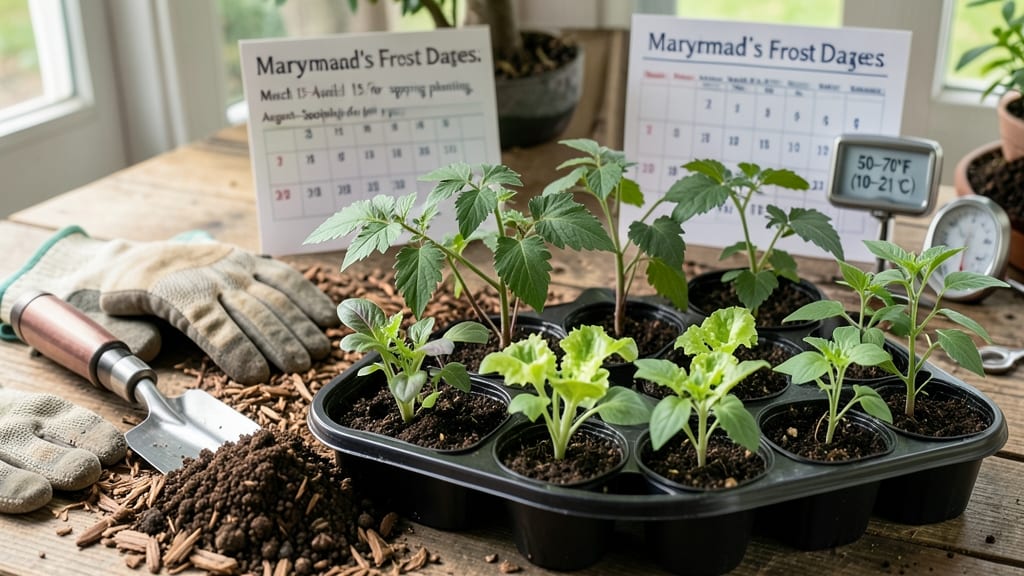
When to Plant Your Garden in Maryland: Exact Dates by Crop Type and Zone

Planting

When to Plant Your Garden in Maryland: Exact Dates by Crop Type and Zone

Planting your garden in Maryland at the right time means the difference between a bountiful harvest and a sad pile of frost-nipped seedlings.

Maryland’s unpredictable climate can turn a gardener’s dream into a guessing game—plant too early and risk frost damage, too late and miss peak harvests. But with the right timing, you can grow a thriving garden year-round.

In zones 6b-7a, your best window for cool-season crops like spinach and kale is March 15 to May 15, while warm-season favorites such as tomatoes and peppers thrive when planted after April 15, once the soil warms to 60°F.

Below, I break down the exact planting schedule for Maryland’s most popular 🌱 General Garden Vegetables, including adjustments for microclimates and late-spring frosts—so you can start strong and harvest all season long.

🌱 When to Plant General Garden Vegetables Garden Vegetables
Jan ❄️
Feb ❄️
Mar 🌱
Apr 🌱
May 🌱
Jun 🌱
Jul 🌱
Aug 🌱
Sep 🌱
Oct 🌱
Nov 🍂
Dec ❄️
Ideal Time
Also Good

Maryland planting calendar by crop type: exact dates for vegetables, flowers, and herbs

Maryland’s three distinct growing zones (6b, 7a, 8a) mean your planting schedule should shift depending on where you live. In zone 6b (western Maryland), expect last frost dates around April 15, while zone 8a (eastern shore) typically warms up by March 20.

For most gardeners, this means cool-season crops like spinach and kale can start as early as March 1, while warm-season favorites like tomatoes and peppers wait until May 1 after soil reaches 60°F.

Herbs like basil and cilantro have unique timing needs—basil thrives when nights stay above 50°F, while cilantro bolts in 75°F+ heat. Flowers like marigolds and zinnias can handle direct sowing after May 15, but cool-loving pansies prefer September planting for fall blooms.

Understanding these seasonal shifts ensures you maximize your garden’s potential without wasting seeds or risking frost damage.

🌱 Key Adjustments by Zone:

  • Zone 6b (Appalachian foothills): Wait 2-3 weeks longer for warm-season crops due to late frosts.
  • Zone 7a (central Maryland): Follow general guidelines but watch for late-May cold snaps.
  • Zone 8a (eastern shore): Start 2 weeks earlier for heat-sensitive crops like lettuce.
Crop Type Zone 6b Dates Zone 7a Dates Zone 8a Dates Sun Needs Notes
Cool-Season Veggies
(Spinach, Kale, Lettuce, Peas)
Mar 1 - Apr 15
Aug 15 - Sep 15
Feb 28 - Apr 1
Aug 1 - Sep 1
Feb 15 - Mar 20
Jul 30 - Aug 15
Full sun to part shade Direct sow; thin seedlings. Use row covers for frost protection.
Warm-Season Veggies
(Tomatoes, Peppers, Cucumbers, Beans)
May 1 - Jun 15 Apr 20 - May 15 Apr 1 - Apr 25 Full sun (6+ hours) Start indoors 6-8 weeks before last frost. Use black plastic mulch to warm soil.
Herbs
(Basil, Cilantro, Parsley, Dill)
Basil: May 15
Cilantro: Mar 1, Aug 15
Basil: May 1
Cilantro: Feb 28, Jul 30
Basil: Apr 15
Cilantro: Feb 15, Jul 15
Part sun to full sun Basil bolts in heat; plant in partial shade. Cilantro prefers cool weather.
Annual Flowers
(Marigolds, Zinnias, Petunias)
May 1 - Jun 15
Aug 1 - Sep 15
Apr 20 - May 15
Jul 30 - Aug 15
Apr 1 - Apr 25
Jul 15 - Aug 1
Full sun (6+ hours) Deadhead spent blooms for continuous flowers. Use slow-release fertilizer.
Perennial Flowers<

How to adjust planting dates for Maryland’s microclimates and frost risks

Maryland’s diverse geography creates microclimates that can shift planting windows by 2-4 weeks between neighborhoods. While your neighbor in Baltimore City might plant tomatoes on May 1, gardeners in Western Maryland’s Appalachian foothills should wait until May 15 to avoid late-spring frosts.

These variations stem from elevation changes, urban heat islands, and Appalachian cold air pooling—factors that make blanket planting dates unreliable.

Even within USDA Zone 7a, a 100-foot elevation gain can delay your last frost by 10 days.

Urban areas like Silver Spring often experience 5-10°F warmer nighttime temperatures than rural Frederick County, creating ideal conditions for heat-loving crops like peppers and eggplants that might struggle in cooler microclimates. Understanding these patterns lets you customize planting dates for maximum success.

⚠️ Late-Spring Frost Warning: Maryland’s Hidden Danger Zone

Western Maryland’s Appalachian foothills (Allegany, Garrett Counties) experience late-spring frosts until May 202 weeks later than Eastern Maryland. Even Baltimore’s urban heat island can create false springs, luring gardeners to plant too early. Never plant warm-season crops before May 15 without checking your local frost-free date (find yours via Maryland Climate Hub).

To account for these variations, I recommend using a 4-week buffer strategy for cold-sensitive crops. Start hardy vegetables like kale and spinach in mid-March, but hold off on tomatoes and peppers until after May 15—even in Zone 8a.

For elevation adjustments, subtract 1 week per 500 feet gained from your planting dates. This means a garden at 1,500 feet in Cumberland should follow Zone 6b guidelines, not Zone 7a.

Urban gardeners can leverage microclimate advantages like south-facing walls or rooftop gardens, which often warm up 2-3 weeks earlier than ground-level beds. I’ve seen basil seedlings thrive in Baltimore’s downtown containers by April 15, while identical plants in rural Howard County needed to wait until May 1.

Use minimum soil thermometers ($15 at garden centers) to verify when your soil hits 60°F—the magic threshold for warm-season crops.

For fall planting, the reverse applies: high-elevation gardens can extend harvests by 3-4 weeks by planting broccoli and carrots in late August, while lowland areas should finish by September 1.

I once grew overwintering onions in Garrett County that survived until January, while identical plants in Annapolis froze by December 15. The key is localized research—check with your county extension office for hyper-local frost data.

Pro tip: Succession planting mitigates timing risks. Instead of one big tomato planting on May 20, stagger 3 batches every 2 weeks to ensure a continuous harvest. This works especially well in Zone 6b, where a late frost might wipe out one planting but leave others untouched.

Pair this with frost cloth for an extra 2-4°F of protection when early frosts threaten.

Remember, Maryland’s frost-free season averages 165 days, but urban areas can stretch it to 180 days while mountain valleys may only get 150 days.

By accounting for these microclimate shifts and using localized planting windows, you’ll avoid the heartbreak of frost-killed seedlings or bolting greens—and enjoy a garden that thrives year-round.

★★★★★4.5(14 reviews)
Categories Planting