Vegetables
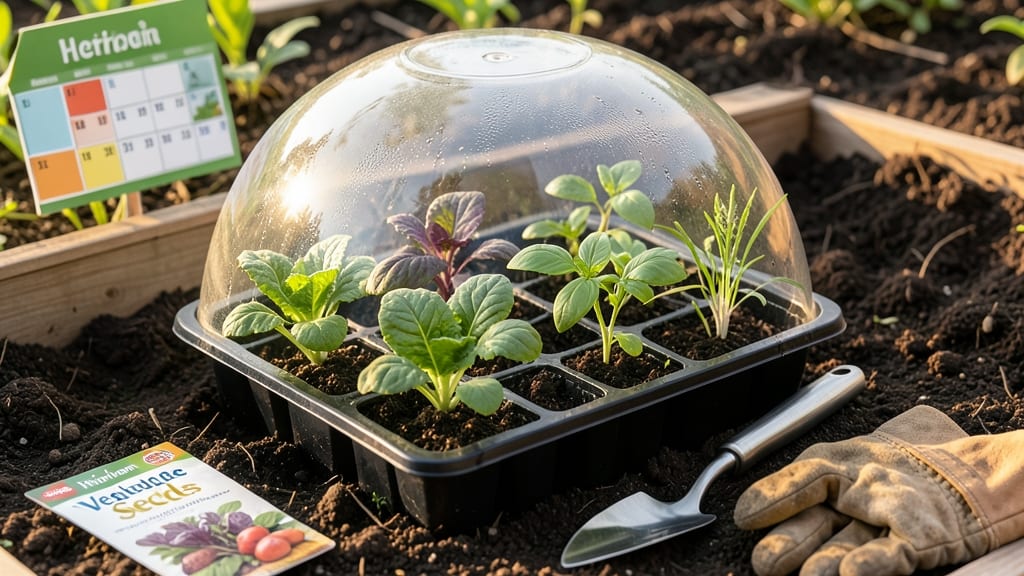
Starting gardening vegetables at the right time means the difference between a bumper crop and a sad, wilted mess—so let’s cut the guesswork and get it right.
Timing your vegetable planting is the difference between a thriving garden and wasted seeds—yet most gardeners guess instead of using science-backed frost dates.
Whether you’re in Zone 6a or a warmer region, planting too early can fry tender seedlings, while waiting too long might leave you with shortened harvests or no harvest at all.
In this guide, you’ll learn how to pinpoint your local frost dates, match them to your favorite 🥕 vegetables, and even stretch your growing season with clever tricks like cold frames or row covers. No more second-guessing—just a foolproof schedule tailored to your climate.
We’ll break down cool-season vs. warm-season crops, share a cheat sheet for your region, and reveal the 3 biggest mistakes that kill gardens before they even start. Ready to turn your soil into a harvest goldmine?
How to determine your local frost dates for perfect planting timing
Getting your vegetable planting timing right means the difference between a bountiful harvest and wasted seeds. The key to success lies in understanding your local frost dates—specifically, your last spring frost and first fall frost.
These dates define your growing season and help you choose the right planting windows for cool-season and warm-season crops. Without this knowledge, even the most experienced gardener can struggle with timing.
Most gardeners rely on USDA hardiness zones as a starting point, but frost dates are more specific. For example, two cities in the same zone can have vastly different frost dates due to elevation, proximity to water, or local microclimates.
That’s why I always check local weather data before planning my garden. Tools like the National Weather Service or Old Farmer’s Almanac provide free, reliable frost date estimates tailored to your exact location.
Here’s how to find your frost dates in just a few clicks: Visit the National Weather Service Climate website and search for your city. Look for the average last spring frost and average first fall frost dates.
If you prefer a simpler approach, the Old Farmer’s Almanac offers frost date predictions based on historical data. Both methods give you a solid baseline, but remember—actual frost dates can vary by 1-2 weeks each year.
Once you have your frost dates, use this 3-step method to calculate your planting windows: 1. Cool-season crops (like lettuce, spinach, and peas) can handle light frosts. Plant them 4-6 weeks before your last spring frost and again 6-8 weeks before your first fall frost for a fall harvest.
2. Warm-season crops (like tomatoes, peppers, and cucumbers) need warm soil and air. Wait until 2 weeks after your last spring frost to plant them outdoors. 3. For longer-season crops (like corn or pumpkins), start seeds indoors 6-8 weeks before your last frost to give them enough time to mature.
Now that you know your frost dates, let’s break down how they impact your planting schedule. The table below summarizes key planting windows for common vegetables based on frost-date categories.
Whether you have a short growing season (like in Alaska) or a long one (like in Florida), this guide will help you plan like a pro.
Pro tip: If you’re unsure about your frost dates, consider using a frost-sensitive plant like basil or tomatoes as a test plant. Plant them early and monitor their progress. If they survive a late frost, you’ve likely passed the danger zone for other warm-season crops.
Conversely, if they’re damaged, wait another week before planting heat-lovers like peppers or eggplants.
Don’t forget that microclimates can drastically alter frost dates in your garden. For example, areas near large bodies of water or south-facing slopes may experience later last frosts and earlier first frosts than the general average.
I always check my lowest-lying spots first, as cold air sinks and collects there. If you’re in a valley or near a river, add an extra 1-2 weeks of buffer time to your frost date calculations.
Once you’ve mastered frost dates, you’ll never guess when to plant again. The next step? Use these dates to create a customized planting schedule tailored to your region’s unique climate.
Whether you’re in Zone 5 with a short season or Zone 9 with a long one, knowing your frost dates puts you in control of your garden’s success.
Start by marking your frost dates on a calendar and planning your planting windows accordingly. Before you know it, you’ll be harvesting fresh vegetables all season long—no wasted seeds in sight! 🌱
Vegetable planting schedule by frost-date categories (cool vs. warm season)
Getting your vegetable planting timeline right depends on your local frost dates. I’ve categorized common crops into three frost-date scenarios—short (60–90 frost-free days), medium (90–120 days), and long (120+ days)—to simplify planning. This ensures you start seeds indoors, transplant outdoors, and harvest before the first frost hits.
Cool-season crops like lettuce and carrots thrive in cooler weather, while warm-season crops such as tomatoes and peppers need heat. Below, I’ve mapped out the ideal planting windows for each category, so you can avoid common mistakes like planting too early or missing the harvest window.
🌱
| Vegetable | Short Season (60–90 Days) | Medium Season (90–120 Days) | Long Season (120+ Days) |
|---|---|---|---|
| Lettuce (Cool) | Start seeds indoors 4–6 weeks before last frost. Transplant 4–6 weeks before frost. | Start seeds indoors 6–8 weeks before last frost. Transplant 6–8 weeks before frost. | Start seeds indoors 8–10 weeks before last frost. Transplant 8–10 weeks before frost. |
| Tomatoes (Warm) | Start seeds indoors 6–8 weeks before last frost. Transplant 2 weeks after last frost. | Start seeds indoors 8–10 weeks before last frost. Transplant 2–3 weeks after last frost. | Start seeds indoors 10–12 weeks before last frost. Transplant 3–4 weeks after last frost. |
| Carrots (Cool) | Direct sow 4–6 weeks before last frost. Harvest 60–70 days after sowing. | Direct sow 6–8 weeks before last frost. Harvest 70–80 days after sowing. | Direct sow 8–10 weeks before last frost. Harvest 80–90 days after sowing. |
| Peppers (Warm) | Start seeds indoors 8–10 weeks before last frost. Transplant 2–3 weeks after last frost. | Start seeds indoors 10–12 weeks before last frost. Transplant 3–4 weeks after last frost. | Start seeds indoors 12–14 weeks before last frost. Transplant 4–6 weeks after last frost. |
| Spinach (Cool) | Direct sow 3–4 weeks before last frost. Harvest 30–40 days after sowing. | Direct sow 4–6 weeks before last frost. Harvest 40–50 days after sowing. | Direct sow 6–8 weeks before last frost. Harvest 50–60 days after sowing. |
| Cucumbers (Warm) | Start seeds indoors 3–4 weeks before last frost. Transplant 2 weeks after last frost. | Start seeds 4–6 weeks before last frost. Transplant 2–3 weeks after last frost. | Start seeds 6–8 weeks before last frost. Transplant 3–4 weeks after last frost. |
| Radishes (Cool) | Direct sow 2–3 weeks before last frost. Harvest 25–30 days after sowing. | Direct sow 3–4 weeks before last frost. Harvest 30–35 days after sowing. | Direct sow 4–6 weeks before last frost. Harvest 35–40 days after sowing. |
| Green Beans (Warm) | Direct sow 2 weeks after last frost. Harvest 50–60 days after sowing. | Direct sow 2–3 weeks after last frost. Harvest 60–70 days after sowing. | Direct sow 3–4 weeks after last frost. Harvest 70–80 days after sowing. |
Use this table as your planting guide to align with your frost-free days. For example, if you’re in a short-season zone, prioritize fast-maturing varieties like radishes or bush beans. In long-season zones, you can afford to start tomatoes and peppers earlier indoors for a longer harvest.
Pro tip: Mark your last