
Picking
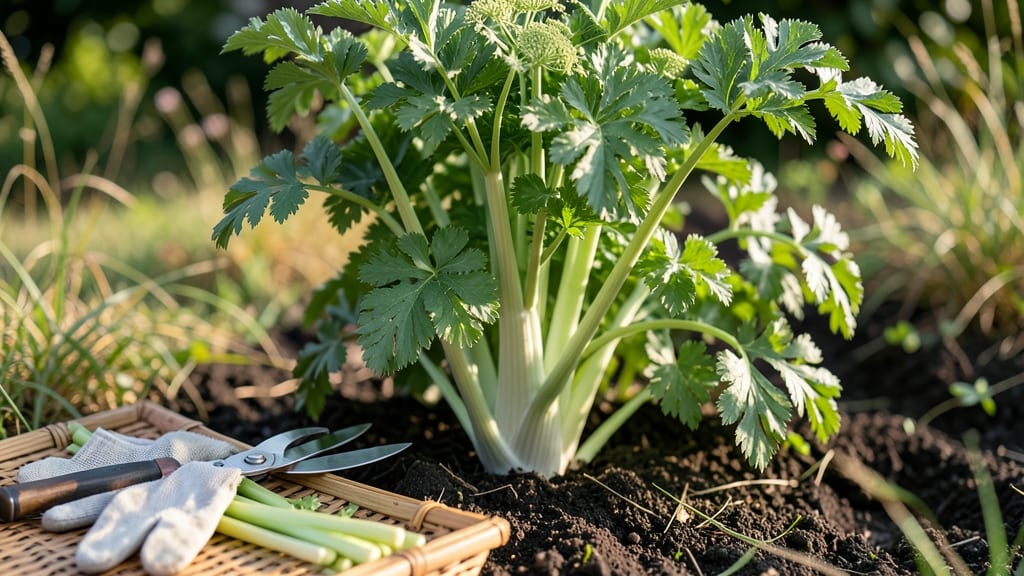
Harvesting garden celery at the right time means the difference between crisp, flavorful stalks and tough, bitter disappointment.
Picture this: you’ve nurtured your 🥬 plants all season, and now the moment of truth arrives. Cut too soon, and the flavor falls flat. Wait too long, and the stalks turn woody—no one wants that in their soup!
The key is knowing when those thick, tightly packed stems are ready, so you can enjoy a steady supply without sacrificing quality.
Timing isn’t just about the calendar—it’s about the plant. Look for stalks that are 12-18 inches tall, with deep green, crisp leaves. When you pinch a stalk and it snaps cleanly, not bends, that’s your cue.
But here’s the game-changer: you can actually regrow celery after harvesting, giving you multiple cuts per plant if you do it right.
In this guide, I’ll walk you through the exact signs to watch for, the best cutting techniques to preserve regrowth, and how to store your harvest so it stays fresh longer.
Whether you’re a first-time grower or a seasoned gardener, these tips will help you maximize your yield—and your kitchen’s crunch factor.


Optimal harvest time for crunchy garden celery stems
Timing your celery harvest is everything—cut too soon, and you’ll miss the crunchy texture and rich flavor; wait too long, and the stalks become woody and bitter. The sweet spot arrives when your plants reach 12–18 inches tall, with thick, tightly packed stalks that snap cleanly when bent.
This stage typically occurs 90–120 days after planting, depending on your USDA zone and variety.
For spring-planted celery, aim for harvests between June and July, while fall-planted varieties are ready in October or November. In warmer climates like Zones 8–10, you can even enjoy year-round harvests with staggered plantings.
The key is monitoring leaf color and stalk firmness—dark green leaves and crisp stalks signal peak readiness.
Regrowth potential depends on timing too. If you harvest too aggressively early on, the plant may struggle to recover. Instead, wait until the outer stalks are mature before cutting, leaving the inner core to regenerate. This balance ensures you get multiple harvests from a single plant, maximizing your garden’s yield.
| Harvest Stage | Key Signs | Days to Maturity | Best Time to Cut |
|---|---|---|---|
| Early Maturity | Stalks 8–12 inches, pale green | 75–90 days | Avoid—too soft, low flavor |
| Prime Harvest | Stalks 12–18 inches, dark green, crisp | 90–120 days | Ideal—peak flavor and texture |
| Overmature | Stalks >18 inches, yellowing leaves, woody | 120+ days | Avoid—bitter, tough, poor regrowth |
| Regrowth Stage | New stalks 6–10 inches, firm | 30–45 days post-cut | Harvest again when crisp |
Climate plays a huge role in harvest timing. In cooler zones (3–7), spring-planted celery may need row covers to extend the season, while warmer zones (8–10) can plant in fall for winter harvests.
Always check your last frost date—celery hates cold snaps and will bolt or turn bitter if exposed to temperatures below 40°F. If frost threatens, harvest immediately, even if stalks aren’t fully mature.
To test readiness, grab a stalk and bend it gently. If it snaps cleanly with resistance, it’s perfect. If it bends easily or feels hollow, it’s overripe.
Another trick: peel back the outer leaves—if the inner stalks are tightly packed and white, they’re ready. Loose or browned stalks mean the plant is stressed or overmature.
Seasonal adjustments are critical. For spring harvests, prioritize moisture and shade to prevent bolting. In summer, mulch heavily to retain soil moisture and protect roots from heat stress.
Fall harvests benefit from light fertilizing to boost regrowth, but avoid heavy feeding late in the season, which can delay maturity.
One common mistake is cutting stalks too close to the base. Always leave 1–2 inches of stem above the soil to encourage regrowth. Use a sharp knife or pruners to make clean cuts at a 45-degree angle, reducing damage to the plant.
After harvesting, water deeply and add a balanced fertilizer (like 5-10-10) to support recovery.
Pro tip: Harvest outer stalks first, working your way inward. This protects the inner core and encourages the plant to produce more stalks. With proper care, a single celery plant can yield 3–5 harvests over a season, making it one of the most efficient regrowing vegetables in your garden.
Remember, patience is key—rushing the harvest sacrifices quality. A well-timed cut ensures crisp, flavorful stalks and a healthy plant ready for regrowth. Now grab those shears and enjoy the rewards of your homegrown celery! 🥬✂️
How to regrow celery after harvesting for multiple cuts
After harvesting your garden celery, you might assume the plant is done—but with the right care, you can encourage multiple regrowth cycles for fresh stems all season. The key lies in proper pruning techniques, consistent moisture, and balanced fertilization to revive the plant's energy.
Unlike many vegetables, celery can rebound surprisingly well if given the right conditions, often producing secondary growth within 3-4 weeks.
I’ve regrown celery plants for three consecutive harvests in my garden by following a simple routine: cutting strategically, watering deeply, and adding a nitrogen boost. The secret? Never removing more than one-third of the plant at once, and always leaving the central stalk intact to fuel regrowth.
This method works best with varieties like 'Tall Utah' or 'Utah Improved', which are bred for resilience.
⚠️ Mistakes That Kill Celery Regrowth
- Over-cutting: Removing more than ⅓ of the plant weakens its core.
- Drought stress: Letting soil dry out halts regrowth entirely.
- Too much shade: Celery needs 4-6 hours of sun daily.
- Heavy fertilizer: Excess nitrogen burns roots; use 5-10-10 sparingly.
These errors turn your plant into a woody stub instead of a regrowing powerhouse.
Start by pruning your celery at the base with a clean, sharp knife, leaving at least 2-3 inches of stem above the soil. This stump acts as a growth catalyst, encouraging the plant to send out new shoots from the crown.
Within 7-10 days, you’ll notice tiny green sprouts emerging—this is your plant’s way of saying, "I’m back!" To speed this up, mulch around the base with straw or compost to retain moisture and protect roots from temperature swings.
Watering is non-negotiable for regrowth. Celery roots are shallow and sensitive, so daily deep watering (about ½ gallon per plant) is critical. I use a soaker hose in the morning to avoid fungal risks and keep the soil consistently moist but not soggy.
If your garden gets hotter than 85°F, increase watering to twice daily—wilting leaves mean regrowth is stalled. A simple trick? Test soil moisture by sticking your finger 1 inch deep; if it’s dry, water immediately.
After 2-3 weeks of regrowth, it’s time to fertilize lightly with a balanced 5-10-10 formula (1 tablespoon per plant). Avoid heavy doses—celery hates excess salts, which can burn roots and halt growth.
Instead, focus on organic options like fish emulsion or compost tea for a gentle nutrient boost. I’ve found that side-dressing (applying fertilizer to the soil surface) works better than top-dressing, as it protects the delicate crown from direct contact.
By month two, your celery plant should be ready for a second harvest. Look for new stalks reaching 6-8 inches tall and deep green leaves. Repeat the pruning process, but this time, leave even more stem (3-4 inches) to support future growth.
With this method, I’ve extended my celery harvest by 6-8 weeks, often yielding two full harvests from a single plant. The key? Patience and consistency—celery rewards careful gardeners with crisp, regrown stems time and time again.