
Tools
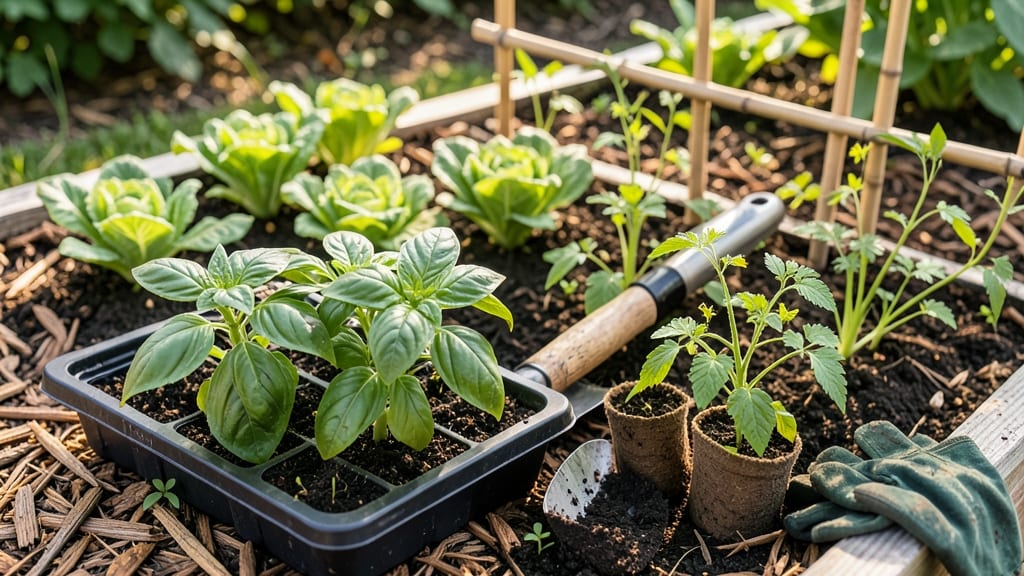
An 8x8 raised garden can pack more produce into a tiny yard than you’d expect — if you plan it right.
Picture this: a 4-foot-tall trellis in one corner holding pole beans and cucumbers, while the rest of the bed is a checkerboard of leafy greens, herbs, and root vegetables all sharing space without crowding. That’s the magic of a well-designed small plot.
Most gardeners assume an 8x8 raised garden is just for salads, but the real secret lies in pairing fast growers with slow climbers, using vertical space, and rotating crops each season. I’ve tested layouts that double yield in the same footprint — and I’ll show you how.
In this guide, you’ll discover space-saving layouts for every skill level, from beginner-friendly grids to advanced companion planting schemes. Ready to turn that corner of your yard into a high-output garden?
Optimal 8x8 raised garden layouts for small yards (with planting plans)
An 8x8 raised garden gives you 64 square feet of prime real estate—perfect for growing high-yield vegetables, fragrant herbs, and colorful flowers without sprawling across your yard. The key? Smart spacing, companion planting, and vertical growth strategies to maximize every inch.
I’ve designed three high-performance layouts for small yards: a vegetable-focused plan, a herb-and-flower mix, and a seasonal rotation system. Each balances sunlight needs, water efficiency, and harvest frequency to keep your garden productive year-round.
Here’s how they compare—pick the one that fits your goals:
| Layout Type | Primary Focus | Sunlight Needs | Yield Potential | Best For | Seasonal Flexibility |
|---|---|---|---|---|---|
| Vegetable Powerhouse | Tomatoes, peppers, cucumbers, lettuce | 6-8 hours daily | High (3-4 harvests/week) | Foodies, beginners | Spring-Fall |
| Herb & Flower Mix | Basil, thyme, marigolds, nasturtiums | 4-6 hours daily | Moderate (continuous harvest) | Pollinator gardens, chefs | Year-round (perennials) |
| Seasonal Rotation | Spring: peas, radishes / Summer: beans, zucchini / Fall: kale, carrots | 6-8 hours daily | Balanced (year-long) | Sustainable gardeners | All seasons |
🌱 All layouts include vertical trellises for vining plants
For the Vegetable Powerhouse layout, I recommend placing tomatoes and peppers along the north and south edges to avoid shading smaller plants. Lettuce and radishes thrive in the cooler shade of taller crops, while cucumbers and beans climb vertical trellises to save floor space.
In the Herb & Flower Mix, I pair basil and tomatoes (they love each other’s company) with marigolds to deter pests naturally. Thyme and oregano spread beautifully, so I plant them along the edges where they won’t crowd other crops.
My favorite trick for the Seasonal Rotation is using straw bales or cardboard as temporary mulch between crops. This suppresses weeds and keeps soil warm for quick spring plantings like radishes (30 days to harvest!) or bush beans (50 days).
Pro tip: Add a 12-inch deep layer of compost to your raised bed before planting. This gives roots room to grow while improving drainage—critical for water-loving plants like cucumbers and lettuce.
Don’t forget to leave 6-inch walkways between beds for easy access. In an 8x8, I use gravel or stepping stones to define paths without wasting space. This keeps your garden tidy and makes harvesting a breeze!
For vertical space, install trellises or cages for tomatoes, cucumbers, and pole beans. Even herbs like mint (which spreads aggressively) can grow in hanging pots along the bed’s edge. This frees up 30% more floor space for other crops.
Finally, rotate crops yearly to prevent soil depletion. For example, swap heavy feeders like tomatoes (which need lots of nutrients) with light feeders like lettuce the next season. This keeps your soil healthy and your yields consistent.
Ready to sketch your plan? Grab a ruler and divide your 8x8 into 1-foot squares. Each square can hold 1 plant, but companion planting lets you fit 2-3 plants per square by pairing small varieties.
Start with my layouts, then tweak based on your local USDA zone and microclimate.
How to choose the best crops for an 8x8 raised garden (by growth habit)
An 8x8 raised garden is a blank canvas for creativity, but choosing the right crops can make all the difference. Your space is limited, so growth habits become your best friend. Vining plants need support, bush varieties thrive in clusters, and trailing plants spill beautifully over edges.
Let’s break down the best options for each category to maximize your harvest without wasting space.
Start with vining plants like cucumbers or pole beans, which climb trellises or stakes. These save floor space while producing abundant yields. For example, a single bush bean plant yields about 4-6 pods, but a 3-foot trellis with cucumbers can produce 10-15 fruits per season.
Pair them with compact bush varieties like bush tomatoes or peppers to balance your layout.
Next, consider bush-type crops such as lettuce, radishes, and carrots. These grow close to the ground, making them perfect for filling gaps. A single radish matures in just 25 days and fits 4-6 inches apart, while lettuce thrives in 8-12 inches of space per head.
Their quick growth means you can succession plant for continuous harvests.
Don’t forget trailing plants like strawberries or nasturtiums, which cascade over the edges of your raised bed. Strawberries produce 2-3 pounds per plant annually and spread 12-18 inches wide, making them ideal for the bed’s perimeter. Nasturtiums, with their edible flowers, add color while deterring pests like aphids.
Sunlight needs also play a critical role in placement. Most vining plants and bush tomatoes require 6-8 hours of full sun, while leafy greens like spinach tolerate 4-6 hours. Arrange taller plants on the north side of your bed to avoid shading shorter varieties. For instance, place pepper plants (which need full sun) behind bush beans (which tolerate partial shade).
| Growth Habit | Plant Type | Sunlight Needs | Spacing (inches) | Yield per Plant |
|---|---|---|---|---|
| Vining | Cucumbers (trellised) | 6-8 hours | 12-18 | 10-15 fruits |
| Vining | Pole Beans | 6-8 hours | 4-6 | 12-15 pods |
| Bush | Bush Tomatoes | 6-8 hours | 18-24 | 10-15 tomatoes |
| Bush | Radishes | 4-6 hours | 2-3 | 5-10 radishes |
| Trailing | Strawberries | 6-8 hours | 12-18 | 2-3 lbs |
| Trailing | Nasturtiums | 4-6 hours | 6-12 | Edible flowers |