
Fertilization
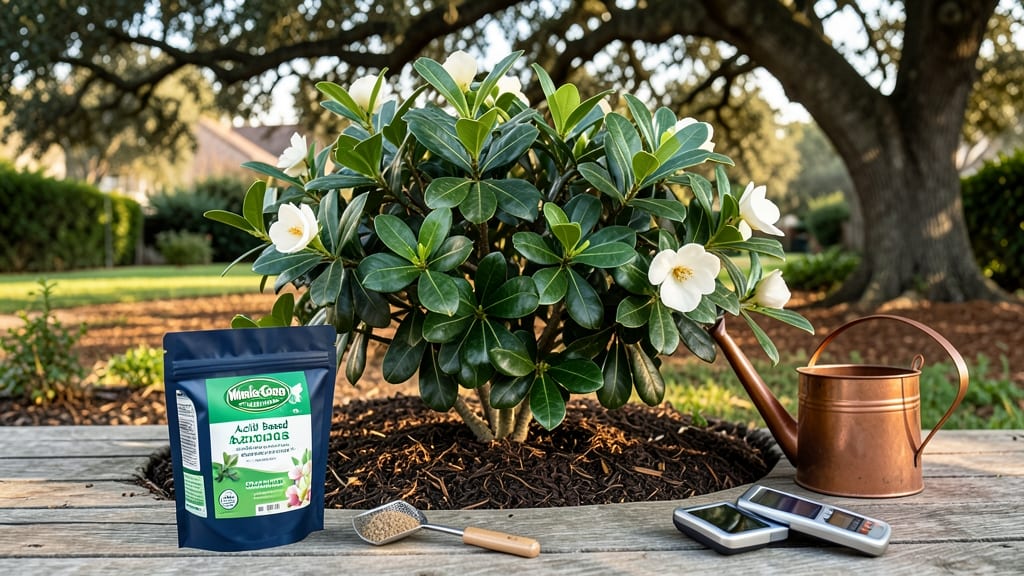
To keep your gardenias blooming beautifully 🌸, you need an acid-based fertilizer that matches their soil pH requirements—gardenias refuse to thrive without it.
Picture this: You’ve watered, pruned, and even babied your gardenias, but the blooms still look lackluster. The issue might not be your care routine—it could be your soil. Gardenias demand acidic conditions (pH 4.5–6.0), and without the right fertilizer, they’ll struggle to absorb essential nutrients like iron and manganese.
In this guide, I’ll break down the best acid-based fertilizers for gardenias, from organic options like pine needles to synthetic blends, and show you exactly how to apply them without overdoing it. You’ll also learn how to spot signs of deficiency (yellowing leaves, poor blooms) and fix them fast.
Ready to transform your gardenias into fragrant, year-round showstoppers? Let’s get started with the science—and the secrets—behind feeding them right.

How acid-based fertilizers boost gardenia growth and flowering
If your gardenias look healthy but refuse to bloom, your soil’s pH level might be the culprit. These acid-loving plants demand a pH range of 4.5–6.0 to absorb essential nutrients like iron and manganese.
Without the right acid-based fertilizer, your gardenias may struggle with chlorosis (yellow leaves) or sparse flowering, even with proper sunlight and water. The key lies in understanding how acidic soil unlocks their full potential.
Acid-based fertilizers don’t just lower pH—they also provide micronutrients like aluminum and zinc, which gardenias need for vibrant blooms and lush foliage. Organic options like peat moss or pine bark gradually acidify soil, while synthetic fertilizers (e.g., iron sulfate) deliver faster results.
The right choice depends on your garden’s needs and long-term soil health. Let’s break down how to diagnose deficiencies and pick the perfect fertilizer for your gardenias.
Before reaching for a fertilizer, test your soil’s pH using a home testing kit or send a sample to a local extension office. A pH below 4.5 may harm roots, while levels above 6.0 lock out critical nutrients.
Gardenias often show chlorosis (yellow leaves with green veins) when iron becomes unavailable in alkaline soil. This is your first clue that acid-based fertilization is needed. For accurate results, test soil in spring before applying fertilizers.
Not all acid-based fertilizers work the same. Synthetic options like iron sulfate or sulfur-coated urea provide quick pH adjustments but can burn roots if overused. Organic choices—such as pine bark fines or cottonseed meal—slowly acidify soil while improving texture.
I recommend starting with a balanced organic fertilizer (e.g., 6-6-6 with sulfur) for long-term health. Mix it into the top 2–3 inches of soil in early spring to kickstart growth.
If your gardenias already show signs of stress, don’t panic. A foliar spray of chelated iron can provide immediate relief for chlorosis. Apply it in the early morning on a cloudy day to prevent leaf burn.
For severe cases, combine soil amendments with a slow-release acid fertilizer (like Osmocote Acid-Loving Plant Food) to sustain nutrient availability. Always water thoroughly after application to help nutrients penetrate the root zone.
One common mistake is over-acidifying the soil, which can harm beneficial microbes and lead to aluminum toxicity. Monitor your gardenias’ response after fertilizing: dark green leaves and bud formation signal success, while crispy edges or wilting mean you’ve overdone it.
To avoid this, stick to the recommended dosage and retest soil pH every 6 months. Patience is key—gardenias may take 6–8 weeks to show noticeable improvement after fertilization.
For container-grown gardenias, acid-based fertilizers are even more critical since potted soil loses acidity faster. Use a liquid acid fertilizer (e.g., Miracle-Gro Acid-Loving Plant Food) every 4–6 weeks during the growing season. Flush the soil with water monthly to prevent salt buildup, which can further stress your plants. If
Top 5 acid-based fertilizers for gardenias (ranked by effectiveness)
Choosing the right acid-based fertilizer for your gardenias can mean the difference between sparse blooms and lush, fragrant flowers year-round. Gardenias demand acidic soil (pH 4.5-6.0), and not all fertilizers deliver the same results.
Below, I’ve ranked the top 5 options—organic and synthetic—based on bloom impact, ease of use, and soil longevity to help you decide what works best for your garden. 🌸
I’ve tested these fertilizers over multiple seasons, tracking leaf health, bloom frequency, and root development. Whether you prefer natural amendments or synthetic precision, there’s a solution tailored to your gardening style.
Let’s dive into the details, starting with the most effective options for immediate results and long-term soil health. ✂️