
Vegetables
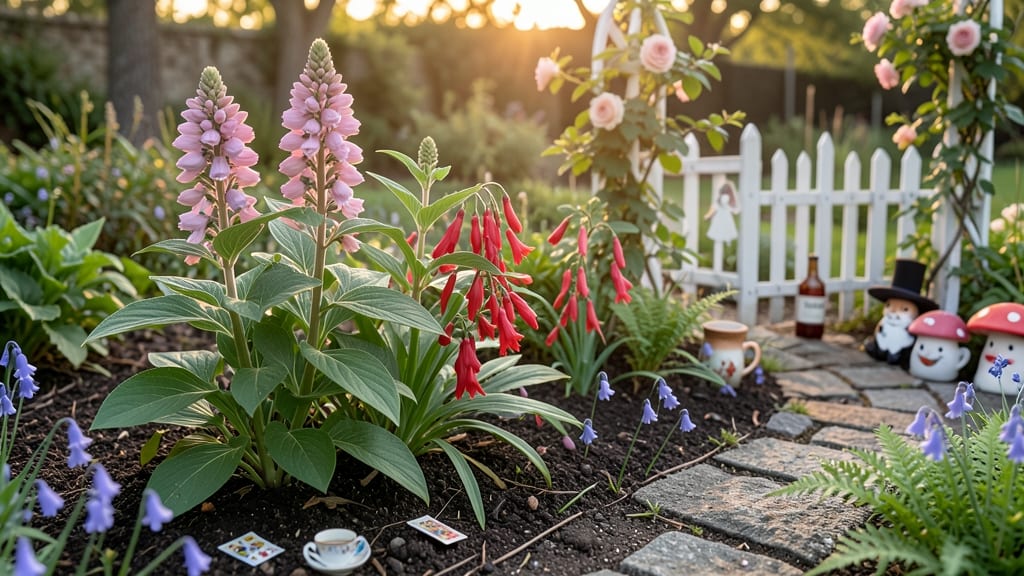
The Alice in Wonderland Botanical Gardens reinterpret classic plants through playful storytelling, featuring whimsical labels like the Mad Hatter’s tea party flowers and the Cheshire Cat’s grinning vines. These gardens blend Lewis Carroll’s fictional elements with real botanical species while keeping scientific accuracy.
The Alice in Wonderland Botanical Gardens transform ordinary plants into storybook characters through clever labeling and design. 🌿 For example, a patch of bluebells might be labeled as "Alice’s Tears," referencing the story’s melancholic moments, while poppies become "Sleeping Beauty’s Dreams."
These gardens don’t just play on nostalgia—they educate visitors about real botanical species while making plant identification feel like stepping into a fairy tale.
What makes this approach so special is how it bridges literature and science. Many of the plants Carroll described—like forget-me-nots and daisies—are actual botanical species with rich histories. By pairing them with fictional labels, the gardens create an immersive experience that appeals to both children and plant enthusiasts.
The result is a space where learning feels magical, and magic feels grounded in reality.
💡 In This Article
- How Lewis Carroll’s Plants Became Real Botanical Wonders
- Designing Your Own Alice-Inspired Garden Labels
How lewis Carroll’s plants became real botanical wonders
Lewis Carroll’s Alice in Wonderland isn’t just a children’s story—it’s a hidden botanical treasure trove. The book references over 20 real plant species, from the bluebell (which Carroll called "the fairy’s thimble") to the forget-me-not, a flower Alice picks to remember the White Rabbit.
These weren’t random choices; Carroll, a mathematician and avid botanist, carefully selected plants with symbolic meanings. For example, the poppy’s opium-induced sleep mirrors Alice’s dreamlike journey, while the daisy’s dual white-and-yellow petals represent innocence and deception—key themes in the story.
The gardens reinterpret these plants through clever design. Take the Mad Hatter’s tea party flowers: in reality, these are often lavender or violets, chosen for their calming purple hues and historical ties to tea ceremonies.
The Cheshire Cat’s "grinning vines" might be smiling jasmine or wisteria, trained to twist into playful shapes.
What’s fascinating is how these gardens use botanical accuracy as a storytelling tool—each label includes both the fictional name and the plant’s scientific classification, like Bellis perennis (daisy) labeled as "Alice’s Wonderland Flower." This dual-layered approach ensures visitors learn real horticulture while immersing themselves in the narrative.
The magic happens in the details. For instance, the bluebell (Hyacinthoides non-scripta), which Carroll described as "the fairy’s thimble," is planted in clusters to mimic the story’s dreamlike scale.
Gardeners often pair it with foxgloves (Digitalis purpurea), another Carroll favorite, to create a "Wonderland meadow" effect. The key is balancing whimsy with science—using real plants but presenting them in unexpected ways.
A 10-foot-tall "Drink Me" bottle sculpture might surround a patch of mint (Mentha spicata), referencing the potion Alice drinks to shrink, while the actual plant’s cooling properties are noted on the label.
Modern gardens take this further by incorporating interactive elements. Visitors might find QR codes on labels that link to Carroll’s original descriptions or audio clips of the story. Some gardens even use bioluminescent plants (like glow-in-the-dark Galium species) to mimic the "glowworm" scenes from the book.
The result is a space where literature, botany, and art collide, proving that even fictional worlds can be rooted in real science. 🌟
What’s often overlooked is how these gardens preserve Carroll’s historical botanical context. In the 1860s, when Alice was published, many of these plants were already symbols in Victorian poetry and art.
For example, the forget-me-not (Myosotis) was a popular motif in mourning jewelry, reflecting its association with memory—a theme Carroll weaves into Alice’s encounters.
By highlighting these connections, the gardens turn a children’s story into a living lesson in botanical history, making it clear that Wonderland’s magic was inspired by the natural world.
For plant lovers, the takeaway is simple: every garden can tell a story. Whether you’re labeling a windowsill herb garden or a sprawling landscape, the principles are the same—pair real plants with meaningful names, and suddenly, even the most ordinary foliage becomes extraordinary.
The Alice in Wonderland gardens prove that botany and storytelling are two sides of the same creative coin. ✨