
Pests
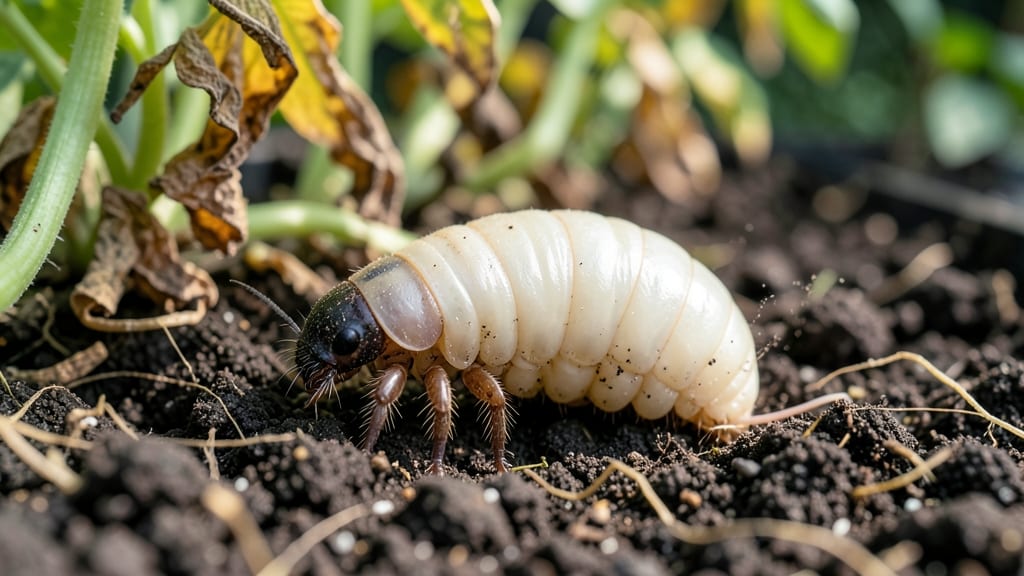
Grub worms are bad for your garden because they systematically destroy grass and plant roots, creating unsightly brown patches, stunted growth, and even plant death. Japanese beetle and May/June beetle grubs are particularly aggressive and can devastate lawns within a single season.
Grub worms don't just nibble—they feast on your garden's lifeline.
These C-shaped larvae burrow 1-2 inches deep into soil, severing roots and disrupting nutrient flow. 🌱 The damage becomes visible as yellowing grass or wilting plants, but the real problem starts underground where fungal infections often take hold in the weakened root systems.
What makes them so destructive is their lifecycle: Japanese beetle grubs, for example, can survive two years underground, continuously feeding during that time.
Identifying their presence early is key—look for spongy lawn patches that pull up easily or gnawed roots when you dig. The good news? Their feeding patterns leave telltale signs if you know where to look. Many gardeners mistake grub damage for drought stress, delaying treatment until the problem becomes severe.
💡 In This Article
- How Grub Worms Destroy Garden and Lawn Roots
- Effective Organic and Chemical Grub Worm Control Methods
How grub worms destroy garden and lawn roots
Grub worms don't just munch—they systematically dismantle your garden's root systems using specialized mouthparts designed for chewing through plant fibers. Japanese beetle grubs, for instance, have strong mandibles that can sever roots measuring 0.02-0.04 inches in diameter, which is about the thickness of a human hair.
These larvae target the most nutrient-rich root zones, typically 1-4 inches below the soil surface, where they create a feeding frenzy that weakens the plant's ability to absorb water and nutrients.
The damage escalates when you consider their feeding patterns. A single grub can consume up to 50 pounds of roots per acre per season, creating what entomologists call "root pruning."
This process leaves plants vulnerable to drought stress and fungal infections like Fusarium or Rhizoctonia, which thrive in the damaged root systems. 🌱 The lifecycle of these pests makes it worse—Japanese beetle grubs can overwinter in the soil for up to two years, continuously feeding during that time, while May/June beetle grubs emerge in late summer to early fall, giving them a second destructive season.
What makes this particularly insidious is how the damage manifests. Surface symptoms like brown patches or wilting plants often appear after the roots have been compromised, giving gardeners a false sense of security.
The grubs also leave behind frass (chewed plant material), which can further clog soil pores and reduce aeration. This creates a perfect storm of root damage, nutrient starvation, and soil degradation that can take years to recover from.
Consider this comparison: A healthy lawn root system can extend 6-12 inches deep, but grub-infested roots may only reach 1-2 inches before being severed. This shallow root system means plants can't access deeper moisture reserves, making them more susceptible to heat stress.
The visual damage you see above ground is just the tip of the iceberg—what's happening below is a silent epidemic of root destruction.
Timing plays a crucial role in their destructive power. Japanese beetle grubs, for example, are most active from June through September, while May/June beetle grubs peak in late summer to early fall.
This overlap means gardeners often face a double threat during the growing season, with both species contributing to root damage simultaneously. The result is a perfect storm of weakened plants that struggle to recover, even with proper watering and fertilization.
What most gardeners don't realize is how these grubs create secondary damage. As they feed, they introduce pathogens into the root zone, creating entry points for soil-borne diseases.
The combination of physical root damage and biological contamination makes grub control not just about eliminating the pests, but also about restoring soil health and plant resilience. This dual challenge explains why grub infestations often require comprehensive treatment approaches rather than quick fixes.
The key to understanding their impact is recognizing that grub worms don't just damage individual plants—they undermine the entire ecosystem of your garden. Their feeding patterns create conditions that benefit other pests and diseases, turning what starts as a grub problem into a full-blown garden crisis.
This interconnected damage is why early detection and targeted control are absolutely critical for maintaining a healthy landscape. 🌿