
Container Gardens
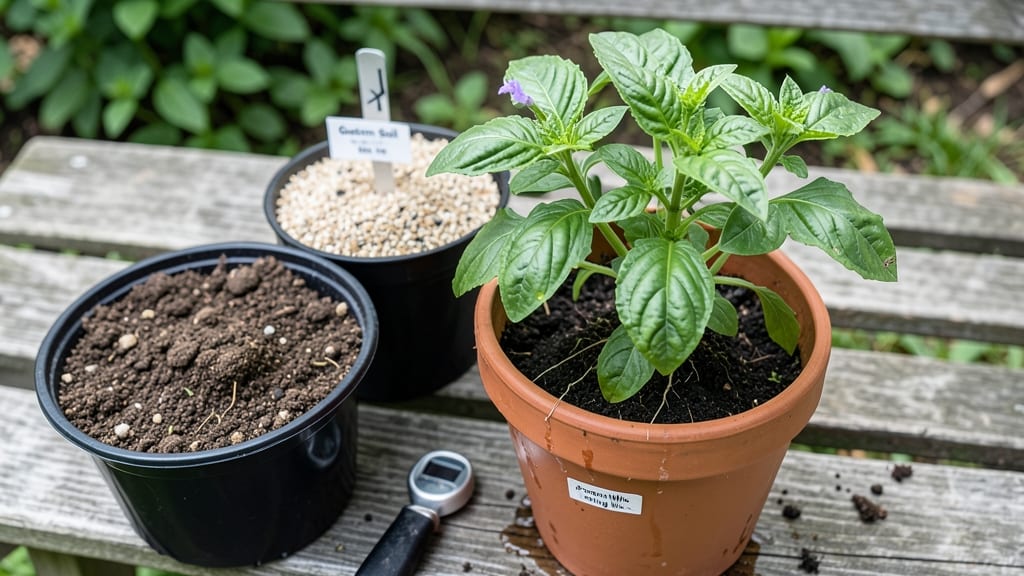
You shouldn't use garden soil in pots because it compacts easily, drains poorly, and can introduce pests or diseases. Instead, combine it with perlite or sand and opt for a lightweight potting mix to improve aeration and root health.
Garden soil is heavy and dense, which suffocates roots by blocking oxygen flow and trapping excess moisture—a recipe for rot. 🌱 The lack of organic matter also means nutrients deplete faster in containers. For example, herbs like basil thrive in fast-draining mixes, while tomatoes need compost-rich blends.
I always recommend testing your soil's moisture retention first—if it stays damp for more than a day, it's too heavy for pots.
For a DIY fix, mix garden soil with equal parts perlite or coarse sand to improve drainage. Add 10-20% compost for nutrients, but avoid garden compost with large chunks—it breaks down unevenly. Pro tip: Use 10% worm castings for a slow-release nutrient boost that works well in containers.
Different plants have unique needs—succulents demand 60% mineral grit, while leafy greens prefer 40% peat or coconut coir. Always check the plant tag for guidance, as overwatering in heavy soil is the #1 killer of potted plants.
💡 In This Article
- Why Garden Soil Fails in Container Gardening
- Best Soil Blends for Potted Plants by Type
Why garden soil fails in container gardening
Garden soil is designed for in-ground planting where roots can spread freely, but pots create a confined space that exposes its flaws. The natural compaction from foot traffic or machinery in garden soil becomes even worse in containers, where roots have no room to escape.
This compaction reduces pore space by 30-50%, suffocating roots by blocking oxygen flow—a critical issue since roots need 10-20% air in their environment to breathe properly. 🌱
The drainage problems get worse because garden soil contains high clay content (often 20-40%) that holds moisture tightly. Unlike potting mixes with 50-70% organic matter, garden soil can trap water for days, creating anaerobic conditions where roots rot.
I've seen tomato plants in garden soil develop root rot within 2 weeks during rainy seasons, while the same plants in potting mix thrive for months.
Pathogens and pests also thrive in garden soil. Fungal spores like Phytophthora and nematode eggs survive in garden soil for years, while potting mixes are typically sterilized. The confined space of pots makes these problems catastrophic—once a disease takes hold, there's no escape route for roots.
Even "healthy" garden soil can contain weed seeds that sprout uncontrollably in pots, competing with your plants for nutrients.
The nutrient imbalance is another silent killer. Garden soil releases nutrients slowly over months, but in containers, they leach out within 4-6 weeks because there's no replenishment from deeper soil layers.
Potting mixes contain balanced, slow-release fertilizers that match a plant's needs over its growing season, while garden soil often has uneven nutrient distribution—too much phosphorus in one spot, not enough nitrogen elsewhere.
Consider the texture difference: garden soil feels dense and gritty, while ideal potting mix has a light, crumbly consistency that mimics a sponge. This structure allows roots to grow easily while maintaining proper moisture levels.
For example, a 50/50 mix of peat moss and perlite maintains 60% air space—perfect for most container plants—whereas garden soil might only offer 10% air space when compacted.
What most people don't realize is that even "good" garden soil can vary dramatically. Soil from your backyard might test perfectly for pH and nutrients, but it could still contain microscopic rock fragments that damage delicate root hairs.
The solution isn't just about mixing in amendments—it's about recreating the ideal environment that potting mixes provide from the start. 💫