
Trees
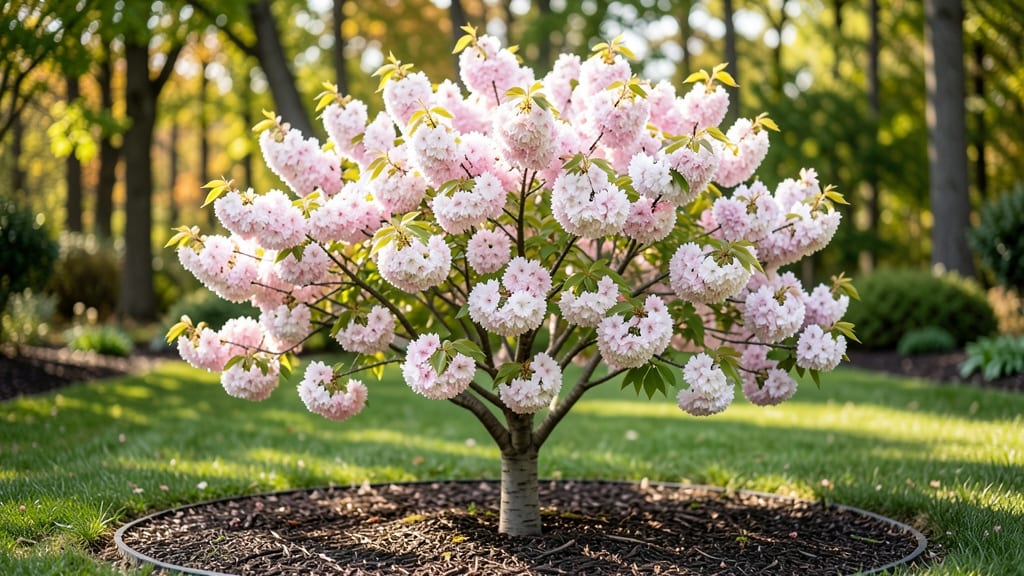
For a garden, a cherry blossom tree brings breathtaking spring color with its fragrant pink or white blossoms, but your choice should match your space, sunlight, and local climate. Compact varieties like 'Royal Ann' work perfectly for small yards, while grand types like 'Kwanzan' dominate larger landscapes, needing full sun and well-drained soil to flourish.
A cherry blossom tree isn't just about beauty—it's about creating a seasonal focal point that transforms your outdoor space. 🌸 The right variety can extend your blooming season from early spring to late winter, depending on the cultivar.
For example, 'Autumnalis' keeps its flowers year-round in mild climates, while 'Yoshino' bursts with color in late April. I've found that even in urban gardens with limited space, a well-placed dwarf variety can create a stunning visual impact without overwhelming the area.
What many gardeners overlook is how these trees thrive with minimal fuss once established. They're surprisingly adaptable to different soil types, though they do best with consistent moisture during their first few years.
The key to long-term success is proper planting—digging a hole twice as wide as the root ball and amending the soil with compost. I always recommend adding a layer of mulch to retain moisture and protect roots from temperature swings.
💡 In This Article
- Cherry Blossom Tree Varieties by Size and Bloom Time
- Planting and Caring for Cherry Blossom Trees in Gardens
Cherry blossom tree varieties by size and bloom time
Cherry blossom trees come in a stunning range of sizes and bloom times, each offering unique garden benefits. Dwarf varieties like 'Royal Ann' typically reach 15-20 feet tall with a spread of 10-15 feet, making them ideal for small urban yards or container planting.
In contrast, standard types such as 'Kwanzan' can grow to 30-40 feet with a 25-35 foot spread, requiring spacious landscapes. The size difference isn't just about space—dwarf varieties bloom earlier and more prolifically, while larger trees often have longer-lasting flowers due to their greater biomass.
Bloom timing varies dramatically between cultivars. Early spring bloomers like 'Yoshino' burst into color in late April with pure white flowers that cover the tree completely, creating a dramatic canopy effect. These varieties thrive in USDA zones 5-8 and typically bloom for 10-14 days.
Late-season varieties like 'Autumnalis' offer something extraordinary—they bloom intermittently from fall through winter in mild climates (zones 6-9), providing year-round interest.
The secret behind this extended blooming lies in their genetic makeup: 'Autumnalis' trees produce flowers on both old and new wood, unlike most cherry blossoms that rely solely on previous year's growth.
Climate plays a crucial role in flower longevity. In colder regions (zones 4-5), early bloomers may face frost damage, while late-season varieties often fare better. I've observed that trees in zone 7 and above consistently show longer bloom periods because they experience fewer late frosts.
The temperature threshold for blossom formation is typically 45-50°F—below this, flowers may drop prematurely. This is why gardeners in transitional climates often choose varieties like 'Okame' that bloom slightly later in the season when frost risks have passed.
For those with limited space but wanting maximum impact, consider the 'Shirofugen' variety—a stunning double-flowering type that reaches 25-30 feet but produces 2-3 times more flowers than single-blooming varieties. Its pink blossoms have a delicate, almost lace-like appearance due to the extra petals.
The trade-off? These double-flowering trees often produce fewer fruits, which means they require more maintenance to prevent disease buildup from retained blossoms. 🌸
Another fascinating variation is the 'Weeping Cherry' types like 'Taff's Light' that grow 15-20 feet tall but cascade with 10-12 foot branches, creating a stunning fountain effect. These varieties are perfect for accenting patios or garden edges.
What makes them special is their 3-4 week bloom period—longer than most standard cherry blossoms—because their weeping habit exposes more flower buds to sunlight and air circulation, both of which enhance bloom duration.
When selecting a variety, consider your garden's microclimate. Trees planted in full sun (6+ hours daily) will bloom more vigorously than those in partial shade. I've found that even within the same zone, trees planted near reflective surfaces (like light-colored walls) can bloom 5-7 days earlier due to increased warmth.
This phenomenon occurs because the reflected sunlight raises ambient temperatures around the tree by 2-4°F, effectively extending the growing season.