
Pests
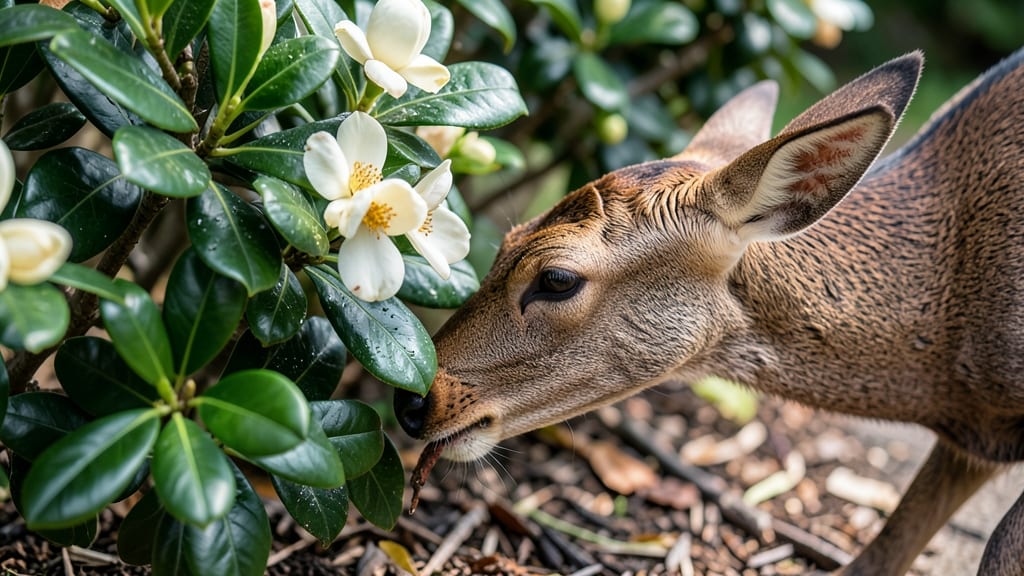
Deer eat gardenia bushes because their glossy, fragrant foliage and tender new growth are highly appealing. These plants are especially vulnerable during spring and summer when deer seek nutrient-rich vegetation. Natural deterrents like repellents, fencing, or companion planting can help protect them.
Deer are naturally drawn to gardenia bushes because of their aromatic leaves and delicate buds, which release scents that attract browsing animals. 🌿 The tender young shoots in spring and summer are particularly tempting, offering a high-protein snack that deer can't resist.
Unlike some ornamental plants, gardenias lack natural chemical defenses that repel deer, making them an easy target for hungry herds—especially in suburban areas where natural predators aren't present.
To protect your gardenias, focus on disrupting deer access rather than just masking the scent. Physical barriers like 8-foot tall fencing work best, while companion plants such as rosemary or boxwood can create natural buffers.
Commercial repellents with putrescent egg or garlic bases are effective but need reapplication after rain. The key is combining multiple strategies—deer are clever and will exploit any single weakness in your defenses.
💡 In This Article
- Why Gardenia Bushes Are a Deer’s Favorite
- Best Natural Deer Deterrents for Gardenia Bushes
Why gardenia bushes are a deer’s favorite
Deer have an extraordinary sense of smell—up to 1,000 times more sensitive than humans—which makes gardenia bushes irresistible. The plant’s glossy, dark green leaves and highly fragrant white flowers release volatile organic compounds (VOCs) that deer detect from up to 100 yards away.
These compounds, including linalool and geraniol, mimic the scent profiles of deer’s natural food sources like clover and young shoots, triggering their foraging instincts. 🌿
The texture of gardenia foliage also plays a role—deer prefer plants with soft, tender leaves that require minimal chewing effort. Gardenias fit this profile perfectly, especially during spring and early summer when new growth emerges.
At this stage, the leaves contain higher moisture and protein levels (around 20-25% protein in young shoots), making them a nutritional powerhouse for deer. Compare this to mature gardenia leaves, which have thicker cell walls and lower protein content, making them less appealing.
Seasonal behavior explains why gardenias face peak damage during dawn and dusk, when deer are most active. In spring and summer, deer prioritize plants with high-water content and tender growth—exactly what gardenias offer.
What’s surprising is how deer learn preferences: if they find your gardenias palatable once, they’ll return repeatedly. This learned behavior contrasts with deer’s typical browsing patterns, where they rotate among multiple plant species to avoid overconsumption.
Gardenias stand out against other deer-resistant plants like boxwood or lavender because they lack natural chemical defenses. Many ornamental plants produce alkaloids or tannins that deter herbivores, but gardenias invest their energy in flower production and fragrance instead.
This evolutionary trade-off makes them a deer’s dream come true—unless you intervene with targeted deterrents. 🦌
Consider this comparison: while deer might nibble on rosemary or thyme (which contain essential oils that repel them), they’ll devour gardenias given the chance. The plant’s lack of bitter compounds and its high palatability create a perfect storm of attraction.
Understanding this biological mismatch is key to protecting your gardenias—because deer aren’t just eating them; they’re actively seeking them out.
Here’s the critical insight: gardenias aren’t just food for deer—they’re a preferred delicacy during their peak growing seasons. The combination of scent, texture, and nutrition creates an irresistible package that even the most selective browsers can’t resist.
This is why single deterrent methods often fail: you need to address all three factors simultaneously to break the deer’s attraction cycle. ✨