
Tools
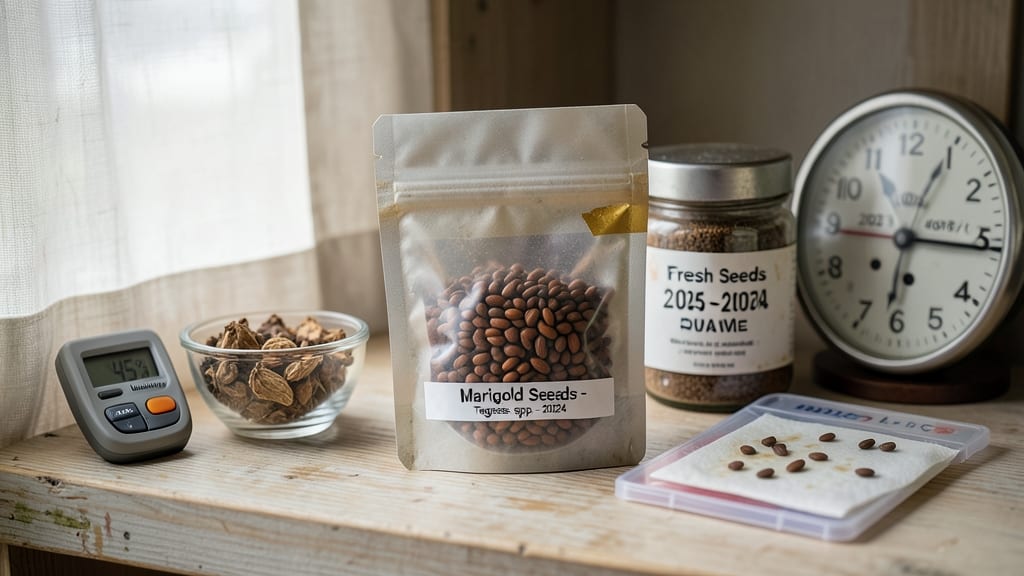
Garden seeds do go bad over time, losing viability due to moisture, heat, or poor storage. Most last 1-5 years, though heirloom and organic seeds degrade faster. Test germination rates annually to confirm freshness before planting.
Seed viability isn't just about age—it's a delicate balance of environmental factors. 🌱 Exposure to humidity or extreme temperatures accelerates deterioration, while proper storage can preserve seeds for years beyond their typical lifespan.
For example, vegetable seeds like tomatoes or peppers often retain viability for 2-4 years, while flower seeds may last only 1-2 years unless stored correctly.
The key is understanding how each seed type reacts to storage conditions, as even small variations can make the difference between a thriving garden and wasted efforts.
Many gardeners assume older seeds are fine until they fail to sprout, but the decline in germination rates is gradual. That's why I always recommend testing a small batch of seeds before committing to a full planting—it's a simple way to avoid disappointment.
The good news? With the right storage techniques, you can extend seed life significantly, saving money and reducing waste while keeping your garden thriving year after year.
💡 In This Article
- How Long Do Garden Seeds Stay Viable?
- Best Practices for Storing Garden Seeds Long-Term
How long do garden seeds stay viable?
Seed viability depends on the plant species and storage conditions, but the biological process behind it all is enzymatic degradation. Inside each seed lies a delicate balance of enzymes and moisture that kickstart germination when conditions are right.
Over time, these enzymes break down the seed's internal structures, particularly the cell membranes, reducing the seed's ability to absorb water and trigger growth. For most vegetable seeds, this process typically takes 2-5 years, but factors like temperature fluctuations and humidity can accelerate or slow it down significantly.
Different seed types have varying lifespans due to their natural adaptations. For instance, tomato seeds often remain viable for 3-4 years, while carrot seeds may last only 1-2 years because their embryos are more sensitive to environmental stress.
Flower seeds like marigolds or sunflowers tend to degrade faster—often within 1-2 years—because they're designed to germinate quickly in nature. Herbs like basil or cilantro usually have a shorter shelf life of 1-3 years due to their thin seed coats that offer less protection against moisture loss.
The science behind germination decline involves a process called desiccation tolerance, where seeds lose their ability to rehydrate properly over time. When seeds dry out too much, their cell membranes become brittle and unable to repair themselves when moisture returns.
This is why storing seeds in environments with 30-40% humidity is ideal—it keeps them just hydrated enough to maintain viability without triggering premature germination. Extreme conditions, like above 80°F or below 32°F, can also damage the seed's genetic material, further shortening its lifespan.
What many gardeners don't realize is that even properly stored seeds experience a gradual decline in germination rates. For example, a packet labeled with a 95% germination rate might drop to 80% after 2 years and 50% after 4 years if stored in less-than-ideal conditions.
This decline isn't linear—some seeds may suddenly lose viability after a few years, especially if exposed to temperature swings or high humidity during storage. That's why I always recommend testing a small sample of seeds before planting a full crop.
One fascinating aspect of seed longevity is how some species have evolved to survive extreme conditions. For example, lotus seeds can remain viable for over 1,300 years when stored in the right conditions, thanks to their unique biochemical adaptations.
While your average garden seed won't match that record, understanding these natural mechanisms can help you optimize storage. The key is mimicking the stable, low-moisture environments these seeds evolved to tolerate in the wild.
To put it simply, the older a seed gets, the more delicate its internal structures become. Even if a seed looks fine on the outside, its ability to sprout can diminish dramatically over time.
That's why I always suggest labeling seeds with their purchase date and testing a few each year—it's the best way to avoid wasting seeds on failed plantings. 💫