
Tools
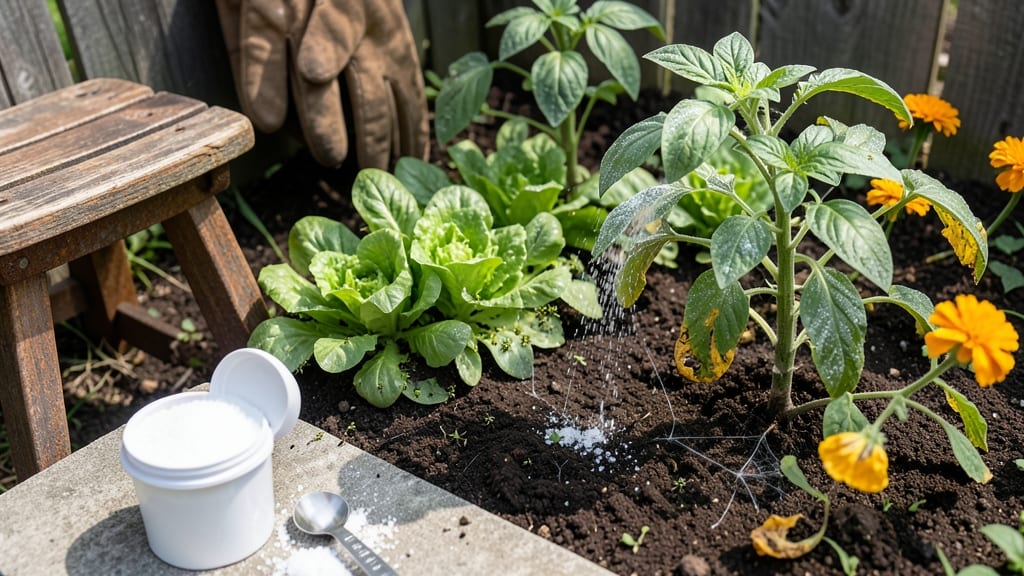
Using Epson salt in your garden provides magnesium sulfate that strengthens plant health by boosting chlorophyll production, reducing leaf yellowing, and improving soil structure when applied as a foliar spray or soil amendment. Always use it sparingly to prevent root damage.
Epson salt works because its magnesium content directly supports photosynthesis—the process that gives plants their vibrant green color. 🌱 Many gardeners notice healthier foliage and stronger stems after just one application, especially in magnesium-deficient soils.
I recommend testing your soil first, as too much can actually harm plants by disrupting nutrient balance. For best results, apply in early spring or late summer when plants are actively growing.
This mineral supplement also helps break up compacted soil, allowing roots to access water and nutrients more easily. The key is proper dilution—never use it straight from the container.
A simple 1 tablespoon per gallon of water solution works wonders for most plants, though succulents and citrus trees may need different ratios. Always monitor your plants for signs of stress, like brown leaf edges, which indicate you've overdone it.
💡 In This Article
- How Epson Salt Enhances Plant Growth and Soil Health
- Safe Application Methods for Epson Salt in Gardens
How Epson salt enhances plant growth and soil health
Epson salt's botanical magic comes from its chemical composition—magnesium sulfate (MgSO₄)—which acts as a direct nutrient booster for plants. Magnesium sits at the center of chlorophyll molecules, the green pigments responsible for photosynthesis.
When plants lack magnesium, they can't produce enough chlorophyll, leading to yellowing between leaf veins—a condition called interveinal chlorosis. 🌿 Studies show that magnesium deficiency affects about 10% of garden soils, particularly in sandy or acidic environments where nutrients leach away quickly.
The magnesium in Epson salt doesn't just help leaves look green—it also improves photosynthesis efficiency by up to 20% in deficient plants. This is why gardeners often see dramatic improvements in plant vigor after application.
The sulfate component plays a secondary role by enhancing nutrient uptake, particularly phosphorus and nitrogen, which are essential for root development and flowering. Unlike synthetic fertilizers that often contain only nitrogen, phosphorus, and potassium (NPK), magnesium sulfate provides a missing piece that many commercial fertilizers overlook.
Soil structure benefits too. Magnesium helps maintain the proper balance of cations (positively charged minerals) in the soil, preventing nutrient imbalances that can occur with excessive potassium or calcium. This is especially valuable in clay-heavy soils, where magnesium helps break up compacted particles and improves water drainage.
The result? Roots can spread more easily, accessing moisture and nutrients more efficiently. For example, tomatoes and peppers—both heavy feeders—often show improved fruit production when magnesium levels are optimized.
However, the benefits come with caveats. While magnesium is crucial, too much can actually displace other essential minerals like calcium and potassium from soil particles. This is why proper application rates matter—typically 1-2 tablespoons per plant for foliar sprays or 1 pound per 100 square feet for soil amendments.
Overapplication can lead to salt buildup in the root zone, causing osmotic stress that prevents water uptake—a condition known as physiological drought. 💧
Seasonal timing also affects effectiveness. Plants absorb magnesium most efficiently during their active growth phases—early spring for cool-season crops and late summer for warm-season varieties. This is when new leaves are forming and can immediately utilize the added magnesium.
For container plants, which dry out faster, a diluted Epson salt solution (1 tablespoon per gallon) applied every 4-6 weeks during growing season can prevent deficiencies before they appear.
One fascinating application is for houseplants like fiddle-leaf figs or snake plants, which often develop yellowing leaves due to magnesium deficiency. A foliar spray applied every 2-3 months can revive struggling plants within weeks, restoring their vibrant green color.
The key is consistency—magnesium isn't stored in plant tissues like nitrogen, so regular applications maintain optimal levels.