
Vegetables
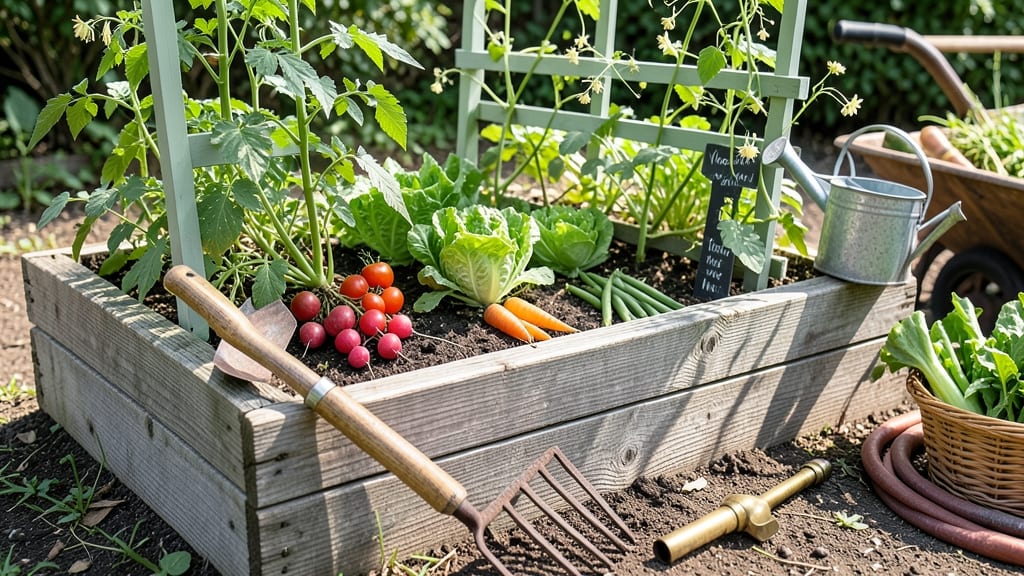
The Fenway Victory Gardens in Boston grew over 50,000 pounds of fresh vegetables during WWII by converting empty lots into shared farming spaces, using simple raised beds and communal effort to supplement wartime food shortages while building neighborhood strength.
The Fenway Victory Gardens weren't just about growing food—they were a lifeline for Boston during WWII when food was scarce. 🌱 These urban farms turned vacant lots into thriving vegetable patches, with families working together to cultivate everything from potatoes to carrots.
The gardens became more than just food sources; they created jobs, taught self-sufficiency, and kept communities connected through shared purpose. What's fascinating is how these gardens proved that even small urban spaces could make a big impact when organized properly.
Today, their legacy lives on in modern community gardens across Boston, where people continue to grow food together while preserving the spirit of resilience that defined the original Victory Gardens.
The key difference now is the focus on sustainability and education, showing how wartime innovations can still inspire today's food movements.
💡 In This Article
- How Fenway Victory Gardens Overcame WWII Challenges
- Modern Revival: Boston Victory Gardens Today
How fenway victory gardens overcame WWII challenges
During WWII, Boston's Fenway Victory Gardens faced extreme constraints: limited soil quality, water rationing, and labor shortages. The solution? A multi-layered approach starting with soil preparation.
Gardeners mixed composted manure and sand into existing urban soil to improve drainage and fertility, creating raised beds that could be easily maintained with basic tools.
These beds were typically 4 feet wide (to allow two-way reaching) and 8 feet long, maximizing space in tight lots while requiring minimal bending—critical for elderly and child participants.
The crop selection was strategic, focusing on high-yield, nutrient-dense vegetables that thrived in Boston's climate. Potatoes, carrots, and cabbage dominated because they grew well in cool autumn temperatures (down to 40°F) and required minimal water once established.
Radishes and lettuce provided quick harvests to boost morale, while beans and peas fixed nitrogen in the soil, improving future yields. 🌱 What's often overlooked is how gardeners planted multiple varieties of the same crop—like 12 different potato types—to ensure some would succeed even if pests or disease struck one variety.
Water conservation became an art form. Gardens used drip irrigation from rain barrels and planted in mounds to reduce evaporation. Children as young as 8 years old were trained to collect rainwater in buckets and distribute it carefully, teaching them both gardening skills and water stewardship.
The gardens also implemented crop rotation to prevent soil depletion, a technique still used in modern organic farming. This wasn't just about growing food—it was about creating a system that could sustain itself with limited resources.
Labor organization was the secret sauce. Gardens operated on a shift system, with families working 2-3 hours daily after school or work. Children participated in "Victory Garden Clubs," where they learned planting techniques and even competed in seedling growth contests.
The communal effort created a sense of purpose that extended beyond food production—it became a social hub where neighbors shared meals, tools, and stories. This collective approach produced over 50,000 pounds of produce annually across just 15 acres of land, proving that urban farming could be both practical and powerful.
One innovative technique was the use of fish emulsion fertilizers made from local fish processing byproducts—a sustainable solution that reduced waste while boosting plant growth. The gardens also repurposed materials like old tires as planters and scrap wood for trellises, demonstrating how creativity could overcome wartime shortages.
These practical adaptations became blueprints for modern urban agriculture, showing how limited resources could yield extraordinary results when combined with community effort and smart planning.
The real breakthrough was turning gardening into a civic duty. By framing food production as patriotic work, organizers motivated participation across all demographics. Schools integrated garden education into curricula, and local businesses donated seeds and tools.
This combination of education, resource sharing, and shared purpose created a movement that extended far beyond the gardens themselves, laying the foundation for Boston's modern community gardening culture. 💛