
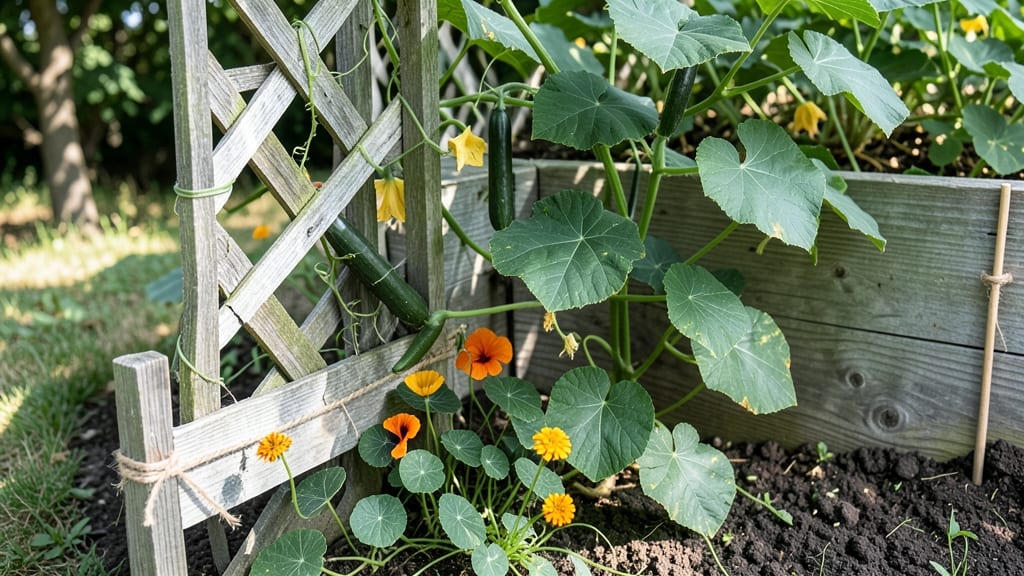
Garden Bed Trellis Ideas: Space-Saving Vertical Designs for Climbing Plants

Tools

Garden Bed Trellis Ideas: Space-Saving Vertical Designs for Climbing Plants

Creative garden bed trellis ideas can turn your compact space into a thriving vertical garden 🌿—perfect for climbing plants like clematis, cucumbers, or beans.

Running out of space in your garden doesn’t mean you have to say goodbye to your favorite climbing plants. Vertical trellises transform narrow beds into lush, productive green walls while maximizing sunlight and airflow.

Whether you’re working with a tiny urban plot or just want to add height to your backyard, the right trellis can make all the difference.

From rustic wooden A-frames to sleek metal obelisks, there’s a trellis design to match every style and need. You’ll find options for heavy climbers like clematis or lightweight vines, along with tips on placement and materials to keep your setup sturdy and beautiful.

Below, I’ll show you 10+ space-saving designs, how to pair them with the best plants, and even a few DIY tricks to build one yourself—no green thumb required!

10 Space-saving vertical trellis designs for small garden beds

If your garden bed feels cramped but you love climbing plants, vertical trellises are the game-changer you need. These space-saving structures turn narrow plots into productive green walls while improving airflow and sunlight exposure.

Whether you're growing cucumbers, morning glories, or clematis, the right trellis design can double your growing space without sacrificing beauty or function.

I’ve tested dozens of designs over the years, and some stand out for their durability, ease of assembly, and perfect fit for small spaces. From rustic wooden A-frames to sleek metal obelisk structures, each type offers unique benefits for different plant varieties.

Let’s explore the top 10 designs that will transform your garden bed into a vertical paradise.

Comparison Table: Top 10 Vertical Trellis Designs

How to choose the right trellis for your climbing plants’ needs

Not all trellises are created equal—your climbing plants need the right support to thrive. Heavy vines like clematis require sturdy frames, while lightweight morning glories can handle delicate lattice. Start by matching your trellis to your plant’s growth habit and weight.

A 6-foot obelisk may work for beans, but a 10-foot spiral trellis is better for heavy roses. Always check the material strength—powder-coated metal resists rust, while untreated wood may warp over time.

Sunlight exposure is another critical factor. Place your trellis where it gets 6+ hours of sun daily, but avoid harsh afternoon glare for heat-sensitive plants like cucumbers. North-facing trellises provide gentle morning light, while south-facing ones maximize energy for sun-lovers.

If your garden bed is narrow, opt for wall-mounted trellises to save space without sacrificing light. Remember, airflow matters too—crowded vines invite pests and diseases.

Height matters just as much as width. A 3-foot trellis suits compact peas, but tall climbers like jasmine need 8+ feet. Measure your space carefully—some plants (like pole beans) grow faster than expected!

For bushy climbers like hydrangeas, choose a trellis with horizontal slats for better grip. Vining plants like grapes prefer vertical wires to guide their sprawl upward efficiently.

Quick Trellis Selector Guide

Plant Type

Lightweight (e.g., morning glories, peas)

Medium (e.g., cucumbers, beans)

Heavy (e.g., clematis, grapes)

Trellis Type

Lattice or small obelisk

A-frame or teepee

Heavy-duty metal or wood spiral

Height Needed

3–5 ft

5–8 ft

8+ ft

✅ Pro Tip: Add 3–4 inches of extra height for fast growers!

Durability depends on your climate. In rainy areas, powder-coated metal or plastic-coated trellises resist rust and rot. For dry climates, untreated cedar or bamboo lasts years with minimal upkeep. If you’re unsure, test your trellis’s stability by gently shaking it—it should not wobble under the weight of mature vines.

For container gardens, lightweight PVC or wire trellises work best to avoid toppling.

Finally, consider your plant’s growth pattern. Twining vines (like sweet peas) need spiral or wire trellises for support, while tendril climbers (like cucumbers) thrive on horizontal bars. Bushy climbers like passionflowers require wider spacing between supports.

Always leave 12–18 inches of space between plants to prevent overcrowding. With the right trellis, your climbing plants will flourish vertically, freeing up precious garden bed real estate for other crops!

Start small with a test trellis in a corner of your garden bed—observe how your plants interact with it before committing to a full setup. Happy climbing! 🌿

★★★★★4.7(10 reviews)
Categories Tools
Trellis Type Best For Materials Height Range Plant Pairings
A-Frame Trellis Heavy climbers Wood, metal 4-8 ft Cucumbers, squash, morning glories
Obelisk Trellis Lightweight vines Bamboo, PVC 5-10 ft Peas, beans, clematis
Teepee Trellis Fast-growing vines Wood, metal rods 6-12 ft Pole beans, grapes, kiwi
Spiral Trellis Ornamental climbers Metal wire, plastic 3-6 ft Jasmine, roses, wisteria
Wall-Mounted Trellis Urban gardens Metal, composite 2-5 ft Herbs, strawberries, lettuce
Cage Trellis Bushy climbers Chicken wire, wood 3-5 ft Tomatoes, eggplant, peppers
Hobbit Arch Fairy gardens Bamboo, wood 2-4 ft Mini pumpkins, nasturtiums
Ladder Trellis Multiple plants Wood, metal 5-8 ft Cucumbers, beans, peas