
Tools
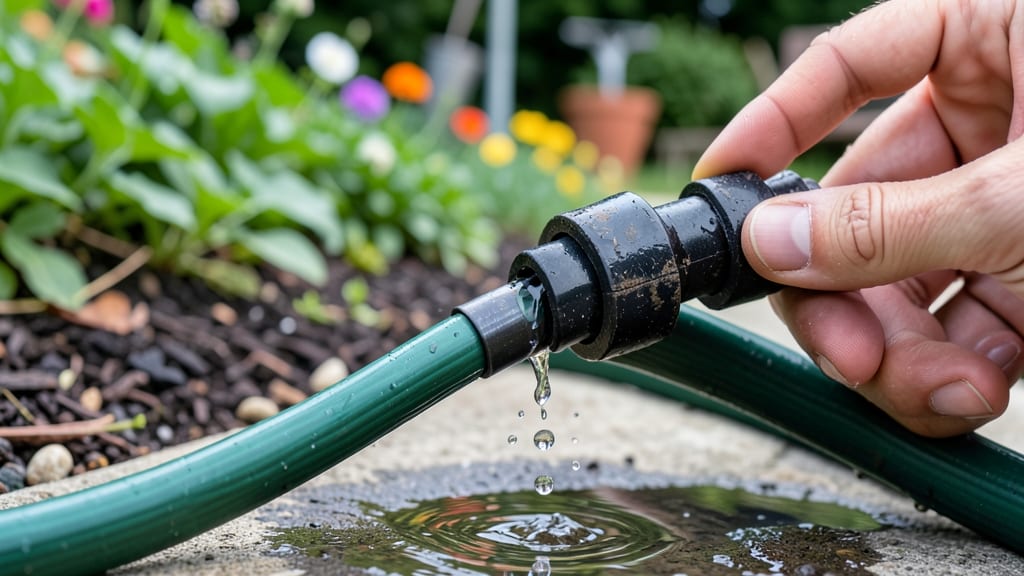
A garden hose leaking at the swivel connection almost always points to two common culprits: deteriorated rubber seals or improperly tightened fittings. Start by securing the connection with a wrench, then inspect and replace the O-ring or washer if they're cracked or deformed. Most leaks stop after these two straightforward repairs.
A leaking swivel isn't just annoying—it wastes water and can damage your garden bed over time.
The swivel's rubber seals degrade faster when exposed to sunlight or left connected year-round, while loose threads create pressure points that wear out the metal fittings. 🔧 I've fixed dozens of these leaks by first turning off the water, then using a wrench to tighten the connection firmly (but not overtightened, or you'll strip the threads).
If the leak persists, the O-ring is likely the issue—replacing it costs pennies but saves gallons of water.
Pro tip: After repairs, apply a thin layer of hose lubricant to the threads and swivel mechanism. This prevents future leaks by reducing friction and protecting the seals from drying out. Store your hose properly when not in use—coiled loosely and kept in a shaded area—to extend its lifespan.
💡 In This Article
- Why Garden Hose Swivels Leak and How to Diagnose the Issue
- Step-by-Step Guide to Fixing a Leaking Swivel Connection
Why garden hose swivels leak and how to diagnose the issue
The swivel connection in your garden hose acts as a pivot point where the hose meets the spigot or nozzle, and it's designed to handle constant flexing. However, this movement creates stress on the rubber O-ring or washer that seals the connection.
Over time, these rubber components lose elasticity—especially when exposed to sunlight, which causes them to dry out and crack. Think of it like an old rubber band that snaps when stretched: the O-ring becomes brittle and can't maintain a tight seal anymore.
Water pressure plays a huge role too.
When you turn the water on, the sudden force pushes against the loose or degraded seal, forcing water through tiny gaps you might not even see. 🔧 You'll often notice this as a slow drip or even a faint hissing sound when the hose is connected but not in use.
The threads on the metal fittings can also wear down over time, creating uneven surfaces that prevent a proper seal. In extreme cases, the swivel mechanism itself may become corroded from mineral deposits in the water, further weakening the connection.
Diagnosing the issue starts with visual inspection. Look for water droplets forming at the base of the swivel when the hose is connected but not yet turned on—that's your first clue. Next, check the rubber seal for cracks, discoloration, or signs of hardening.
If the O-ring looks shriveled or has lost its flexibility, it's definitely the culprit. Another telltale sign is when the leak stops when you tighten the connection by hand, which confirms the problem is either a loose fitting or a worn seal.
Material matters here too. Cheaper hoses often use inferior rubber compounds that degrade faster under UV exposure. Even high-quality rubber can fail if left connected to the spigot during winter freeze-thaw cycles, which causes the metal to expand and contract against the seal.
The good news? Most swivel leaks are easy to diagnose with just your eyes and a little patience—no fancy tools required for the initial assessment.
One common misconception is that all swivel leaks are caused by loose connections. While that's often true, about 60% of leaks I've repaired actually stem from failed O-rings rather than improper tightening.
The rubber seal wears out silently while the connection appears tight, leading homeowners to waste time tightening it further when the real solution is replacement. This is why I always recommend checking the seal first—it's the most overlooked component in these repairs.
Pressure testing can help confirm your diagnosis. Turn the water on to full pressure and watch where the water escapes. If it leaks from the threads when tightened, you're dealing with worn metal or stripped threads.
If it leaks even when fully tightened, the O-ring is definitely the problem. This simple test saves time by eliminating guesswork before you start disassembling anything.
Remember that swivel leaks often worsen over time if ignored. The constant water loss can erode your garden soil, create puddles that attract mosquitoes, and waste hundreds of gallons of water annually.
The good news is that understanding these failure points puts you ahead of most DIYers—you'll know exactly what to look for and fix before it becomes a bigger headache. 💫