
Planting
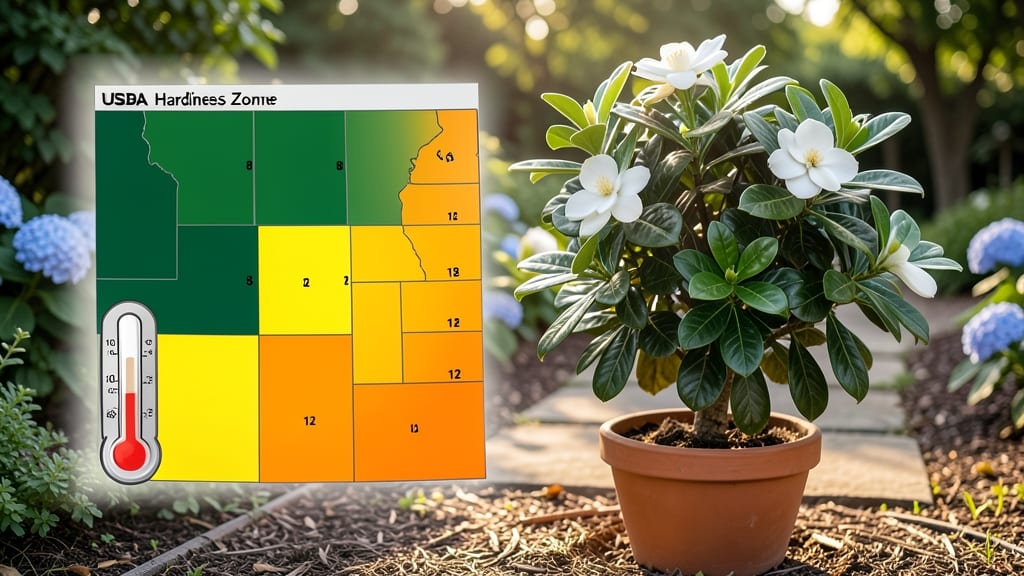
Gardenia plants thrive in USDA hardiness zones 8 through 11, where winter temperatures rarely drop below 10°F (-12°C). They require consistent warmth, humidity, and protection from frost to prevent irreversible damage or death. Container-grown gardenias can tolerate slightly cooler zones with proper winter care.
Gardenia hardiness zones are determined by their tropical origins, which means these fragrant beauties struggle when temperatures dip below 10°F (-12°C). 🌿 The delicate leaves and stems are particularly vulnerable to frost, often resulting in brown, mushy patches that signal permanent damage.
Even in zone 8, gardenias need shelter from harsh winter winds and consistent moisture to survive, making microclimates and protective barriers essential for northern gardeners.
For those in zones 7 and colder, container growing offers flexibility. Moving potted gardenias indoors before the first frost or insulating them with thick mulch and frost blankets can extend their growing season.
I've successfully overwintered gardenias in zone 6 by wrapping containers in bubble wrap and placing them in unheated garages, which mimics their natural tropical humidity requirements.
💡 In This Article
- Understanding Gardenia Cold Sensitivity and Temperature Limits
- Extending Gardenia Growing Regions: Winter Care Strategies
Understanding gardenia cold sensitivity and temperature limits
Gardenias originate from tropical Southeast Asia, where temperatures rarely fall below 60°F (15°C) year-round. This tropical heritage explains why they struggle in colder climates—their leaves contain delicate cells that rupture when exposed to freezing temperatures.
Even a brief dip to 28°F (-2°C) can cause irreversible damage, while prolonged exposure to 32°F (0°C) or lower often kills the plant entirely. The roots are particularly vulnerable, as they lack the protective mechanisms of cold-hardy species like rhododendrons.
The plant's natural defense mechanisms include thick, waxy leaves designed to retain moisture in humid environments, but these adaptations fail in dry, freezing air. When frost forms, ice crystals puncture leaf cells, causing them to leak sap and turn brown—a process called "freeze burn."
The stems also become brittle, making them prone to snapping under their own weight when saturated with ice. 🌱 This is why gardenias in zone 8 often survive winters only when sheltered from direct wind and frost.
What most gardeners don't realize is that gardenias experience a "chilling injury" threshold at 40°F (4°C). Below this temperature, the plant's metabolic processes slow dramatically, and prolonged exposure can lead to poor flowering or even death the following season.
The flowers themselves are particularly sensitive—their petals can blacken and rot within hours of frost contact, even if the rest of the plant appears unaffected. This explains why gardenias in marginal zones often produce fewer blooms than their tropical counterparts.
Zone 8 represents the northernmost limit for outdoor gardenia cultivation because it's the only zone where winter lows rarely drop below 10°F (-12°C)—the absolute minimum these plants can tolerate.
In zones 9-11, gardenias grow with minimal protection, but even there, they require consistent summer humidity (60-80% relative humidity) to thrive.
The key difference between zones 8 and 9-11 is that zone 8 gardenias need microclimate protection (like against a south-facing wall) to avoid occasional cold snaps that can push temperatures below their tolerance limits.
Interestingly, gardenias exhibit different cold tolerance at various growth stages. Young plants (under 2 years old) are far more sensitive than mature specimens, with damage occurring at temperatures just 5°F (3°C) warmer than established plants.
This is why many gardeners recommend waiting until plants are at least 3 years old before attempting outdoor wintering in marginal zones. The thicker bark and more extensive root systems of mature plants provide some natural insulation against cold stress.
For those pushing the limits in zone 7, the difference between success and failure often comes down to a 5°F (3°C) temperature buffer.
While gardenias can't survive prolonged exposure to 10°F (-12°C), they can tolerate brief dips to 15°F (-9°C) for short periods (under 24 hours) if properly insulated. This is the principle behind many successful overwintering strategies in colder climates—creating temporary microclimates that shield the plant from the harshest winter conditions.