
Planting
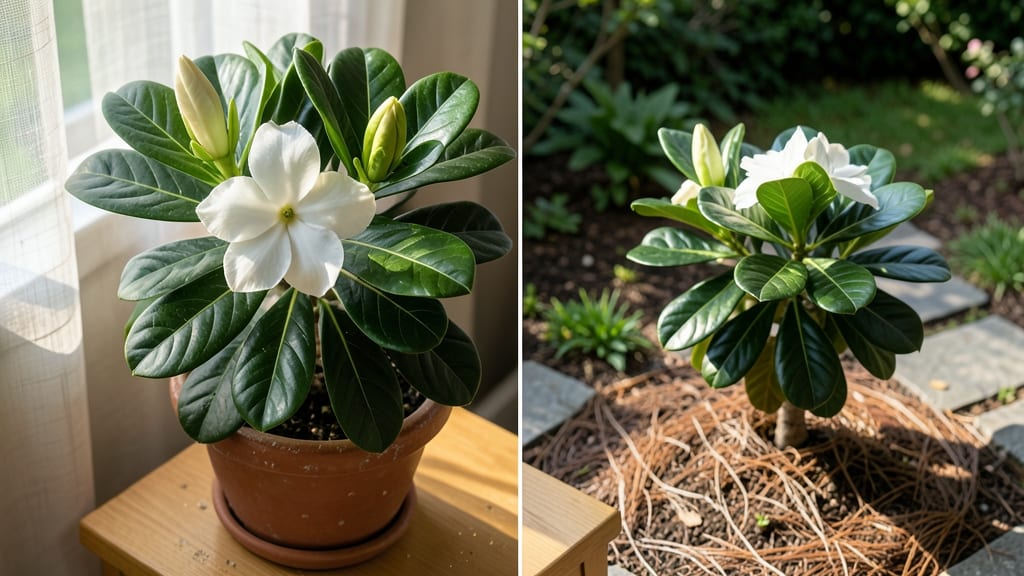
Gardenia plants can flourish both indoors and outdoors, but their care differs significantly—outdoor plants thrive in warm, humid climates with natural sunlight, while indoor gardenias require artificial grow lights, consistent moisture, and temperature control to maintain their signature white blooms and glossy leaves.
Indoor gardenias need bright, indirect light for 6-8 hours daily, since direct sunlight can scorch their delicate leaves. 🌿 I’ve found that placing them near east-facing windows or using full-spectrum LED grow lights helps mimic outdoor conditions.
Outdoor plants, on the other hand, bask in morning sun with afternoon shade in hotter regions—this balance prevents leaf burn while encouraging blooming. The key difference? Indoor plants rely on your active monitoring of humidity (ideally 50-70%) and soil moisture, while outdoor gardenias draw from natural rainfall and airflow.
Both settings share one critical need: well-draining soil. Outdoor gardenias prefer slightly acidic, loose soil mixed with compost, while indoor pots benefit from a blend of peat moss and perlite to prevent root rot.
Pruning is another game-changer—indoor plants need regular trimming of spent blooms to redirect energy, while outdoor plants often self-prune in cooler months. The fragrance and glossy foliage you love? That’s the payoff for getting these details right.
💡 In This Article
- Climate and Environmental Needs for Indoor vs Outdoor Gardenias
- Potting, Pruning, and Fertilizing Tips for Both Settings
Climate and environmental needs for indoor vs outdoor gardenias
Outdoor gardenias thrive in USDA zones 8-11, where daytime temperatures stay between 65-85°F and nighttime dips rarely fall below 55°F. Their natural tropical habitat demands high humidity—think of coastal areas with 60-80% relative humidity—which prevents bud drop and promotes those signature fragrant blooms.
The plant’s glossy leaves actually contain waxy cuticles that help retain moisture, but they’re not foolproof against dry air or intense midday sun. In contrast, indoor gardenias must replicate these conditions artificially, often requiring a humidifier or pebble tray to maintain 50-70% humidity.
The light requirements create the biggest challenge indoors. Gardenias need bright, indirect light for 6-8 hours daily—direct sun causes leaf scorch (look for crispy brown edges), while insufficient light leads to sparse blooming.
I’ve found that east-facing windows provide the perfect balance, or you can supplement with full-spectrum LED grow lights positioned 12-18 inches above the plant for 12-14 hours daily. Outdoor plants adapt beautifully to morning sun with afternoon shade in hotter climates, using their natural circadian rhythms to conserve energy.
The difference? Indoor plants grow more slowly without proper light, while outdoor specimens can double in size seasonally.
Temperature control becomes critical indoors. Gardenias hate drafts and sudden temperature swings—keep them away from AC vents, heaters, or open windows. The ideal indoor range is 60-75°F, with nighttime temperatures never dropping below 55°F.
Outdoor plants handle seasonal changes better, but they still suffer if temperatures dip below 50°F for extended periods. This is why gardenias in cooler climates need winter protection, like moving potted plants to sheltered porches or covering them with frost cloth. The fragrance you love?
It’s actually a stress response—gardenias produce more volatile oils when they feel secure in stable conditions.
Air circulation makes another world of difference. Outdoor plants benefit from natural airflow, which prevents fungal diseases like powdery mildew.
Indoors, you’ll need to mimic this with a small fan on low setting (2-3 mph airflow) for 1-2 hours daily, or by gently shaking the leaves to dislodge dust. The trade-off? Too much airflow indoors can dry out the plant faster, so balance is key.
I’ve seen gardenias in stuffy rooms develop bud rot simply because the humidity wasn’t balanced with proper air movement. The solution? A combination of a humidifier and occasional leaf misting (with room-temperature water) keeps that tropical feel without creating a fungal paradise.
Let’s talk about that intoxicating fragrance—it’s not just for show. The white blooms contain high levels of jasmine-like compounds that attract pollinators outdoors, but indoors, the scent serves as a natural stress indicator.
When your gardenia’s blooms smell stronger than usual, it’s often telling you it’s thirsty or needs more humidity. The glossy leaves? That’s another clue—they’re coated with a waxy cuticle that helps retain moisture, but if they start looking dull, it’s time to adjust your care routine.
Outdoor plants develop this resilience naturally, while indoor specimens need your constant attention to maintain their signature tropical appearance.
One final pro tip: Pay attention to your gardenia’s leaves. Dark green, shiny leaves mean happy conditions, while yellowing or curling indicates either overwatering or underwatering. The soil should stay evenly moist but never soggy—think of a damp sponge.
Outdoor plants often handle seasonal rains better, while indoor plants need your finger-in-the-soil test twice weekly. The key to both settings? Consistency.
Gardenias are divas—they demand attention to detail, but when you nail the light, humidity, and temperature, they reward you with those heavenly blooms and intoxicating scent that make all the effort worthwhile. 🌸