Gardenia Plants Size Guide: Variety-Specific Heights and Growth Habits

Planting

Gardenia Plants Size Guide: Variety-Specific Heights and Growth Habits

Understanding the gardenia plant size you’re bringing home is the first step to giving it the perfect home—whether that’s a cozy container or a sunny garden corner.

If you’re dreaming of fragrant white blooms but wondering how much space your gardenia plant will need, this size guide breaks down everything you need to know—from dwarf varieties that fit small patios to towering specimens that demand landscape planning.

Most gardenias 🌸 grow into 3- to 6-foot shrubs, but some varieties stay compact, while others stretch taller with the right care. We’ll cover how growth habits vary by type, how pruning shapes their size, and why container gardening can be a game-changer for small spaces.

By the end, you’ll know exactly how to plan for your gardenia’s future—whether it’s a 3-foot patio star or a 6-foot garden centerpiece—so you can set it up for success from day one.

🌸 Gardenia Planting Timeline
🌸
☀️
🍂
❄️
🍂 🍁 🍂 🍁
zz
Spring Summer Fall Winter
🌱 Plant: January - February (or year-round in frost-free zones)
🌸 Harvest: N/A (ornamental, not harvested)

Gardenia plant size by variety: height, spread, and growth habits explained

Choosing the right gardenia variety depends heavily on your space and vision. Some varieties stay compact enough for patio planters, while others grow into tall shrubs that need landscape planning.

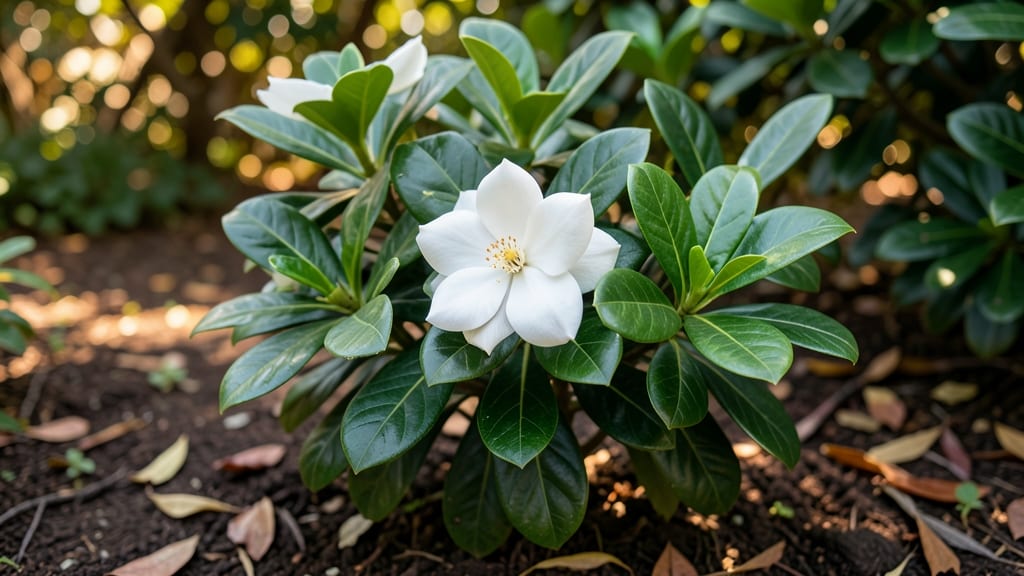
The most common type, Gardenia jasminoides, typically reaches 3-6 feet tall with a 4-5 foot spread, but there are stunning exceptions—like the dwarf varieties that stay under 3 feet. Knowing these differences helps you avoid overcrowding or underutilizing your garden space.

Gardenia growth habits also vary dramatically. Some varieties grow upright and bushy, while others develop trailing vines that need vertical support. The growth rate matters too—some varieties bloom faster, while others take years to reach their full mature size.

For example, Gardenia radicans grows aggressively in warm climates, while Gardenia augusta stays smaller but denser. Let’s break down the specifics so you can pick the perfect fit for your garden.

🌱

How to control gardenia plant size: pruning, training, and container tips

Managing your gardenia’s size is key to keeping it healthy and blooming beautifully. Without proper control, these fragrant shrubs can quickly outgrow their space, becoming unruly and losing their compact shape.

The good news? With the right pruning techniques and container training, you can easily shape your gardenia to fit any garden or patio.

Start by understanding your gardenia’s natural growth habit. Most varieties like Gardenia jasminoides grow as upright shrubs reaching 3-6 feet tall, while trailing types like Gardenia radicans can spread 4-5 feet wide.

Knowing this helps you decide whether to prune for height or width control. For container gardening, dwarf varieties (like ‘Kleim’s Hardy’) stay under 3 feet tall, making them perfect for balconies.

Pruning & Training Gardenias for Size Control

Pruning for Compact Shape

  • ✂️ When: After blooming (late spring)
  • ✂️ How: Cut back 1/3 of new growth to encourage bushiness
  • ✂️ Why: Promotes denser foliage and more blooms

Container Training Tips

  • 🪴 Size: 12-18 inch pots for dwarf varieties
  • 🪴 Soil: Acidic, well-draining mix with perlite
  • 🪴 Prune: Pinch back tips to prevent legginess
⚠️ Warning: Avoid heavy pruning in fall or winter—it reduces next year’s blooms!

For upright gardenias, focus on structural pruning—remove dead or crossing branches first, then trim back 1/3 of the oldest stems to rejuvenate growth. This method keeps your plant balanced and blooming while controlling height.

Trailing varieties, however, need a different approach: prune longest stems to encourage a fuller, bushier habit rather than letting them sprawl.

Container gardening offers the easiest way to control size, especially for small spaces. Choose dwarf varieties like ‘Radicans’ or ‘Kleim’s Hardy’, which thrive in 12-18 inch pots. Use a well-draining, acidic mix with perlite or orchid bark to prevent root rot.

Water consistently—containers dry out faster than in-ground plants—and fertilize monthly during spring and summer with an acid-loving plant food.

Leggy growth is a common issue with gardenias, often caused by too little light or overcrowded roots. To fix it, move your plant to bright, indirect light and prune back overly long stems to encourage branching.

For container plants, consider root pruning—gently tease the roots when repotting to stimulate new growth. This simple step can transform a lanky gardenia into a compact, bushy beauty in just a few months.

Remember, gardenias respond best to gentle, regular pruning rather than drastic cuts. By mastering these techniques, you’ll keep your gardenia blooming abundantly while maintaining the perfect size for your space. Happy pruning! 🌸

★★★★★4.8(14 reviews)
Categories Planting
Variety Mature Height (ft) Mature Spread (ft) Growth Rate Ideal Spacing (in-ground) Notes
Gardenia jasminoides 3-6 ft 4-5 ft Moderate 4-5 ft apart Classic fragrant blooms; needs pruning
Gardenia augusta 2-4 ft 3-4 ft Slow to moderate 3-4 ft apart Dense foliage; great for hedges
Gardenia radicans 6-10 ft 5-8 ft Fast 6-8 ft apart Vining habit; needs trellis
Gardenia 'Kleim's Hardy' 3-5 ft 3-4 ft Moderate 3-4 ft apart Cold-hardy; great for USDA Zone 7
Gardenia 'Radicans' 10+ ft (climbing) 3-5 ft (width) Fast Plant near fence/trellis Needs vertical support
Gardenia 'Veitchii' 2-3 ft 2-3 ft Slow 2-3 ft apart Dwarf variety; perfect for containers