
Planting
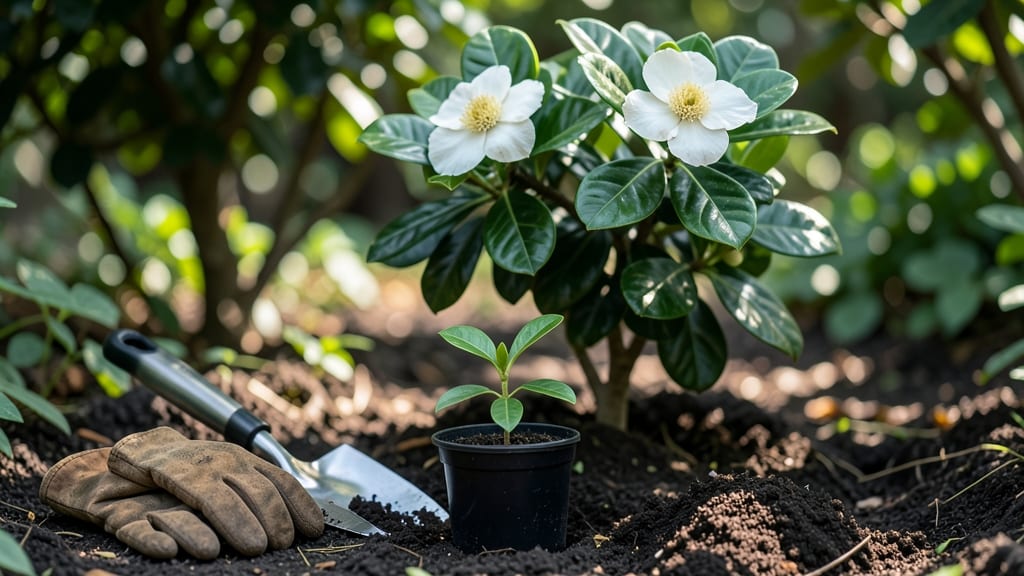
Gardenia planting zones span USDA Hardiness Zones 7 through 11, where consistent warmth prevents winter dieback. These tropical shrubs typically perish when temperatures drop below 30°F, though some cold-hardy varieties may survive brief dips to 20°F with protection.
Understanding these zones helps you avoid common mistakes like planting too early in spring or assuming all gardenias share the same cold tolerance. 🌿 The key difference between zones 7 and 11 isn't just about summer heat—it's how your local microclimate handles winter chill.
For example, a gardenia in zone 7 might thrive near a south-facing wall where afternoon sun warms the roots, while the same plant in an exposed spot could suffer frost damage.
I've seen gardeners in marginal zones extend the growing season by using frost blankets or moving potted plants indoors before the first frost.
What's interesting is how gardenias react to sudden temperature drops. Unlike some plants that go dormant, gardenias often show visible damage when exposed to cold, including leaf burn and stem dieback. This makes them less forgiving than other tropical plants like hibiscus, which can recover from light frosts.
The solution? Pay attention to your last frost date and either plant in containers for mobility or choose cold-hardy varieties like 'Radicans' or 'Kleim's Hardy', which can handle slightly cooler conditions.
💡 In This Article
- USDA Zones for Gardenias: Exact Heat and Cold Tolerance Limits
- Microclimate Hacks for Growing Gardenias Outside Ideal Zones
USDA zones for gardenias: exact heat and cold tolerance limits
Gardenia plants originate from tropical and subtropical regions, which explains why their ideal growing range falls within USDA Zones 7 through 11. These zones represent areas where winter temperatures rarely drop below 10°F, providing the consistent warmth gardenias need.
The critical threshold for most gardenia varieties is 30°F—when temperatures fall below this point, cellular damage occurs in the leaves and stems, leading to irreversible harm. 🌸 What's fascinating is how this threshold varies by variety: while standard gardenias may perish at 28°F, cold-hardy types like 'Radicans' can survive brief exposures to 20°F.
Zone distinctions matter because they reflect both minimum winter temperatures and cumulative cold exposure. For example, Zone 7 (0-10°F) sees occasional dips to 15°F, while Zone 11 (40-50°F) remains above 25°F year-round. The real danger for gardenias isn't just the cold itself, but how quickly temperatures fluctuate.
A sudden drop from 50°F to 25°F can shock the plant's root system, which prefers stable soil temperatures above 55°F. This is why gardenias often fail in Zone 6 (below -10°F) unless given intensive protection—the roots simply can't recover from prolonged cold stress.
The science behind this sensitivity lies in gardenias' tropical physiology. Their large, glossy leaves have minimal wax coating, making them prone to frost damage. When ice crystals form in the leaf tissue, they rupture cell walls, causing the characteristic brown "frost burn" you'll see on damaged foliage.
The stems are equally vulnerable—they contain vascular tissues that can't withstand freezing, leading to stem dieback. 🌿 Unlike deciduous plants that drop leaves to conserve energy, gardenias continue photosynthesizing until temperatures drop too low, which is why they show visible damage even from light frosts.
What most gardeners overlook is how frost timing affects survival. A late spring frost (after buds have formed) can be more damaging than a hard winter freeze because the plant is actively growing.
This is why gardenias in marginal zones often need to be moved indoors before 40°F nighttime temperatures arrive. The root zone is particularly critical—if soil temperatures fall below 45°F for more than a few days, root growth stops, and the plant becomes stressed.
This is why mulching with 4-6 inches of organic matter (like pine straw) is essential in Zone 7—it insulates roots and maintains soil temperatures 10°F warmer than ambient air.
Here's a quick comparison of how gardenias perform across zones:
- Zones 9-11: Thrives outdoors year-round with minimal protection
- Zone 8: Needs winter protection (mulch, burlap wraps) for 20°F dips
- Zone 7: Requires container culture or indoor overwintering for 15°F nights
- Zone 6 and below: Only possible with cold-hardy varieties and intensive winter care
The key takeaway is that gardenias aren't just about summer heat—they're about avoiding cold stress. Even in Zone 8, where winter lows might only reach 15°F, a single night below 25°F can cause significant damage.
This is why I always recommend monitoring your local frost dates and having a plan to protect your plants before temperatures drop. 💫