
Light Requirements
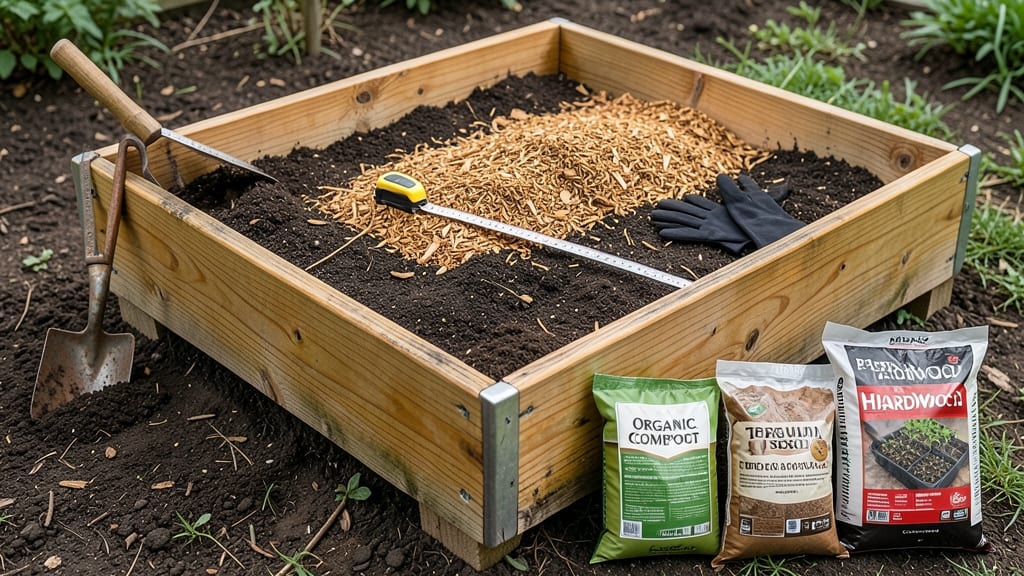
To determine how much dirt you need for your raised garden, multiply the garden’s square footage by the desired depth (typically 6–12 inches) and divide by 216 (cubic feet per cubic yard). For example, a 4’x8’ garden at 10 inches deep requires about 1.3 cubic yards of soil mix.
Figuring out the right amount of soil for your raised bed starts with measuring your garden's footprint and depth. A 6-inch depth is standard for most vegetables, but deeper beds (up to 12 inches) improve root growth for larger plants.
The key is converting all measurements to cubic feet first—this is where most beginners trip up. For instance, a 4’x4’ bed with 8-inch depth needs roughly 0.7 cubic yards, while a 10’x12’ bed at 10 inches jumps to 5.3 cubic yards.
Always round up slightly to account for compaction during filling. 🌱
Pro tip: Buy soil in bulk from local suppliers to save money, and consider mixing 60% topsoil with 30% compost and 10% perlite for optimal drainage and nutrient retention. This blend prevents soil from becoming too dense, which can stunt plant growth.
If you're working with limited space, smaller bags (1-2 cubic feet) work well for top-ups or repairs.
💡 In This Article
- Calculating Raised Garden Soil Volume by Dimensions
- Best Soil Mixes for Raised Garden Beds
Calculating raised garden soil volume by dimensions
Understanding soil volume starts with your garden's dimensions. First, measure the length and width in feet—most raised beds range from 4’x4’ to 8’x12’. Then, convert your desired depth from inches to feet (e.g., 10 inches ÷ 12 = 0.83 feet).
The magic happens when you multiply these three numbers: length × width × depth. This gives you cubic feet, which is critical because soil is sold by the cubic yard, not cubic foot.
Here's why the conversion matters: 1 cubic yard equals 27 cubic feet (3 feet × 3 feet × 3 feet). So when you divide your cubic feet total by 27, you get cubic yards.
For example, a 4’x8’ bed with 10-inch depth equals 25.6 cubic feet (4 × 8 × 0.83), which converts to 0.95 cubic yards. Round up to 1 cubic yard to account for settling and uneven edges. This precision prevents running short or buying excess soil.
Depth matters more than you might think. Most vegetables thrive in 6–12 inches of soil, but deeper beds (up to 18 inches) benefit root crops like carrots or potatoes. The deeper the soil, the more water and nutrients plants can access.
However, deeper doesn't always mean better—if your bed exceeds 12 inches, you'll need to add drainage material (like gravel) at the bottom to prevent waterlogging. 🌱
Another common mistake is ignoring the frame's thickness. Wooden frames (typically 2–4 inches wide) reduce usable space. For accurate calculations, subtract the frame's width from both length and width before measuring depth.
For instance, a 4’x4’ frame with 2-inch thick boards leaves only 3’x3’ of usable planting area. This adjustment can save you 20–30% of soil in tight spaces.
For irregularly shaped beds, break them into rectangles or squares, calculate each section separately, then sum the totals. A kidney-shaped bed might be split into a 4’x6’ rectangle plus a 2’x3’ triangle.
This method ensures you don’t overestimate for complex designs. Pro tip: Use a tape measure with a level to maintain consistent depth across the bed—uneven layers can cause drainage issues.
Finally, consider soil compaction. Fresh soil settles 10–25% after watering, so always order 10–15% more than your calculation. For example, if your math says 2 cubic yards, buy 2.2 cubic yards.
This buffer accounts for both settling and minor errors in measurement. The last thing you want is to run out mid-project and need a rushed (and expensive) delivery.