Light Requirements
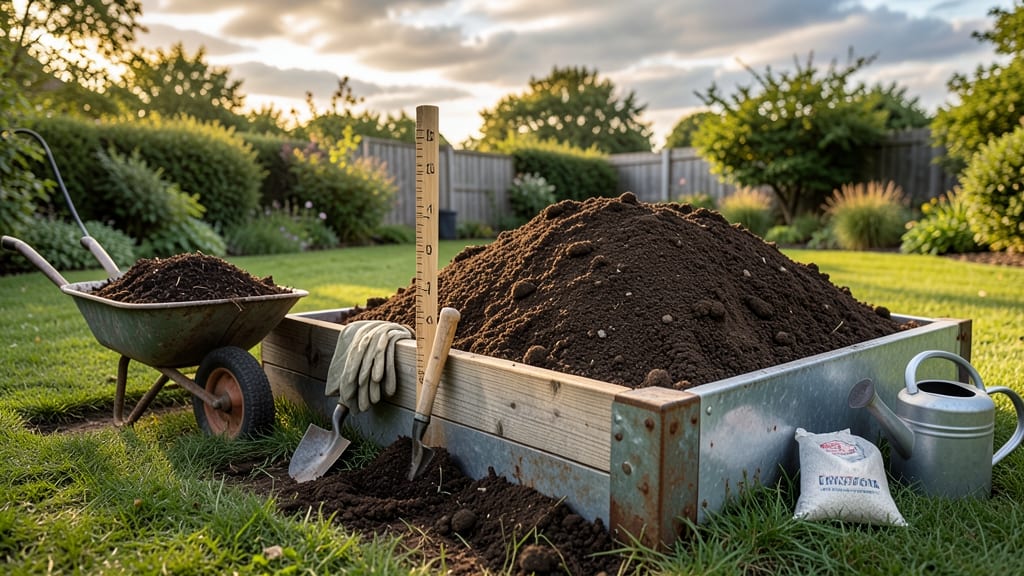
Filling your raised garden bed with the right amount of soil means knowing how much soil to fill raised garden bed for your plants to thrive without wasting a bag.
Picture this: you’ve spent hours building the perfect raised bed, only to realize halfway through filling it that you’ve either overbought soil or left roots gasping for space. That’s why getting the math right upfront saves you money, stress, and a second trip to the garden center.
The key is simple: multiply your bed’s length, width, and depth (in feet), then adjust for the plants you’re growing. A 6-inch depth works for shallow-rooted herbs, while deep-rooted veggies like tomatoes need 12–18 inches of soil.
Below, I’ll walk you through the exact formula, common mistakes to avoid, and how to pick the best soil mix for your crops.
By the end, you’ll have a foolproof way to calculate soil volume—no guesswork, just perfect depths every time.
Raised garden bed soil depth formula: calculate soil volume by bed size and plant type
Calculating the exact amount of soil for your raised garden bed starts with simple math: multiply your bed's length × width × depth. But here's the catch—most gardeners overlook how plant root zones influence soil depth.
A 6-inch depth works for lettuce, while tomatoes need 18 inches to thrive. Let's break down the formula so you never guess again.
First, measure your bed's interior dimensions (not the frame). A 4'×8'×12" deep bed requires 32 cubic feet of soil. But if you're planting carrots or potatoes, you'll need to adjust depth to 18 inches—that's 48 cubic feet.
Always account for drainage layers (like 2-4 inches of gravel) when calculating total fill volume.
Here’s the soil volume formula in action: Length (ft) × Width (ft) × Depth (ft) = Cubic Feet Then convert cubic feet to bags or cubic yards (1 cubic yard = 27 cubic feet).
For example, a 3'×6'×12" bed needs 1.5 cubic yards of soil—about 12 standard bags (2 cubic feet each).
Don’t forget to factor in soil compaction. Loose, fluffy soil settles over time, so buy 10-15% more than your calculation. For the same 3'×6'×12" bed, that means rounding up to 1.7 cubic yards to avoid running short mid-project.
| Bed Size (L×W×D) | Cubic Feet | Cubic Yards | Standard Bags Needed (2 cu ft) | Recommended Depth for Plants |
|---|---|---|---|---|
| 2'×4'×6" | 0.5 cu ft | 0.02 cu yd | 3 bags | Herbs, shallow-rooted veggies |
| 4'×8'×12" | 32 cu ft | 1.18 cu yd | 16 bags | 6-12" for most vegetables |
| 3'×6'×18" | 48 cu ft | 1.78 cu yd | 24 bags | 18" for deep-rooted plants |
| 8'×12'×12" | 96 cu ft | 3.56 cu yd | 48 bags | 12" for mixed crops |
| Custom (L×W×D) | (L×W×D)/12 | (L×W×D)/46656 | (L×W×D)/24 | Adjust based on plant roots |
*Add 10-15% extra for compaction and drainage layers.
Pro tip: Use a soil calculator for complex shapes or layered beds. For example, a keyhole-shaped bed requires dividing the space into rectangles, calculating each section separately, then summing the totals. Always test your soil's drainage—poor drainage can drown roots even in a perfectly sized bed.
For organic gardening, blend 60% topsoil, 30% compost, and 10% perlite to improve aeration. This mix reduces compaction and retains moisture better than pure topsoil. Label your bags or order pre-mixed raised bed soil to save time and ensure consistency.
When in doubt, overestimate. It’s easier to return leftover soil than to scramble for more mid-planting. And if you’re reusing soil from another bed, sterilize it first with solarization or a 10% hydrogen peroxide solution to kill weeds and pathogens.
Remember: Soil depth = root happiness. Shallow beds stunt growth, while over-deep beds waste resources. Stick to the plant-specific guidelines in the table above, and your garden will reward you with healthier, more abundant harvests all season long.
Now that you’ve mastered the math, grab your measuring tape and get ready to fill that bed like a pro! Your plants will thank you with stronger stems and bigger yields from day one.
Best soil depths for different plants: root zone requirements for vegetables, herbs, and flowers
Not all plants need the same soil depth to thrive. While tomatoes and carrots require deep, airy soil to support their extensive root systems, lettuce and radishes are happy in shallow layers. Understanding these differences helps you calculate soil volume accurately for your raised bed.
For example, a 4x8-foot bed filled to 12 inches for shallow-rooted plants will need less soil than one filled to 18 inches for deep-rooted varieties.
Deep-rooted plants like tomatoes, potatoes, and asparagus demand at least 12–18 inches of soil to prevent root binding and nutrient deficiencies. Shallow-rooted plants such as spinach, basil, and marigolds, however, thrive in just 6–8 inches.
Mixing plant types in one bed? Prioritize the deepest-rooted variety to ensure all plants have adequate space.
| Plant Type | Ideal Soil Depth | Notes |
|---|---|---|
| Vegetables (Deep Roots) | 12–18 inches | Tomatoes, carrots, potatoes, corn |
| Vegetables (Shallow Roots) | 6–8 inches | Lettuce, radishes, spinach, herbs |
| Flowers (Perennials) | 10–12 inches | Daylilies, coneflowers, lavender |
| Flowers (Annuals) | 6–10 inches | Marigolds, zinnias, petunias |
| Herbs | 6–12 inches | Basil, rosemary, thyme, parsley |
For herbs like rosemary and thyme, which have moderate root depths, aim for 8–12 inches of soil. These plants benefit from slightly deeper beds to encourage stronger root growth, especially in drought-prone climates.
If your raised bed is only 6 inches deep, stick to shallow-rooted herbs like basil or cilantro to avoid stunted growth.
When planning your raised bed, consider layering soil types to optimize depth. Start with a 2-inch drainage layer of gravel or coarse sand at the bottom, followed by a 4-inch layer of compost to retain moisture and nutrients.
The remaining depth can then be filled with a mix of topsoil and compost, tailored to your plants' needs. This approach ensures proper drainage while maximizing root space.
Adjust your soil depth calculations based on the mix of plants you’re growing. If your bed is 4 feet wide and 8 feet long, filling it to 12 inches for a mix of deep and shallow-rooted plants means you’ll need roughly 3.2 cubic feet of soil.
For deeper beds (up to 18 inches), multiply the volume by 1.5 to account for the extra depth. Always round up slightly to avoid running short mid-project.
Remember, soil quality matters just as much as depth. Even with the perfect depth, poor soil can limit plant growth. Amend your soil with organic matter like compost or aged manure to improve texture and fertility.
Test your soil’s pH and adjust with lime or sulfur if needed—most vegetables prefer a slightly acidic to neutral pH (6.0–7.0). 🌱