
Light Requirements
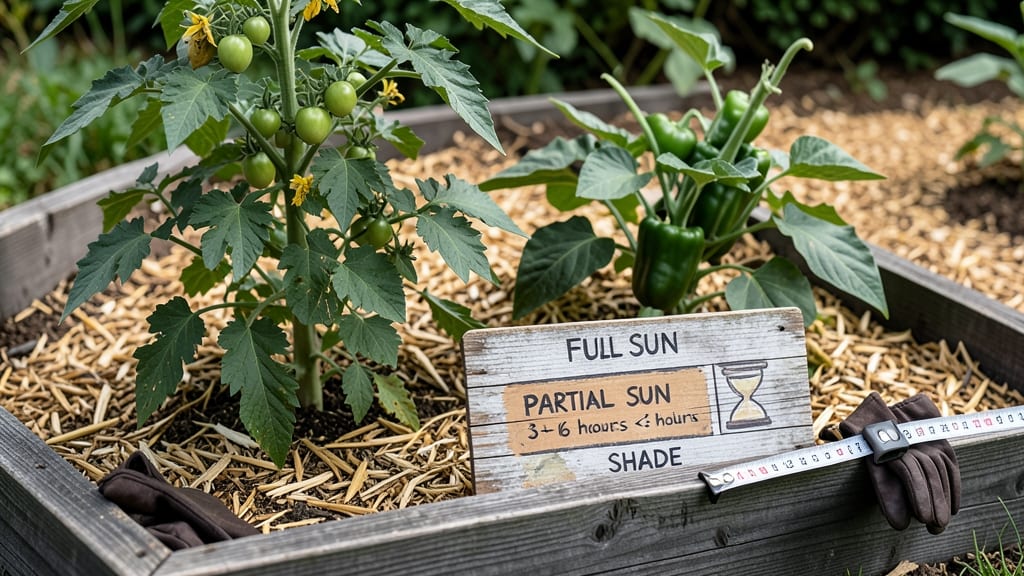
To grow a thriving vegetable garden, you need how much sun does a vegetable garden need—6 to 8 hours of sunlight daily for most crops, though some tolerate less. Getting this right is the difference between a bountiful harvest and wasted effort.
Struggling to decide where to plant your tomatoes or lettuce? The right amount of sunlight can mean the difference between a thriving vegetable garden and a disappointing harvest—here’s the science-backed guide to get it right.
Think about your garden layout: a south-facing spot gets the most light, but even there, shadows from fences or trees can cut hours. I’ll show you how to measure what you’ve got and adjust placements so every plant gets its ideal dose.
From full-sun lovers like peppers to shade-tolerant greens, you’ll learn exactly how many hours each needs—and how to fix common mistakes that leave your garden in the dark.

Sun requirements by vegetable type: full sun vs. partial shade breakdown
Understanding your garden's sunlight map is the first step to growing a productive vegetable harvest. Not all plants thrive under the same conditions—some vegetables crave 6+ hours of full sun, while others prefer partial shade or even low-light conditions.
Getting this right means the difference between lush, flavorful produce and stunted, bitter vegetables. Let’s break down exactly what each type needs to shine.
First, let’s clarify the terms: full sun means 6-8+ hours of direct sunlight daily, partial shade is 3-6 hours, and low light refers to less than 3 hours.
Most vegetables fall into the first two categories, but knowing the specifics helps you design a garden that works with your space—not against it. For example, tomatoes and peppers demand full sun, while leafy greens like spinach adapt well to partial shade.
| Vegetable | Sunlight Needs | Ideal Hours | Notes |
|---|---|---|---|
| Tomatoes | Full Sun | 6-8+ hours | Needs consistent sun; leggy if shaded |
| Peppers | Full Sun | 6-8+ hours | Heat-loving; avoid afternoon shade |
| Cucumbers | Full Sun | 6-8 hours | Vining types need trellis support |
| Spinach | Partial Shade | 3-6 hours | Bolts in full sun; prefers cooler temps |
| Lettuce | Partial Shade | 3-5 hours | Heat-sensitive; mulch to retain moisture |
| Carrots | Partial Sun | 4-6 hours | Deep soil needed; avoid overcrowding |
| Green Beans | Full Sun | 6-8 hours | Bush types tolerate slight shade |
| Kale | Partial Shade | 3-5 hours | Cold-hardy; sweeter after frost |
| Onions | Full Sun | 6+ hours | Needs consistent moisture |
| Radishes | Partial Sun | 3-6 hours | Fast-growing; harvest early |
If you’re working with a shady garden, focus on leafy greens like spinach, Swiss chard, or arugula. These thrive with just 3-4 hours of morning sun and can even tolerate dappled shade from trees. For full-sun lovers, prioritize south-facing beds where sunlight lingers longest.
Pro tip: Use a sun calculator (available online) to map your garden’s light exposure over a week—this helps you spot microclimates where shade might be sneaking in unexpectedly.
Seasonal shifts matter too. In summer, the sun arcs higher, while winter light is softer and lower. Adjust your planting plan accordingly: move heat-sensitive crops like lettuce to partial shade in July, but give winter squash a full-sun spot where it can soak up every ray.
A simple trick is to plant taller, full-sun crops like corn on the north side of shorter plants to avoid shading them prematurely.
What about container gardening? Small spaces often mean limited sunlight, so opt for compact varieties of full-sun plants like bush beans or cherry tomatoes. Place pots on a reflective surface (like a light-colored deck) to bounce extra light onto leaves.
For partial-shade containers, choose herbs like parsley or radishes, which are forgiving and productive even with less sun.
One common mistake is assuming "morning sun" is enough for full-sun plants. While morning light is gentler, afternoon sun
How to measure sunlight in your garden and adjust plant placement
Not all parts of your garden receive the same amount of sunlight—and that matters more than you might think. Tomatoes planted in shade will produce bitter fruit, while leafy greens like spinach may bolt in too much sun.
The key is understanding your garden's microclimates and matching plants to their perfect light conditions. Here’s how to measure sunlight accurately and adjust your layout for maximum success.
Start by observing your garden’s sunlight patterns over a 7-10 day period, as weather can vary. Use a simple sunlight journal or app like SunCalc to track when shadows fall across your space.
Note the start and end times of direct sunlight for each planting area—this will reveal whether a spot gets full sun (6+ hours), partial sun (3-6 hours), or low light (less than 3 hours).
- Step 1: Place a white stake or chalk marker in each planting area. Mark the ground where shadows fall every hour from 8 AM to 6 PM for 3 consecutive days.
- Step 2: Use a sunlight meter (or smartphone app) to measure lux levels (10,000+ lux = full sun, 3,000-10,000 = partial sun, <3,000 = low light).
- Step 3: Map your garden by color-coding zones: yellow = full sun, green = partial sun, blue = low light. Adjust based on seasonal sun shifts (e.g., winter shadows).
- Step 4: Group tall plants (e.g., corn, sunflowers) on the north side of shorter crops (e.g., lettuce, radishes) to avoid shading them.
- Step 5: Test reflective surfaces like white gravel or mirrors to redirect sunlight to shady corners during peak sun hours (10 AM–4 PM).
Once you’ve mapped your garden, group sun-loving vegetables like peppers and cucumbers in the full-sun zones, while partial-shade plants such as Swiss chard or bush beans can thrive in 3-6 hours of light.
For mixed-light gardens, use vertical trellises to lift vining plants (e.g., pole beans) out of shade cast by taller neighbors.
Don’t forget to account for seasonal sun shifts. A spot that gets full sun in summer might only receive 4 hours in winter due to lower angles.
Plan for this by selecting flexible crops (e.g., kale tolerates partial shade) or using seasonal shade cloths to protect heat-sensitive plants like lettuce.
Pro tip: If your garden has uneven sunlight, consider container gardening to move plants as needed. For example, relocate tomato plants to sunnier spots in early summer when they need more light for fruiting. With a little planning, you can turn even tricky spaces into productive harvests!