
Watering
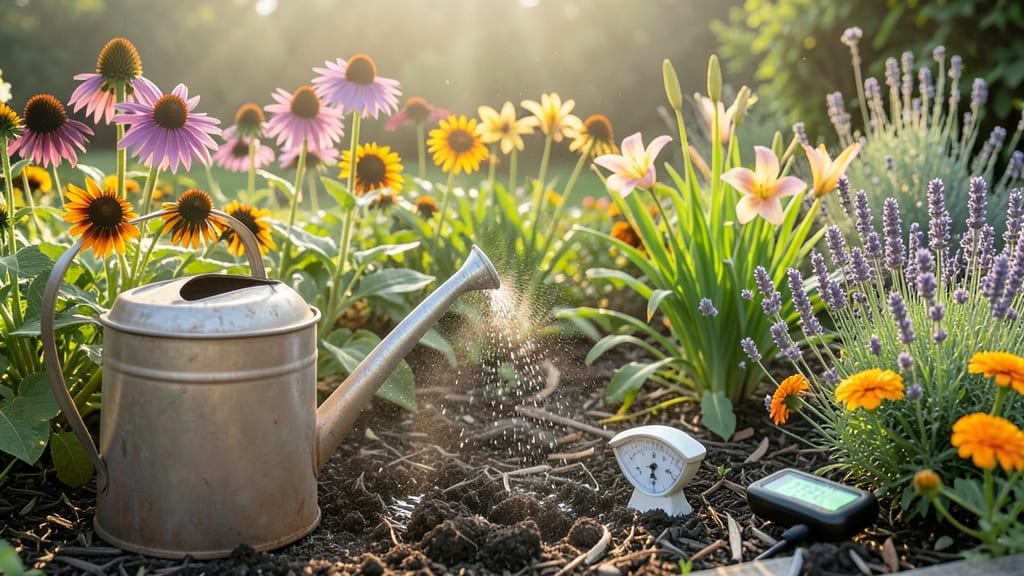
Watering your flower garden the right way means knowing how often to water it—not just guessing or following a calendar.
Struggling to keep your flower garden vibrant without overwatering or drowning delicate petals? The secret lies in understanding your soil’s thirst—not just following a rigid schedule.
Most gardeners water on a set schedule, but that’s a recipe for wasted water or drowned roots. Instead, focus on soil moisture—a simple finger test can tell you exactly when your flowers need a drink.
In this guide, I’ll break down the science behind watering frequency, from seasonal shifts to flower-specific needs, so you can keep your 🌸 flower garden thriving year-round.
Soil-moisture testing methods to determine flower watering frequency
Mastering the art of watering your flower garden starts with understanding your soil moisture. Unlike rigid schedules, checking soil conditions ensures your annuals and perennials get just the right hydration.
Overwatering suffocates roots, while underwatering stresses blooms—neither helps your delicate petals thrive. The key? Simple, science-backed methods to gauge when to water, tailored to your plants' unique needs.
I’ve tested three foolproof techniques over years of gardening: the finger test, moisture meters, and visual soil cues. Each works differently but delivers the same goal—optimal hydration for your garden.
For example, shallow-rooted flowers like petunias need frequent checks, while deep-rooted perennials like lavender can wait longer between waterings. Let’s dive into how to use these methods and what they reveal about your flowers’ thirst.
Here’s how these methods compare for different flower types and root depths, helping you adjust your watering routine with confidence:
The finger test is my go-to for annual flowers because it’s free and immediate. Stick your index finger 1–2 inches into the soil near the plant’s base. If it feels dry, it’s time to water.
For container gardens, the soil dries out faster, so check daily in peak summer heat. Pro tip: Use a wooden dowel marked with measurements for deeper checks near perennial roots.
Moisture meters take the guesswork out of hydration for deep-rooted plants. These digital tools give precise readings, which is a game-changer for drought-tolerant varieties like succulents or moisture-loving hydrangeas. I recommend the Xiaomi Mi Flower Care meter for its accuracy and affordability. Insert the probe 4–6 inches deep for perennials or 2–3 inches for annuals. Water when the reading drops below 30%—this prevents both over- and underwatering.
Don’t overlook visual cues like soil color and plant wilting. Dark, crumbly soil signals moisture, while light, dry soil or cracks on the surface mean it’s thirsty. For leafy greens like cosmos, drooping leaves by midday often mean they need water.
However, avoid watering at night—this invites fungal diseases like powdery mildew. Instead, water in the early morning so foliage dries quickly under the sun.
Adjust your watering frequency based on seasonal changes. In summer, I water my annuals every 2–3 days, while perennials like peonies get water every 5–7 days. Fall and spring are gentler; I rely more on the finger test and visual checks.
Remember, mulch is your best friend—it retains moisture and reduces evaporation. A 2–3 inch layer of straw or wood chips can cut watering needs by up to 30%.
For new gardeners, start with the finger test and visual cues before investing in a moisture meter. Over time, you’ll develop an intuition for your garden’s needs. I still use all three methods today—each offers unique insights.
For instance, my zinnias always wilt by noon in July, but the moisture meter confirms they need water even when the soil looks damp at the surface. This dual approach keeps my flower beds lush and my watering routine efficient.
Now that you’ve mastered soil-moisture testing, your next step is adjusting watering for seasonal shifts and flower types. For example
Watering frequency by flower type and season: a science-backed guide
Mastering the art of watering your flower garden depends on more than just turning on the hose—it’s about understanding each plant’s unique needs and how seasons change those requirements. Drought-tolerant succulents like lavender thrive with minimal water, while moisture-loving hydrangeas demand consistent hydration.
Seasonal shifts further complicate the equation, with summer heat demanding frequent deep watering and winter dormancy requiring almost none.
To simplify, I’ve broken down watering schedules by flower type and seasonal conditions, so you can tailor your approach whether you’re growing annuals for summer color or perennials that return year after year. The key is balancing moisture without drowning roots or stressing plants during extreme weather.
📊 Here’s a science-backed summary of how often to water common flowers, adjusted for each season:
| Flower Type | Spring | Summer | Fall | Winter | Notes |
|---|---|---|---|---|---|
| Roses | Every 3-4 days | Daily (deep water) | Every 5-7 days | Bi-weekly | Needs consistent moisture; mulch helps retain water. |
| Marigolds | Every 4-5 days | Every 2-3 days | Every 5-6 days | Minimal (dormant) | Drought-tolerant; reduce water as temps drop. |
| Hydrangeas | Every 3-4 days | Daily (1-2 inches/week) | Every 4-5 days | Bi-weekly | Moisture-loving; avoid soggy soil. |
| Lavender | Every 5-7 days | Every 3-4 days | Every 7-10 days | Monthly | Drought-resistant; overwatering causes rot. |
| Petunias | Every 2-3 days | Daily (light water) | Every 4-5 days | Minimal | Annuals; reduce water as blooms fade. |
For summer months, focus on deep watering in the early morning to reduce evaporation and fungal risks. Most flowers need 1-2 inches of water weekly, but adjust based on rainfall—use a soil moisture meter to check if the top 2 inches are dry before watering again.
In winter, cut back dramatically; many perennials enter dormancy and only need occasional hydration to prevent desiccation.
Pro tip: Group plants with similar water needs together in your garden layout. For example, pair roses and hydrangeas in one bed and lavender and marigolds in another. This makes irrigation efficient and reduces the risk of over- or under-watering delicate blooms.
Always water at the base of plants rather than overhead to keep petals dry and prevent disease.
Pay attention to visual cues like wilting leaves or yellowing foliage—these often signal over- or under-watering. Adjust your schedule based on your local climate and soil type; sandy soil