
Size
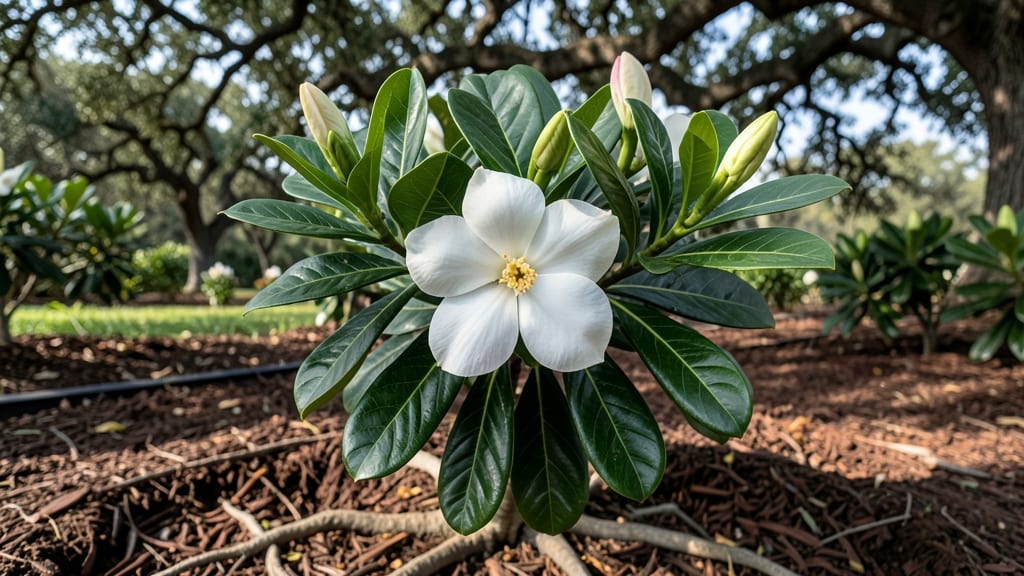
Gardenia plants can grow anywhere from 2 to 15 feet tall, depending on the variety—so if you're dreaming of fragrant blooms but worried about space, you're not alone.
Picture this: a compact 3-foot gardenia 🌸 spilling over a patio planter, or a towering 12-foot shrub lining your driveway with creamy white flowers. The difference comes down to the type you choose—and how you prune it.
Some varieties stay neatly contained, while others stretch toward the sky if left unchecked.
Whether you're working with a small balcony or a sprawling backyard, knowing the mature height of your gardenia is the key to happy planting.
Below, I break down the most popular varieties, their growth habits, and how to keep them at your ideal height—whether that means trimming back a wild climber or letting a dwarf variety thrive without a care.
You'll also discover which gardenias are perfect for containers, which need room to spread, and the simple pruning tricks that make all the difference. Let's get started!


Gardenia height by variety: mature sizes & growth habits explained
If you're dreaming of adding gardenias to your garden, their mature height is one of the first things to consider. These fragrant shrubs can range from compact 2-foot varieties to towering 15-foot specimens, making them versatile for almost any space.
Understanding each variety's growth habits helps you plan for their long-term placement and care, especially since gardenias thrive in warm climates but can adapt with proper winter protection.
Most gardenias fall into three height categories: dwarf (2-4 ft), standard (4-8 ft), and large (8-15+ ft). The Gardenia jasminoides, the most common type, typically reaches 4-6 feet at maturity, but its spread can be just as wide.
Meanwhile, varieties like Gardenia radicans grow as climbing vines, while Gardenia augusta can become small trees in tropical climates. Let's break down the specifics so you can pick the perfect fit for your garden.
| Variety | Mature Height | Spread | Growth Rate | Climate Adaptation |
|---|---|---|---|---|
| Gardenia jasminoides (Common) | 4-6 ft | 4-6 ft | Moderate (1-2 ft/year) | Zones 7-11 (needs winter protection in cooler zones) |
| Gardenia augusta (Large) | 10-15 ft | 8-12 ft | Fast (2-3 ft/year) | Tropical (Zones 10-12) |
| Gardenia radicans (Climbing) | 6-10 ft (on trellis) | Vining (spreads widely) | Moderate (1-2 ft/year) | Zones 9-11 (needs support) |
| Gardenia 'Kleim's Hardy' (Dwarf) | 2-3 ft | 3-4 ft | Slow (6-12 in/year) | Zones 6-9 (hardier) |
| Gardenia 'Veitchii' (Large) | 12-15 ft | 8-10 ft | Fast (2-3 ft/year) | Tropical (Zones 10-12) |
For small gardens or containers, 'Kleim’s Hardy' is my top recommendation. This dwarf variety stays under 3 feet tall and spreads just as wide, making it perfect for patios or window boxes. Its hardiness in Zone 6 also gives it an edge over other varieties in cooler climates.
If you're looking for a privacy screen, Gardenia augusta or 'Veitchii' will deliver, but they require tropical conditions or heavy winter protection.
If you love the idea of a climbing gardenia, Gardenia radicans is a stunning choice. It can reach 10 feet when trained on a trellis or fence, adding vertical interest to your garden.
This variety thrives in partial shade and loves humidity, so it’s ideal for coastal gardens or areas with high moisture. Just be prepared to provide support early, as its vines can become heavy with blooms.
Gardenias grow at different rates depending on their variety and growing conditions. Dwarf varieties like 'Kleim’s Hardy' grow slowly, adding only 6-12 inches per year, while larger types like Gardenia augusta can shoot up 2-3 feet annually in ideal conditions.
To encourage faster growth, ensure your gardenia gets well-draining, acidic soil (pH 5.0-6.0) and consistent moisture. Overwatering or poor soil can stunt growth, so always plant in a location with good airflow.
One of the biggest mistakes I see gardeners make is underestimating a gardenia's spread. Even a 4-foot-tall gardenia can spread just as wide, so give it plenty of space to avoid overcrowding.
In small spaces, consider pruning to control width, but leave enough room for airflow to prevent fungal diseases like powdery mildew. If you're planting near a fence or wall, account for the spread to avoid blocking sunlight or airflow to other plants.
For temperate climates, choose varieties like Gardenia jasminoides or 'Kleim’s Hardy', which can handle cooler temperatures with proper winter care. In USDA Zones 7-9, mulch heavily around the base and wrap the plant in burlap for protection.
Tropical varieties like Gardenia augusta won’t survive freezing temperatures, so they’re best for Zones 10-12 or grown as container plants that can be moved indoors during winter.
If you're growing gardenias in containers, dwarf varieties are your best bet. A 5-gallon pot works well for 'Kleim’s Hardy', while larger varieties like
How to control Gardenia height: pruning techniques for bushier or taller growth
Pruning is the secret to shaping your gardenia into the perfect size—whether you want a compact bush for containers or a taller specimen for privacy. The key lies in timing, technique, and understanding how gardenias respond to cuts.
Unlike many plants, gardenias bloom on new wood, meaning you can prune more aggressively without sacrificing flowers. But get it wrong, and you might stunt growth or invite pests. Let’s break down the best methods to control height while keeping your plant thriving.
Most gardenias reach mature heights of 4–6 feet, but with strategic pruning, you can encourage bushier growth (2–3 feet) or even taller forms (up to 8 feet). The time of year matters most—spring pruning promotes fuller shapes, while summer pruning helps maintain height.
Avoid pruning in fall or winter, as this can stress the plant before dormancy. Grab your clean, sharp pruners and let’s get started!
Gardenias hate aggressive pruning. Cutting back more than one-third of the plant at once can shock the roots and reduce blooms. Dwarf varieties (like ‘Kleim’s Hardy’) need minimal pruning—just light shaping to maintain form.
For standard types, never remove more than 20–25% of growth in a single session. Always prune just above a leaf node to encourage branching.
For bushier growth, focus on pinching back new shoots in early spring (March–April). This encourages the plant to branch out instead of growing tall. Use your fingers or small pruners to snip the tips of the top 2–3 inches of each stem.
Repeat every 4–6 weeks during the growing season to keep the shape dense. This works especially well for container gardenias, where space is limited but fragrance is prized.
If you want a taller gardenia, prune later in the season (June–July) to redirect energy upward. Remove lower branches that compete with vertical growth, and avoid cutting the topmost buds unless necessary.
For trellis-trained varieties like ‘Radicans’, prune selectively to guide vines along supports. Always sterilize your tools with rubbing alcohol to prevent bacterial infections, which gardenias are prone to after pruning.
After pruning, give your gardenia extra care to recover. Water deeply (1–2 gallons per plant) and apply a balanced fertilizer (10-10-10) to support new growth. Mulch around the base with acidic compost to retain moisture and mimic its tropical habitat.
Avoid heavy nitrogen fertilizers, which promote leafy growth at the expense of fragrant blooms. Monitor for yellowing leaves or dropping buds, signs of stress or over-pruning.
Common mistakes include pruning after flowering (which removes next year’s buds) or using dull tools (which tear stems). Always prune on a dry, cloudy day to reduce stress, and never prune in frost-prone zones—gardenias despise cold damage.
With the right approach, you’ll have a gardenia that’s perfectly sized for your space, blooming beautifully year after year.