
How To
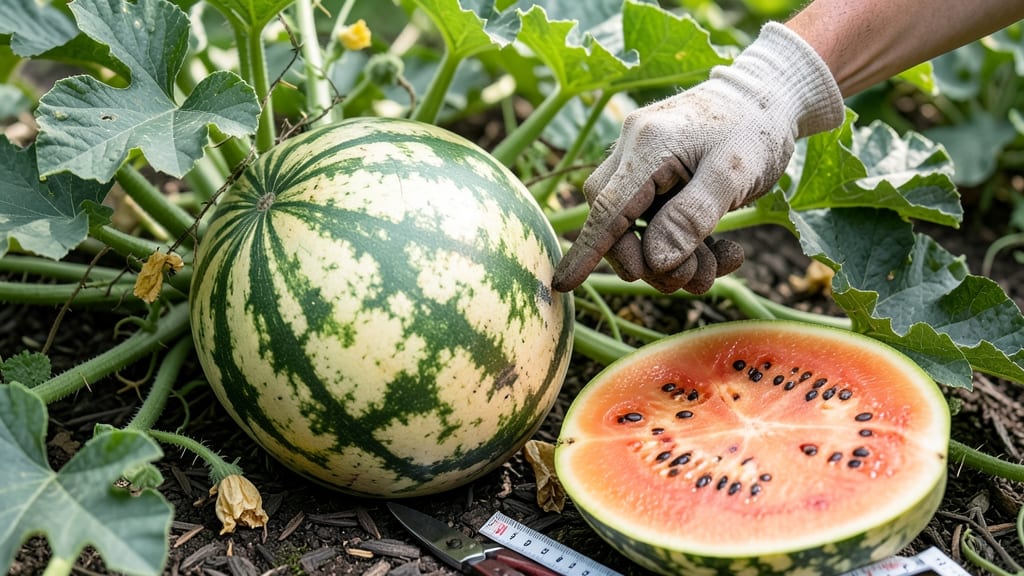
Knowing when to pick watermelon from your garden means the difference between a juicy, sweet reward and a meal of bland, seedy disappointment.
Picture this: you’ve waited all summer for that first ripe 🍉, but how do you tell if it’s ready? One wrong move and you’re left with a fruit that’s either too hard or too mushy.
The good news? With just a few simple tricks—like checking the rind’s color, listening for the telltale rattle, or testing the stem—you’ll never second-guess harvest time again.
Most gardeners rely on size or color alone, but those cues can be misleading. What you really need are the hidden signals that reveal perfect ripeness, from the ground spot to the vine’s behavior. These methods work for every variety, whether you’re growing seedless, heirloom, or hybrid types.
In this guide, I’ll walk you through five foolproof tests to pick your watermelons at their peak—so you can enjoy that first slice of summer without any guesswork.

5 Scientifically proven ways to test watermelon ripeness before picking
There's nothing worse than biting into a watermelon only to discover it's either bland and underripe or overripe with mushy texture. The good news? Science gives us five foolproof tests to determine the perfect moment to harvest.
These methods go beyond guesswork and rely on color changes, sound cues, and vine behavior—all backed by horticultural research.
As a gardener who's spent years perfecting my watermelon harvest, I've learned that combining these tests gives the most accurate results. For example, a deep creamy rind might look ripe, but if the stem doesn't snap cleanly, the fruit needs more time.
Let's break down each method with expert insights on what they reveal about flavor and texture.
How to Know When to Pick Watermelon
- 🌱 Ground Spot Test: Look for a creamy yellow spot on the underside where the melon rests. This indicates sun exposure and sugar development—the larger and yellower, the riper.
- 🔊 Thump Test: Tap the melon with your knuckles. A deep, hollow sound means it's ripe, while a dull thud signals underripeness or overripeness.
- 🎨 Rind Color Analysis: The rind should be deep, consistent in color (no green patches). Heirloom varieties turn stripe-free and solid, while hybrids may develop a satiny sheen.
- 🪴 Vine Separation Method: Gently twist the vine near the stem. If it snaps cleanly with no resistance, the melon is ready. A green, flexible stem means it needs more time.
- 🌞 Stem Drying Technique: The stem end should turn brown and dry out. This indicates the nutrient flow has stopped, meaning the melon has reached full maturity.
Let's start with the ground spot test, which is often the most reliable indicator for home gardeners. When watermelons develop a creamy yellow patch on the side touching the ground, it's a clear sign of photosynthesis and sugar accumulation.
I've found that melons with a 3-5 inch diameter spot tend to be sweeter than those with smaller patches.
The thump test is a classic method that works surprisingly well. Hold the watermelon with one hand and tap it firmly with your knuckles. A deep, resonant "thump" suggests the seeds are fully developed and the flesh is tender.
I once tested a melon that sounded dull—only to cut it open and find it underripe and seedy. Always combine this with other tests for accuracy.
Don't underestimate the power of rind color. A ripe watermelon's rind should be deep and uniform, whether it's striped, solid green, or yellow. I grow Charleston Gray heirlooms, and I wait until the stripes fade completely before harvesting.
For seedless varieties, look for a satiny sheen—this indicates the fruit has reached peak sweetness.
The vine separation method is one of my favorite tests because it's so simple. When the vine near the stem becomes brittle and snaps easily, it's a sign the melon has stopped drawing nutrients from the plant.
I've noticed that if the vine resists breaking, the melon still needs 3-5 more days to ripen fully.
Finally, the stem drying technique is a foolproof way to confirm ripeness. The stem end should turn brown and dry out, almost like a scar. This happens because the plant has sealed off nutrients to the fruit.
I always check this last because it's the most definitive sign—if the stem is still green, the melon isn't ready yet.
Pro tip: Combine at least three of these tests for the most accurate results. For example, if the ground spot is yellow but the stem is still green, wait another day.
Over the years, I've found that morning is the best time to test watermelons because the fruit is cooler and easier to evaluate.
Remember, environmental factors like temperature and rainfall can affect ripening. Heatwaves might speed up the process, while cool nights can slow it down. Always adjust your timeline based on your local climate. With these five methods, you'll never second-guess your watermelon harvest again!
Common mistakes that make you pick watermelons too early (or too late)
Even experienced gardeners fall into the trap of relying only on rind color to judge watermelon ripeness. A deep green or striped pattern doesn’t always mean maturity—especially in heirloom varieties that develop their final hue weeks after the fruit is ready to eat.
I’ve harvested melons that looked perfect on the outside but tasted like watery pulp because I ignored other critical signals.
The second biggest mistake? Assuming size equals ripeness. While watermelons do reach their full size before becoming sweet, leaving them on the vine too long can lead to overripe, seedy disappointments.
I once waited until my melons were the size of footballs, only to find they were mushy inside. The key is balancing size expectations with other ripeness indicators.
Weather plays a surprising role too. Hot, dry spells can trick melons into looking ripe before they are, while cool nights slow sugar development. Last summer, my melons developed their final color during a heatwave, but the flesh remained bland.
Always cross-reference visual cues with tactile and auditory tests to avoid this pitfall.
- Green stem end that’s still soft and flexible
- Patchy or pale rind with uneven coloring
- Spongy feel when pressed gently near the blossom end
- No rattle when shaken—indicates immature seeds
- Cracked or shriveled skin from dehydration
Don’t overlook the vine’s health as a ripeness indicator. A thriving vine with new growth and healthy leaves suggests the melon still needs time, while yellowing leaves or wilted vines can signal stress that affects flavor.
I once ignored my vine’s declining health and picked melons that tasted bitter—turns out, the plant was struggling with powdery mildew.
Another common error is picking at the wrong time of day. Melons harvested in midday heat can develop bruises faster, while those picked in the early morning (when temperatures are cooler) store better.
I learned this lesson the hard way when my afternoon harvests spoiled within days, even though they tasted perfect fresh off the vine.
Finally, variety-specific traits often go unnoticed. Seedless watermelons, for example, may never develop the classic cream-colored ground spot that signals ripeness in traditional types. Always research your specific watermelon variety and adjust your expectations accordingly—this small step saved my harvest last season when my seedless melons refused to turn yellow.