
Tools
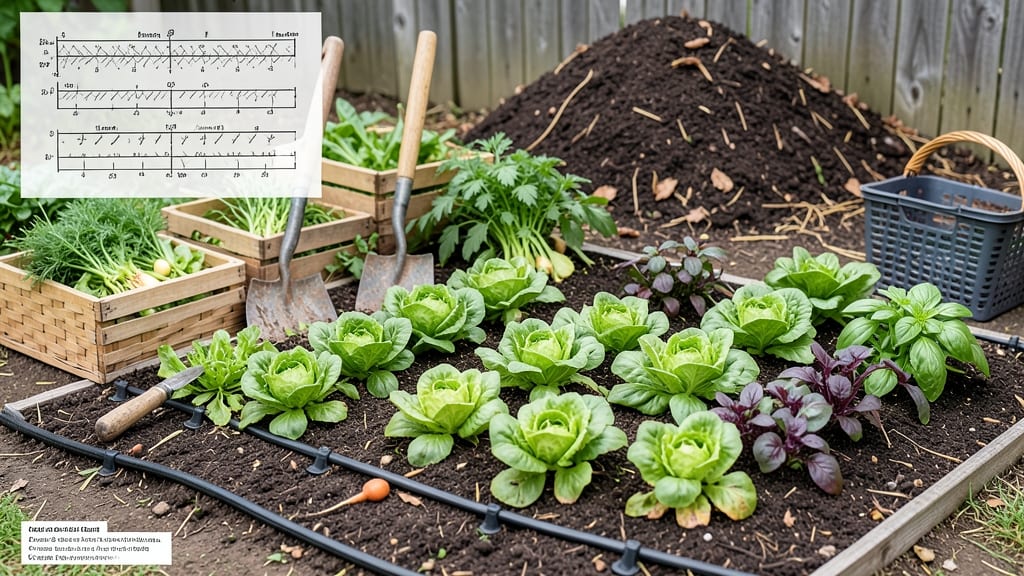
A market gardening definition centers on small-scale, high-intensity farming that prioritizes fresh produce like leafy greens, berries, and specialty vegetables for direct sales to local customers, often incorporating organic methods and minimal land use.
This farming approach thrives by maximizing yield per square foot, making it perfect for urban gardens or suburban plots. 🌱 Unlike large-scale agriculture, market gardening focuses on diversity—growing 20+ varieties in a single season—and builds strong community ties through farmers' markets and CSA programs.
The proximity to consumers allows for ultra-fresh harvests while reducing transportation costs and environmental impact.
What sets it apart is the hands-on management: frequent weeding, precision irrigation, and crop rotation become essential to maintain soil health and prevent pests. Many market gardeners use season-extending tools like cold frames or row covers to grow year-round, turning short growing seasons into profitable opportunities.
💡 In This Article
- Key Characteristics of Market Gardening Systems
- Essential Techniques for Successful Market Gardening
Key characteristics of market gardening systems
Market gardening stands apart from large-scale agriculture through its focus on crop diversity and land efficiency. While commercial farms often specialize in monocultures (like corn or soybeans) covering hundreds of acres, market gardeners might grow 20-30 different vegetable varieties on just 1/4 to 1 acre of land.
This high-density approach maximizes yield per square foot—think 15-20 pounds of leafy greens per 100 square feet versus 2-3 pounds from conventional row crops.
The labor intensity is what makes it thrive in urban and suburban areas. Market gardeners spend 10-15 hours per week per 1,000 square feet on tasks like hand-weeding, trellising, and harvesting, compared to 1-2 hours for mechanized large farms.
This hands-on care results in produce that's 30-50% fresher than grocery store items, as it travels only 50-100 miles to market rather than 1,000+ miles. 🌿 The direct-to-consumer model—through farmers' markets, CSAs, or farm stands—eliminates middlemen, allowing gardeners to charge 2-3x more per pound for heirloom tomatoes or microgreens.
Historically, market gardening traces back to medieval Europe, where "market gardens" supplied cities with fresh produce. In the U.S., it boomed during the 19th century as immigrant communities grew specialty crops near urban centers. Today, its revival is driven by demand for locally grown, organic, and heirloom varieties.
The system's adaptability makes it ideal for rooftop gardens, backyard plots, and even vertical farming setups, proving that small spaces can outperform large farms in value density.
Soil health is the backbone of this method. Market gardeners prioritize composting, cover cropping, and biointensive techniques to maintain fertility in small plots. Unlike conventional farming, which relies on synthetic fertilizers, they often use worm castings or fish emulsion to feed crops naturally.
The result? Soil that retains 3-5% more moisture and supports 20-30% higher yields over time. This sustainable cycle reduces water usage by up to 40% compared to industrial agriculture.
What truly sets market gardening apart is its seasonal flexibility. While large farms depend on long growing seasons, market gardeners use tools like low tunnels, cold frames, and greenhouse polytunnels to extend harvests by 4-6 weeks in spring/fall.
For example, spinach can be grown in 30°F conditions under row covers, while strawberries thrive under unheated greenhouses year-round. This adaptability turns short seasons into year-long profitability.
Consider the numbers: A 1/4-acre market garden can produce $50,000-$100,000 annually in revenue, compared to $10,000-$20,000 from a similarly sized conventional farm. The key? Focusing on high-value crops like herbs ($50/lb), microgreens ($100/lb), or specialty peppers ($3/lb) rather than commodity crops like potatoes ($0.50/lb).
The direct consumer connection ensures steady demand, making market gardening one of the most resilient farming models today. 💡