
Neem Oil
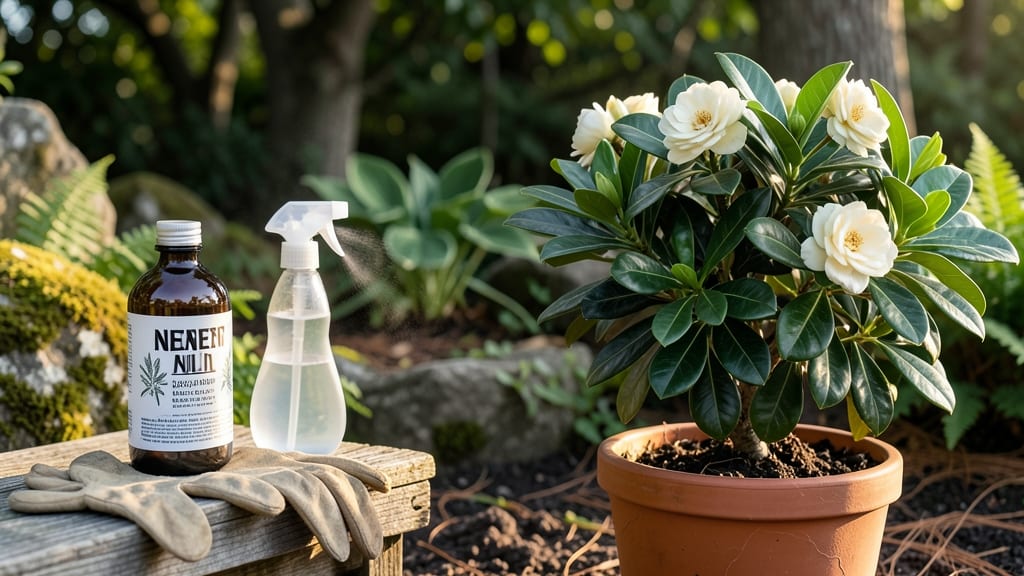
Using neem oil on gardenia plants involves diluting it to a 1-2% solution and applying it to the foliage in the evening to prevent sunburn, effectively targeting pests such as aphids and mites while also helping to prevent fungal problems when used correctly. Always conduct a patch test on a single leaf first.
Neem oil is a powerhouse for gardenia care because its active compound, azadirachtin, disrupts the life cycles of pests while also offering antifungal properties. 🌿 This makes it ideal for gardenias, which are susceptible to both insects like scale and fungal diseases such as powdery mildew.
The key to success lies in proper dilution—too strong a solution can harm the delicate leaves, so always follow the 1-2% concentration guideline. I’ve found that applying it in the evening reduces the risk of sunburn and allows the oil to work overnight, maximizing its effectiveness.
For best results, use a spray bottle with fine mist settings and apply the solution evenly to both the tops and undersides of leaves. Reapply every 7-14 days during active pest seasons, but always monitor your plants for signs of stress, like yellowing or wilting.
If you notice these symptoms, reduce frequency or dilute further. Pairing neem oil with other organic treatments, like neem cake for soil health, can create a holistic approach to gardenia care.
💡 In This Article
- How Neem Oil Works on Gardenia Pests and Fungal Issues
- Step-by-Step Guide to Safely Treating Gardenias with Neem Oil
How neem oil works on gardenia pests and fungal issues
Neem oil’s effectiveness on gardenias stems from its active compound, azadirachtin, a natural insect growth regulator that disrupts the feeding and reproductive cycles of pests. When applied to gardenia leaves, azadirachtin interferes with insects like aphids and mites by blocking their ability to molt, ultimately starving them.
This is particularly valuable for gardenias, which often attract soft-bodied pests that thrive in their dense foliage. The oil also contains salannin and nimbin, which act as mild antifungal agents, helping prevent fungal diseases like powdery mildew—a common issue for gardenias in humid climates.
The chemical mechanism works best when neem oil coats the leaf surfaces, creating a protective barrier that pests avoid. For example, scale insects, which gardenias frequently host, are deterred by the oil’s bitter taste and smell, forcing them to relocate or die off.
Unlike synthetic pesticides, neem oil doesn’t kill pests instantly but instead weakens them over time, making it safer for beneficial insects like bees and ladybugs that pollinate gardenias. 🌿 The antifungal properties come into play by disrupting the cell membranes of fungal spores, preventing them from establishing on the leaves.
Gardenias are particularly vulnerable to powdery mildew due to their thick, glossy leaves, which trap moisture and create ideal conditions for fungal growth.
Neem oil’s 1-2% dilution (1-2 teaspoons per quart of water) is critical here—higher concentrations can damage the delicate leaf cuticles, leaving them susceptible to sunburn or further infection. The oil’s lipophilic nature allows it to penetrate waxy leaf surfaces, but only when properly diluted and applied evenly.
This is why organic gardeners prefer neem oil: it targets pests and fungi without introducing harsh chemicals that could harm the plant’s natural defenses.
What most gardeners don’t realize is that neem oil’s effectiveness depends on consistent application timing. Pests like whiteflies and spider mites develop resistance if exposed to neem oil sporadically, so a 7-14 day schedule during peak pest seasons (spring and summer) is ideal.
The oil also works synergistically with other organic treatments—pairing it with potassium soap sprays can enhance its efficacy against soft-bodied insects, while neem cake (a byproduct of neem oil production) improves soil health by suppressing nematodes and fungal pathogens in the root zone.
To visualize its impact, imagine a gardenia leaf infested with aphids: within 24-48 hours of a neem oil application, you’ll notice the aphids becoming sluggish and eventually dropping off. Meanwhile, the leaf’s natural defenses remain intact, unlike with synthetic pesticides that can leave residue and disrupt the plant’s microbiome.
This dual-action approach—targeting both pests and fungi—is why neem oil has become a staple in organic gardening, especially for high-maintenance plants like gardenias.
For those concerned about overuse, remember that neem oil’s low toxicity to plants is only true when diluted correctly. Always conduct a patch test on a single leaf first—if you see signs of chlorosis (yellowing) or leaf burn within 48 hours, reduce the concentration or frequency.
The key is balance: strong enough to deter pests, but gentle enough to preserve the gardenia’s vibrant, fragrant blooms. 💫