
Planting
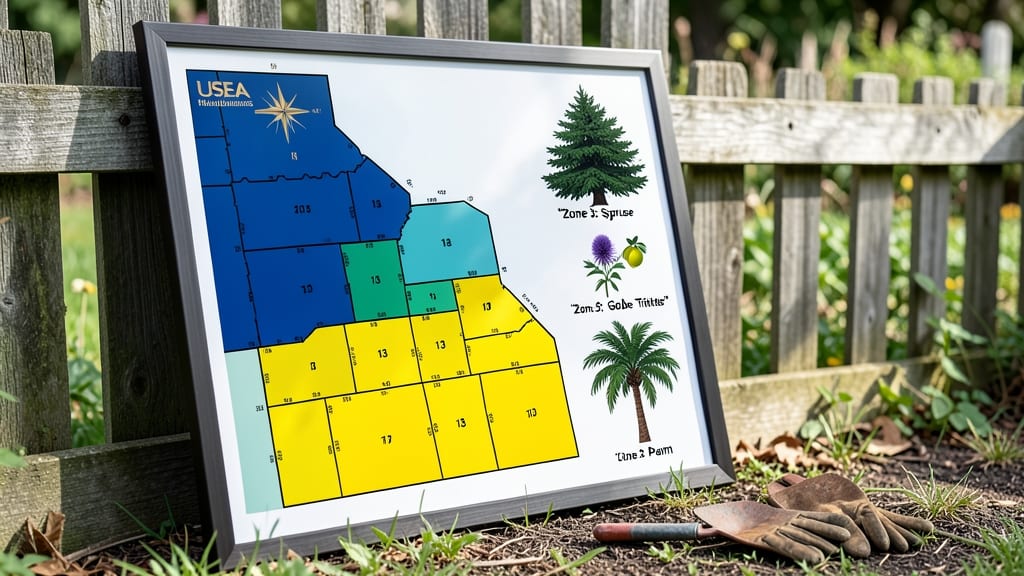
To determine your plant gardening zones, consult the USDA Plant Hardiness Zone Map for your area, which categorizes regions based on average annual minimum temperatures to help you select plants that will thrive in your specific climate conditions. Zones typically range from 3 to 12, but local microclimates may require adjustments.
The USDA Plant Hardiness Zone Map divides the country into 13 distinct zones, each representing a 10°F temperature range. This system helps gardeners choose plants that can survive winter lows in their region.
For example, Zone 5 can handle temperatures down to -20°F to -10°F, while Zone 9 rarely drops below 20°F to 30°F. Microclimates—like urban heat islands or sheltered valleys—can shift your effective zone by one or more numbers, so always verify with local data. 🌱
Beyond temperature, factors like frost-free days, humidity, and soil quality further refine plant suitability. For instance, a coastal area might have milder winters than inland zones at the same latitude.
Using tools like the USDA Interactive Map or Sunset Climate Zones lets you pinpoint your exact location and adjust for these variations, ensuring your garden thrives year-round.
💡 In This Article
- Understanding USDA Plant Hardiness Zones and Climate Factors
- How to Locate Your Exact Gardening Zone Using Free Online Tools
Understanding USDA plant hardiness zones and climate factors
The USDA Plant Hardiness Zone Map divides North America into 13 zones based on average annual minimum temperatures, measured over a 30-year period. Each zone represents a 10°F range—Zone 3 endures -40°F to -30°F, while Zone 12 rarely drops below 50°F.
This system helps gardeners select plants that can withstand winter lows in their specific area. For example, a Zone 5 garden can support hardy perennials like peonies, but tropical hibiscus would perish in those conditions.
Beyond temperature, frost-free days play a critical role. Southern California's Zone 9-10 may have 300+ frost-free days, while Minnesota's Zone 3-4 averages just 100-120 days. These variations explain why some plants thrive in coastal climates but fail inland at the same latitude.
Elevation also creates microclimates—mountain slopes can be 3-5°F colder than valley floors just miles away, shifting your effective zone by one or more numbers.
Urban heat islands further complicate zone mapping. Cities like Phoenix (Zone 9b) can experience 10-15°F higher summer temperatures than rural areas, while nighttime lows may stay warmer. This means urban gardeners might successfully grow plants rated for Zone 10 despite officially being in Zone 9.
Always verify local conditions by checking nearby weather stations or university extension reports for precise adjustments.
Why does this matter? Plant survival hinges on these factors. A Zone 7 azalea might survive winter in a sheltered microclimate but succumb to frost in an exposed location. The USDA system provides a baseline, but real-world conditions often require fine-tuning.
For instance, a Zone 6 garden in a sheltered valley could grow Zone 7 plants like camellias with proper winter protection.
Consider these key climate factors when selecting plants:
- Temperature extremes: Check both winter lows and summer highs—some plants (like heat-loving bougainvillea) need 90°F+ summers to thrive.
- Frost timing: Early spring frosts in Zone 5 can damage tender plants, while late frosts in Zone 8 may delay planting.
- Soil characteristics: Wet climates (like Zone 6 Pacific Northwest) favor moisture-loving plants, while arid Zone 7 Southwest gardens need drought-tolerant species.
Understanding these nuances ensures your garden thrives despite the zone map's generalizations. For example, a Zone 6 gardener in the Midwest might successfully grow Zone 7 roses by planting them against a south-facing wall, which adds 5-10°F of winter protection. 🌿