
Tools
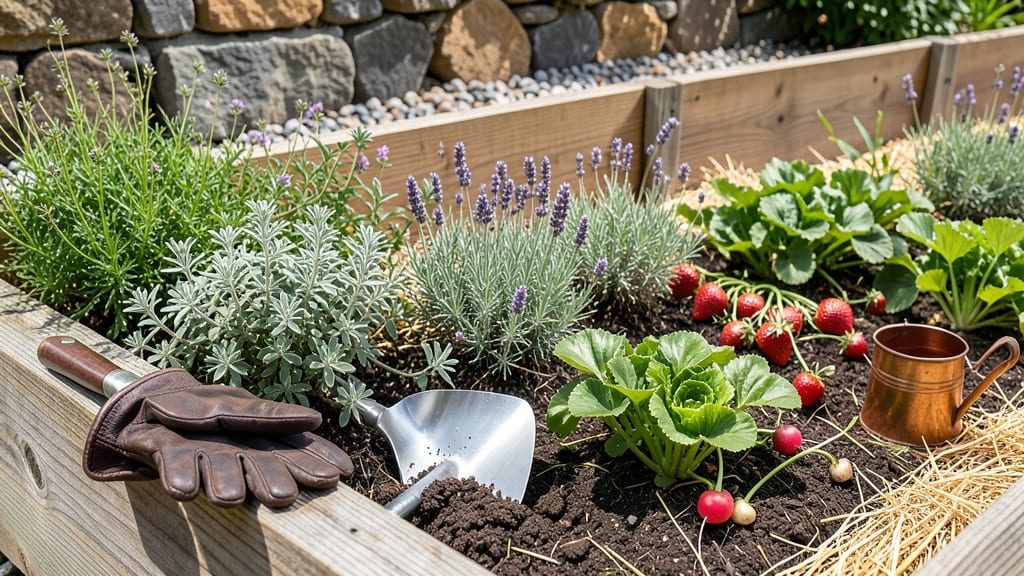
Rock wall raised garden beds create elevated planting spaces that enhance drainage, accessibility, and soil quality, making them perfect for small yards, steep terrain, or areas with poor soil conditions. The stone construction adds long-term durability while creating a natural, attractive landscape feature.
These elevated garden designs solve multiple common gardening challenges at once. 🌿 The raised height prevents soil compaction from foot traffic while improving water drainage—critical for root health in heavy clay soils.
Stone walls also act as natural thermal regulators, keeping roots cooler in summer and warmer in winter compared to ground-level beds. Plus, the accessibility makes gardening easier for people with mobility limitations or steep yards.
For best results, I recommend using 12- to 18-inch-high walls for most vegetables, with deeper beds (24 inches) for root crops like carrots or potatoes.
The stone construction not only lasts decades but also blends seamlessly with natural landscapes, creating a rustic yet functional garden feature that doubles as a retaining wall in hilly areas.
💡 In This Article
- How Rock Wall Garden Beds Improve Soil and Plant Health
- Best Plants and Layouts for Rock Wall Raised Garden Designs
How rock wall garden beds improve soil and plant health
The elevation of rock wall garden beds creates a fundamental shift in soil dynamics that directly benefits plant health.
By lifting the planting area 12-18 inches above ground, these structures prevent soil compaction—a common issue in ground-level gardens where foot traffic or machinery compresses the topsoil, restricting root growth and oxygen flow.
The stone construction itself acts as a natural barrier, maintaining a loose, aerated soil structure that encourages deeper root penetration and healthier microbial activity. 🌱
Drainage becomes dramatically improved in elevated beds. Unlike ground-level gardens that can become waterlogged—especially in clay-heavy soils—rock wall beds allow excess water to drain freely through the sides and bottom. This is particularly valuable for plants like herbs and leafy greens that suffer from root rot in soggy conditions.
The stone walls also create a thermal buffer: during summer, the dense stone absorbs and slowly releases heat, preventing soil temperature spikes that can stress plant roots, while in winter, the mass retains warmth better than exposed ground soil.
Moisture retention works differently in these elevated systems. While you might think raised beds dry out faster, the stone walls actually help regulate humidity by reducing evaporation from the sides.
The compacted soil against the stone wall stays moister longer than exposed ground soil, which loses water rapidly to wind and sun. This moisture balance is why drought-tolerant plants like rosemary and thyme thrive in these beds while requiring 30-50% less supplemental watering than ground-level counterparts.
The porous nature of the stone also allows for better air circulation around roots.
One often-overlooked benefit is the natural weed suppression. The stone walls create a physical barrier that blocks most weed seeds from reaching the planting area, while the elevated design makes it easier to spot and remove any weeds that do appear.
This reduces competition for nutrients by up to 70% compared to ground-level gardens. The combination of improved drainage, temperature regulation, and reduced compaction creates an optimal growing environment that can extend the growing season by 2-4 weeks in both spring and fall.
For those concerned about soil quality, rock wall beds offer another advantage: you can customize the growing medium. Many gardeners fill these beds with a mix of 60% topsoil, 30% compost, and 10% perlite or vermiculite—a recipe that improves fertility while maintaining excellent drainage.
This controlled environment prevents the dilution of nutrients that occurs when mixing amended soil with native, often poor-quality ground soil. The result is healthier plants with better yields, even in challenging locations.
Consider this comparison: a ground-level garden in heavy clay soil might see roots struggle in waterlogged conditions during spring rains, while the same plants in a 16-inch-high rock wall bed would experience consistent moisture levels and improved oxygen flow.
The stone construction's durability also means these benefits last for decades, making them a long-term investment in garden productivity. 💡