
Landscaping
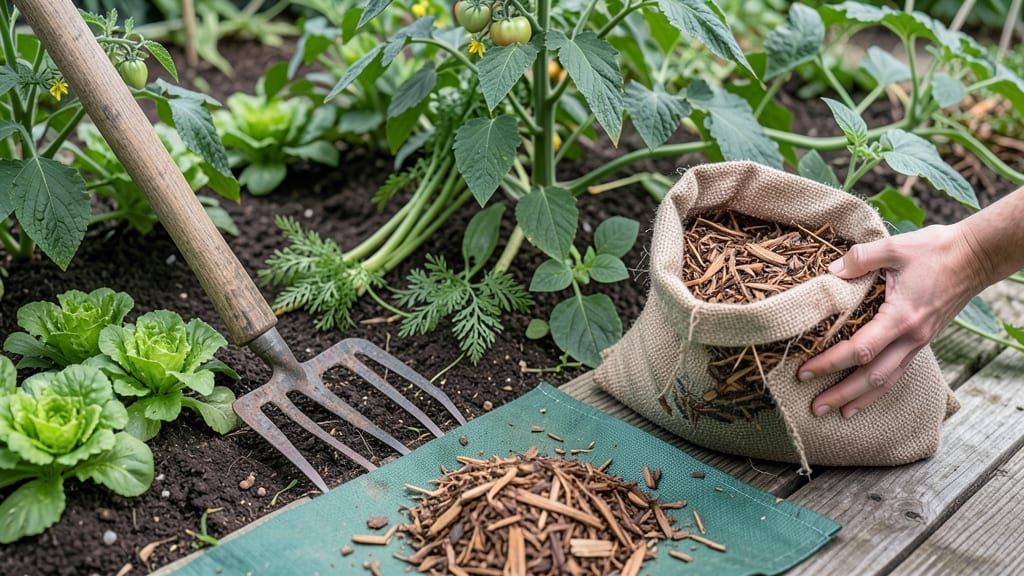
You should put mulch in your vegetable garden because it conserves water, blocks weeds, and stabilizes soil temperature, though you must keep it 2-3 inches deep away from plant stems to prevent decay or insect issues. Organic options break down to fertilize soil over time.
Mulch acts like a protective blanket for your plants, keeping soil consistently moist while reducing evaporation—critical during dry spells. 🌱 The right layer also smothers weeds before they sprout, cutting down on manual weeding by up to 80%.
I’ve noticed organic mulches like straw or shredded leaves work best for vegetables because they gradually release nutrients as they decompose, giving your crops a slow-release fertilizer boost without the risk of burning roots.
That said, not all mulches are equal. Inorganic options like gravel or landscape fabric won’t enrich soil but excel at long-term weed suppression. For warm climates, I recommend 3-4 inches of mulch, while cooler regions benefit from slightly thinner layers to prevent overheating.
Always refresh mulch seasonally—especially after heavy rains—to maintain its effectiveness.
💡 In This Article
- How Mulch Benefits Vegetable Garden Soil Health
- Best Mulch Types for Vegetable Gardens and Application Tips
How mulch benefits vegetable garden soil health
Mulch works like a natural insulator, creating a microclimate that protects plant roots from extreme temperature swings. During summer, a 3-inch layer of organic mulch can keep soil 5-10°F cooler than exposed soil, reducing heat stress on sensitive crops like lettuce or spinach.
In winter, it acts as a thermal blanket, preventing soil from freezing solid and protecting tender roots of crops like kale or carrots. The key mechanism here is how mulch blocks sunlight from directly heating the soil surface while trapping moisture at the root zone.
The moisture retention benefits are equally impressive. Organic mulches like straw or wood chips absorb and slowly release water, reducing evaporation by up to 70% compared to bare soil. This means you'll need to water 30-50% less during dry periods.
The science behind this involves capillary action—mulch particles create tiny air pockets that hold moisture near the soil surface while allowing excess water to drain away, preventing waterlogged conditions that can suffocate roots. 🌱
Beyond temperature and moisture, mulch transforms soil biology. As organic materials decompose, they feed beneficial microbes and earthworms, which in turn break down organic matter into nutrients plants can absorb. Studies show that well-mulched gardens can have 20-30% more microbial activity than unmulched plots.
This microbial boost improves nutrient cycling, making essential elements like nitrogen and phosphorus more available to your vegetables. The decomposition process also creates humus, which enhances soil structure and water-holding capacity over time.
However, there are trade-offs to consider. Thick mulch layers (4+ inches) near plant stems can create anaerobic conditions, where oxygen is depleted and harmful fungi or bacteria thrive. This is why I always recommend maintaining a 2-3 inch gap around stems—it prevents rot while still protecting roots.
Some organic mulches, like fresh grass clippings, can also draw nitrogen from the soil as they decompose, potentially starving your plants. To avoid this, I recommend using "cold" compost or well-aged manure instead.
Another critical factor is mulch type. Inorganic options like gravel or plastic sheeting won't decompose but excel at long-term weed suppression. They're ideal for perennial vegetable beds where you want minimal maintenance. Organic mulches, however, offer the added benefit of improving soil fertility over time.
For example, straw mulch breaks down slowly, providing consistent benefits, while wood chips take longer but create excellent long-term soil structure. The choice depends on your specific needs and crop types.
Seasonal adjustments are key too. In hot climates, I recommend applying mulch in early spring to protect emerging seedlings from temperature fluctuations. In cooler regions, a lighter layer in fall helps insulate soil as winter approaches.
Always monitor your mulch—refresh it annually or after heavy rains to maintain its effectiveness. The right approach balances protection with plant health, ensuring your vegetable garden thrives without unintended consequences. ✨