
Landscaping
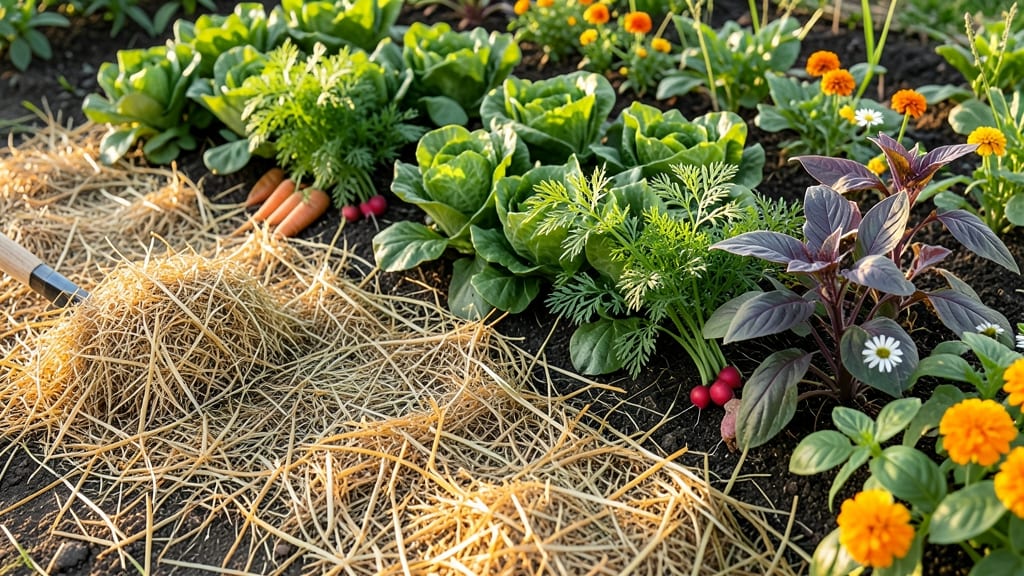
Straw mulch for garden beds blocks sunlight to smother weeds while holding moisture near plant roots, cutting watering needs by up to 50% and shielding roots from heat or cold. Spread 2-4 inches of dry straw evenly across beds for optimal results.
This organic approach works because straw creates a physical barrier that starves weeds of sunlight while its fibrous structure wicks water upward through capillary action. 🌱 The mulch also acts as insulation, keeping soil temperatures stable—critical for young seedlings and drought-prone plants.
I've seen gardens where straw mulch reduced watering by half while keeping soil loose enough for root growth, though you'll want to refresh it every 2-3 months as it breaks down.
For best results, choose wheat straw (more durable) over oat straw (decomposes faster), and apply it after planting when soil is moist but not wet. Just avoid piling it against plant stems to prevent rot, and always use dry straw to discourage mold growth.
💡 In This Article
- How Straw Mulch Blocks Weeds and Preserves Soil Moisture
- Best Straw Mulch Types and Application Tips for Garden Beds
How straw mulch blocks weeds and preserves soil moisture
Straw mulch works its magic primarily through two scientific mechanisms: light deprivation and capillary action. When you spread a 2-4 inch layer of straw, it creates a physical barrier that blocks 90-95% of sunlight from reaching weed seeds and seedlings.
Without light, weeds can't photosynthesize, effectively starving them to death within 2-3 weeks. This is why straw is far more effective than synthetic mulches—it doesn't just smother weeds temporarily but actively prevents new ones from sprouting.
The fibrous structure of straw plays a crucial role in moisture retention too. Straw fibers act like tiny straws, drawing water upward through capillary action and distributing it evenly near plant roots.
Studies show straw mulch can reduce soil evaporation by 30-50% compared to bare soil, meaning your plants stay hydrated with 30-50% less watering. The mulch also creates microclimates that maintain soil temperatures within 5-10°F of ideal growing ranges, protecting delicate roots from temperature swings that can shock plants.
What's often overlooked is how straw mulch improves soil structure over time. As it decomposes (typically 2-3 months for wheat straw), it adds organic matter that enhances soil aeration and microbial activity.
The decomposition process releases nutrients slowly, feeding your plants without the risk of burning that comes from synthetic fertilizers. This gradual breakdown also prevents soil compaction—a common problem with heavy mulches like wood chips—while maintaining loose, crumbly soil perfect for root growth.
Temperature regulation is another hidden benefit. In summer, straw mulch can keep soil 10-15°F cooler than unmulched beds, while in winter it provides 5-8°F of insulation against freezing. This stability is especially critical for young seedlings, whose roots are vulnerable to temperature fluctuations.
The mulch's insulating properties also help prevent soil crusting from heavy rains, which can suffocate emerging plants and block water penetration.
For maximum effectiveness, maintain the mulch layer at 2-3 inches—thicker layers can suffocate plants by blocking oxygen, while thinner layers won't provide adequate weed suppression. The ideal texture is slightly coarse but not compacted, allowing both water and air to penetrate while still blocking light.
You'll notice the biggest difference in areas with high weed pressure or sandy soils that dry out quickly, where straw mulch can reduce maintenance by up to 70%.
One pro tip: If you're using straw for moisture retention in particularly dry climates, consider adding a 1-inch layer of compost beneath the straw. This creates a moisture reservoir that releases water slowly to plants while the straw protects it from evaporating.
The combination is especially effective for containers and raised beds where water drains away quickly.