
Vegetables
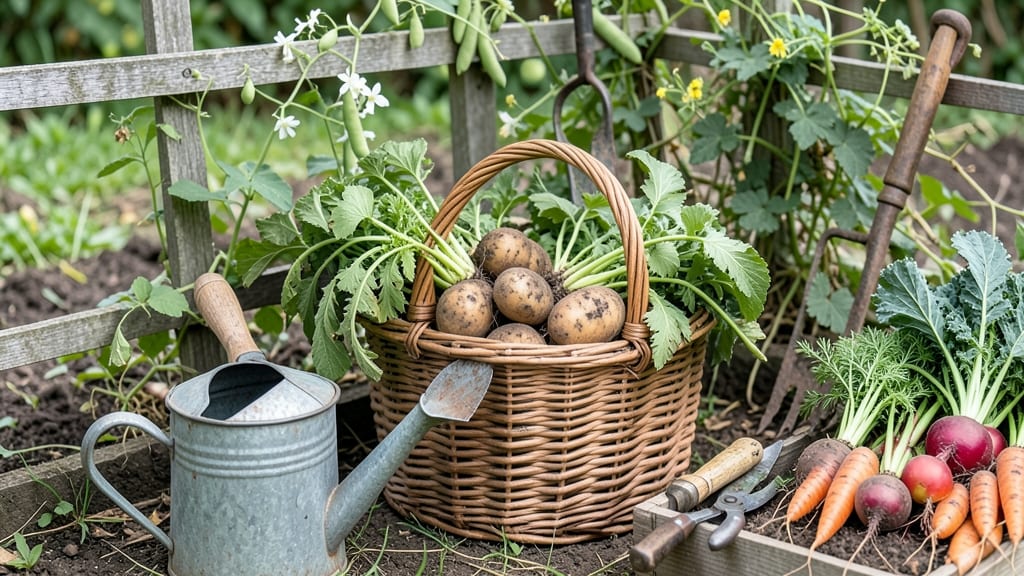
Victory gardens during World War 1 transformed civilian spaces into food production hubs, providing up to 40% of Britain's fresh vegetables by 1918 and easing critical shortages across war-torn Europe and America.
These gardens weren't just about food—they became symbols of patriotism and resilience. 🌱 The British government launched the "Dig for Victory" campaign in 1915, encouraging families to cultivate even small patches of land, from backyards to rooftops.
Americans followed with similar initiatives, growing everything from potatoes to cabbage to stretch limited supplies. What's fascinating is how these efforts laid the foundation for modern urban farming movements, proving that even small-scale gardening could have massive impacts during crises.
What makes this story particularly relevant today is how victory garden principles directly inspired contemporary solutions like community gardens and vertical farming. Many modern gardeners unknowingly use techniques pioneered during WW1, such as intensive planting and crop rotation, to maximize yields in limited spaces.
The legacy lives on in how we approach sustainable food production today.
💡 In This Article
- How WW1 Victory Gardens Revolutionized Food Production
- Legacy of WW1 Victory Gardens in Modern Urban Farming
How WW1 victory gardens revolutionized food production
At the heart of victory gardens was a brilliant combination of government strategy and grassroots participation.
The British "Dig for Victory" campaign, launched in 1915, used posters, pamphlets, and even school programs to transform ordinary citizens into farmers. 🌱 The propaganda showed how growing just 100 square feet of vegetables could feed a family for a month—equivalent to about 15 pounds of potatoes or 20 pounds of carrots.
This messaging worked because it framed gardening as both a patriotic duty and a practical solution to food rationing.
The space allocated for these gardens was remarkably creative. Families utilized backyards, vacant lots, and even rooftops, while communities organized shared plots in urban areas. In London alone, over 1.3 million gardens were created by 1918, producing enough food to feed 1.5 million people.
The most common crops were high-yield vegetables like potatoes (which could produce 10-15 pounds per plant), cabbage, carrots, and beans—all chosen for their ability to thrive in small spaces and provide maximum calories per square foot.
What made these gardens so effective was their integration with wartime agricultural policies. The British government provided free seeds, fertilizers, and even loaned tools to participants. 💡 They also established "market gardens" near cities, where professional growers used victory garden techniques to supplement commercial production.
This dual approach ensured that both urban and rural areas contributed to the food supply chain, creating a resilient system that could adapt to shortages caused by disrupted shipping and manpower shortages.
The psychological impact was equally significant. Gardening provided a tangible way for civilians to contribute to the war effort, boosting morale during a time of uncertainty. Studies from the era show that communities with active victory gardens reported lower stress levels and higher community cohesion.
This dual benefit—feeding families while strengthening social bonds—made the movement far more than just an agricultural solution.
One often overlooked aspect was the role of women in victory gardens.
With many men serving overseas, women took on farming roles they'd previously been excluded from. 🌟 This shift not only addressed labor shortages but also challenged traditional gender norms, paving the way for women's increased participation in agriculture after the war.
The skills they developed during this period later became foundational for modern home gardening movements.
Perhaps most surprisingly, victory gardens demonstrated how small-scale production could have large-scale impacts. When you consider that the average British garden produced about 1,000 pounds of food annually by 1918, you realize these weren't just backyard hobbies—they were mini agricultural operations.
This proved that food security didn't require vast farmland but rather smart land use and community cooperation, a lesson that resonates strongly in today's discussions about sustainable urban farming.