
Watering
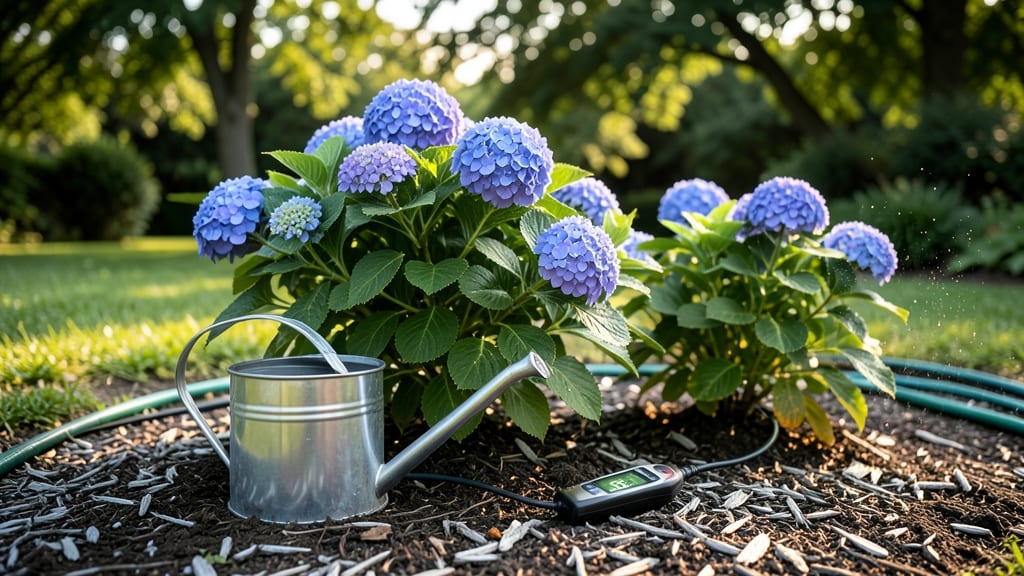
Watering your garden at night increases humidity risks, promotes fungal growth, and wastes moisture through evaporation. Early morning or late afternoon is ideal for most plants, though succulents and desert species may tolerate nighttime watering better.
Nighttime watering creates a damp, cool environment that fungal spores love, turning your garden into a breeding ground for diseases like powdery mildew. 🌱 The lack of sunlight at night also means water evaporates more slowly, leaving foliage damp longer—which is exactly what pathogens need to spread.
Even if you're careful, the soil stays saturated overnight, cutting off oxygen to roots and stressing plants. For most gardeners, this is a recipe for weaker growth and more pests.
That said, not all plants follow the same rules. Succulents and desert species actually thrive with night watering because their natural habitats have cooler evenings and hot days.
If you must water at night, use drip irrigation systems to deliver water slowly at the base of plants, and always pair it with a thick layer of mulch to help moisture absorb instead of pooling on leaves.
💡 In This Article
- Why Nighttime Watering Harms Most Garden Plants
- Best Times and Techniques for Night Watering Specific Plants
Why nighttime watering harms most garden plants
Nighttime watering creates a perfect storm for fungal growth because the combination of cool temperatures, high humidity, and damp foliage mimics the ideal conditions pathogens like powdery mildew and rust thrive in. 🌱 During the day, sunlight helps dry leaves quickly, but at night, the lack of UV radiation means water lingers on surfaces for hours—sometimes even until morning.
This prolonged moisture exposure gives fungal spores up to 12-24 hours to germinate and infect plant tissues, compared to just 2-4 hours during daytime watering.
The science behind this involves spore germination thresholds. Most fungal spores require relative humidity above 85% to activate, and nighttime watering can push garden humidity levels to 90-95% near the soil surface.
For comparison, daytime watering typically maintains humidity at 60-75%, giving plants a fighting chance to dry out. The cooler night air also slows evaporation rates by up to 40%, meaning water stays in the soil longer and creates waterlogged conditions that suffocate roots by displacing oxygen.
This oxygen deprivation is particularly damaging because roots need 15-20% oxygen in the soil for optimal respiration. When soil stays saturated overnight, oxygen levels can drop below 10%**, causing roots to suffocate and triggering stress responses like ethylene production—a plant hormone that accelerates leaf drop and weakens stems.
The visual signs? Yellowing leaves, stunted growth, and plants that feel mushy at the base when you gently tug them—all classic symptoms of overwatering at night.
Even the moisture itself behaves differently at night. Water molecules evaporate more slowly in cooler air, but what does evaporate carries away heat from the soil surface. This creates a microclimate effect where the top 1-2 inches of soil stays cooler longer, delaying root activity.
Meanwhile, the water that doesn't evaporate pools around the base of plants, creating ideal conditions for bacterial rot. Compare this to daytime watering, where evaporation rates can be 2-3 times faster, allowing roots to access moisture without prolonged saturation.
What makes this especially problematic is how these conditions compound over time. A single night of watering might not cause visible damage, but consistent nighttime watering builds up stress in plants, making them more susceptible to pests and diseases.
For example, aphids and spider mites are attracted to stressed plants with high sugar content—a direct result of fungal infections thriving in damp conditions. The cumulative effect is a garden that looks healthy on the surface but is actually struggling beneath the soil line.
To put it simply: nighttime watering turns your garden into a fungal buffet. The cool, dark, and damp environment is like rolling out the red carpet for pathogens while simultaneously starving your plants of the oxygen they need to grow. 💫 The good news?
This isn't an absolute rule—some plants actually prefer it, which we'll explore in the next section.