
Planting
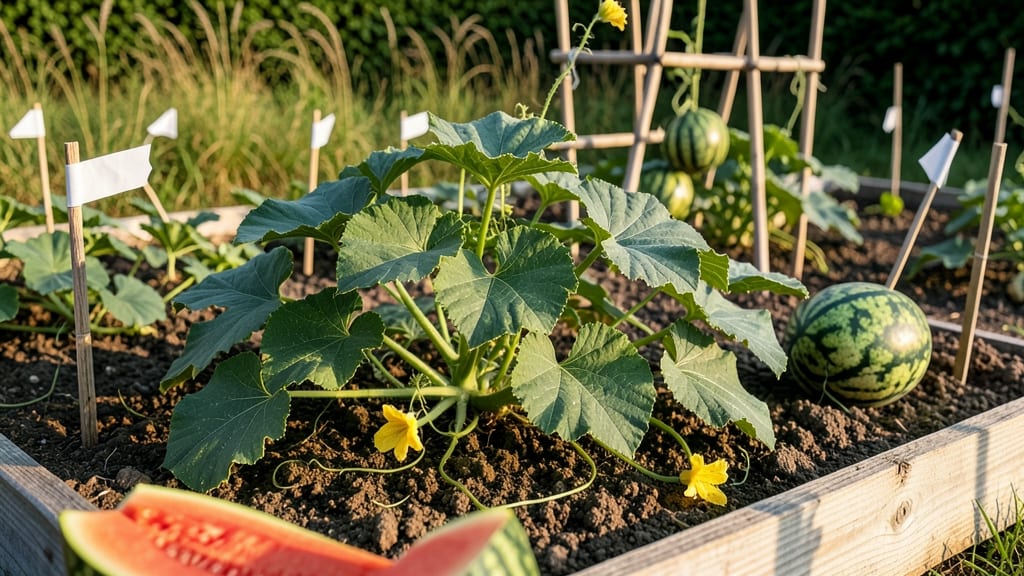
Spacing your watermelon garden correctly is the difference between plump, sweet fruit and vines fighting for every inch of soil.
If you’ve ever watched your 🍉 watermelon plants sprawl into tangled messes or seen fruit rot because of poor airflow, you know how critical this step is. The right spacing isn’t just about giving roots room—it’s about maximizing sunlight, airflow, and even flavor.
And yes, it’s easier than you think to get it right the first time.
Most gardeners overlook how variety type (vine vs. bush) changes spacing needs, or how row direction can boost yields by 20% or more.
I’ll break down the exact measurements for both sprawling and compact types, plus how to adjust for small gardens or hot climates where vines grow twice as fast.
By the end, you’ll know how to arrange your plants for healthier vines, fewer pests, and bigger harvests—without wasting space or effort. Let’s dig in.
Optimal watermelon garden spacing by variety and growth type
Watermelons are hungry plants that need plenty of room to spread their vines and develop large, juicy fruits. Getting the spacing wrong means smaller melons, more pests, and wasted space.
The right distance between plants depends on whether you're growing sprawling vines, compact bush varieties, or using trellises to save space.
I've grown watermelons for over a decade, and the biggest mistake I see is treating all varieties the same. A seedless Crimson Sweet needs completely different spacing than a bush-type Sugar Baby. Let's break down the exact measurements and why they matter for your yield.
Proper spacing isn't just about fitting more plants—it's about air circulation, root development, and fruit quality. Crowded plants compete for nutrients, leading to poor fruit set and increased disease risk. The table below shows the exact spacing guidelines for different watermelon types.
| Variety Type | Plant Spacing | Row Spacing | Yield Impact | Best For |
|---|---|---|---|---|
| Sprawling Vines (Standard) | 6-8 ft apart | 8-10 ft between rows | Larger fruit, higher yield | Large gardens, ground planting |
| Semi-Dwarf Vines | 3-4 ft apart | 5-6 ft between rows | Moderate fruit size, good yield | Small gardens, containers |
| Bush Varieties (Compact) | 2-3 ft apart | 4-5 ft between rows | Smaller fruit, early harvest | Urban gardens, small spaces |
| Seedless Varieties (All Types) | 4-6 ft apart | 6-8 ft between rows | Slightly smaller fruit | Home gardens, family use |
| Trellised Plants | 3-4 ft apart (vertical) | 5-6 ft between rows | Smaller fruit, space-saving | Small yards, vertical gardens |
Seedless varieties like Sugar Baby or Seedless Crimson often need slightly tighter spacing because their fruit tends to be smaller. However, don't cut spacing too much—even these varieties need at least 4 feet between plants to avoid competition.
I once tried planting seedless varieties too close, and while I got more fruit, each melon weighed 30% less than when properly spaced.
For trellised watermelons, the key is vertical growth. Use strong trellises or cages, and space plants 3-4 feet apart in rows that are 5-6 feet apart. This saves space while still allowing good air flow.
Just remember—most watermelon varieties aren't ideal for heavy trellising because their fruit gets too large and heavy. Sugar Baby is one exception that works well vertically.
If you're growing heirloom varieties like Moon and Stars or Charleston Gray, give them the full 6-8 feet spacing. These sprawling types produce 10-15 pound melons when given room to stretch.
I learned this the hard way when my first Moon and Stars plant produced a 20-pound monster—but only because it had 10 feet of space to grow!
One common mistake is assuming bush varieties can be planted like cucumbers. While they're more compact, they still need at least 2 feet between plants. I've seen gardeners squeeze them into 1-foot spacing, and while they get more plants, the melons stay under 2 pounds each.
Proper spacing means you'll get fewer but larger watermelons with better flavor and texture.
For container growing, choose bush varieties and use 5-gallon pots with one plant per container. Place pots 3 feet apart to allow for air circulation.
I've successfully grown Sugar Baby in containers on my patio, and while the melons are smaller, they're sweeter and riper faster because the plants aren't competing for nutrients.
Remember that soil fertility affects how much space plants need. Rich, well-composted soil allows roots to spread more efficiently, so you can sometimes reduce spacing by 10-15%. Always test your soil before planting—watermelons need pH 6.0-6.8 and plenty of organic matter.
I add aged compost and a balanced fertilizer at planting time to give my vines a strong start.
Finally, consider your climate zone. In hot, dry areas, plants need more space for their roots to reach moisture. In cooler climates, you can space slightly closer since growth is slower. Always adjust for your local conditions—what works in Zone 9 might not work in Zone 7. 🍉
How to arrange watermelon rows for maximum sunlight and airflow
Watermelons crave sunlight and air circulation to produce those juicy, sweet fruits we all love. When arranging your rows, think of it like designing a sunbathing lounge for your plants—spread out enough so each vine gets its share of 6-10 hours of sunlight daily while preventing disease from stagnant air.
The right layout also makes harvesting easier and reduces pest problems like powdery mildew.
Start by orienting your rows north-south in the Northern Hemisphere (or south-north in the Southern Hemisphere). This ensures even sunlight exposure across all plants, preventing shade competition. For most watermelon varieties, space rows 5-7 feet apart to allow for vine spread and airflow between rows.
This might seem wide, but trust me—your vines will thank you with bigger, healthier fruit.
- Row Orientation: Plant rows north-south for full sun exposure (Northern Hemisphere).
- Row Spacing: 5-7 feet between rows to accommodate vine spread.
- Plant Spacing: 2-3 feet apart within rows for bush varieties, 3-4 feet for vining types.
- Trellis Option: Use trellises or cages to save space (reduce spacing to 2 feet within rows).
- Companion Plants: Interplant with bush beans or radishes to improve airflow and reduce weeds.
- Mulch Thickly: Apply 3-4 inches of mulch to retain moisture and prevent soil-borne diseases.
Within each row, the spacing depends on your watermelon variety. Bush varieties (like 'Sugar Baby') can handle 2-3 feet apart, while vining types (such as 'Crimson Sweet') need 3-4 feet to sprawl comfortably.
If you're short on space, consider trellising—this lets you reduce spacing to 2 feet apart while keeping vines off the ground, which cuts down on pest and disease risks.
Don’t forget about companion planting to boost airflow and deter pests. Try planting bush beans or radishes between watermelon hills—they add greenery that improves airflow and break up the monochromatic vine sea.
Just avoid planting near potatoes or squash, as they can compete for nutrients or attract similar pests. A little diversity in your rows goes a long way!
Finally, add a thick layer of organic mulch (like straw or wood chips) around each plant. This keeps soil moist, regulates temperature, and prevents soil-borne diseases from splashing onto leaves.
Mulch also suppresses weeds, which are natural competitors for sunlight and nutrients. Think of it as giving your watermelons a cozy, disease-free blanket to grow under.
With these row arrangements, your watermelons will bask in sunlight, enjoy fresh airflow, and produce fruit that’s the envy of the neighborhood. Happy planting! 🌱☀️