
Picking
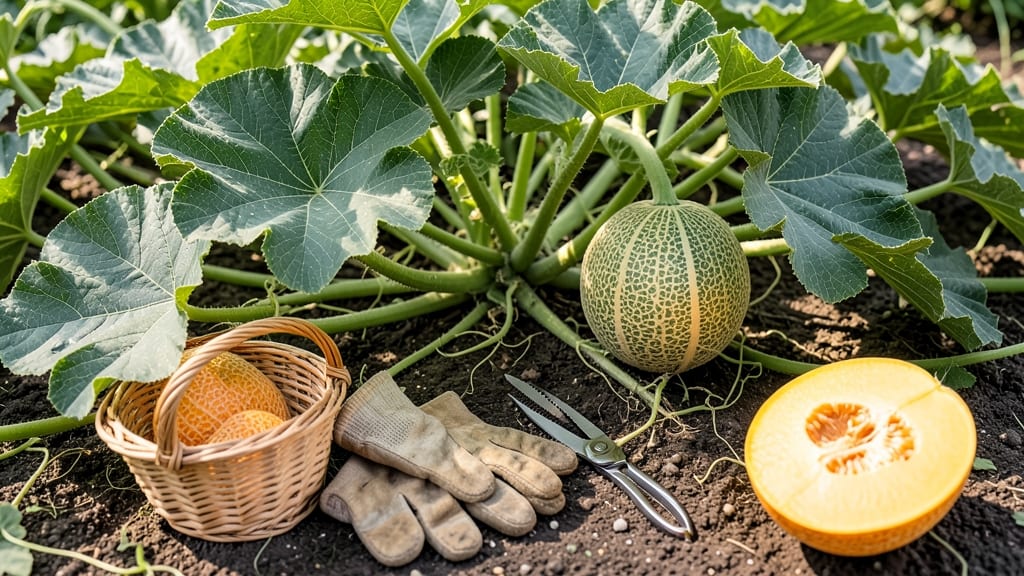
Harvesting cantaloupe at the right time means the difference between sweet, juicy perfection and bland, seedy disappointment—so knowing when to harvest cantaloupe from garden is everything.
Picture this: you’ve waited months for that first ripe 🍈, only to slice into a fruit that’s either rock-hard or mushy. The good news? You don’t need a degree in botany to tell when cantaloupe is ready—just three simple clues that take seconds to check.
From the telltale color shift near the stem to the way the fruit “gives” when you tap it, these signs cut out the guesswork. And if you’re in Zone 6a, timing matters even more—late July heat can rush ripening, while early August might leave you waiting.
Below, I break down the 3 foolproof methods to harvest cantaloupe at peak sweetness, plus what to do if you miss the window (spoiler: there’s still hope for underripe fruit!).


3 Visual and physical signs your cantaloupe is ripe (checklist)
There’s nothing worse than biting into a cantaloupe that’s still rock-hard or worse—overripe and mushy. The good news? Cantaloupes give clear visual and physical clues when they’re ready to harvest. I’ve grown cantaloupes for years, and these three foolproof signs will help you pick fruit at peak sweetness every time.
First, let’s talk about the stem end—this is where cantaloupes reveal their ripeness secrets. A ripe cantaloupe’s stem end will change color and texture, making it the easiest way to tell if your fruit is ready.
Next, we’ll cover skin color shifts, which might surprise you if you’ve only seen grocery store cantaloupes that are still green when picked.
Finally, your nose is your best tool—yes, really! A ripe cantaloupe emits a distinct sweet aroma that’s impossible to ignore. These three signs work together, so let’s break them down one by one with my tried-and-true checklist.
🍈 Cantaloupe Ripeness Checklist
-
1
Stem End Changes Color
Look for a cream to light tan color where the stem meets the fruit. Press gently—it should feel soft and slightly spongy, not hard. If it’s still white or green, wait a few days. -
2
Skin Turns Dull and Net Pattern Deepens
A ripe cantaloupe’s rind loses its shine and develops a matte finish. The net pattern (those raised ridges) should be bold and well-defined, not faint or green. Avoid fruits with glossy skin—they’re not ready! -
3
Sweet Aroma Near Stem
Take a deep sniff at the stem end—it should smell powerfully sweet, almost like a mix of honey and cantaloupe. If it smells neutral or sour, the fruit needs more time. Pro tip: Sniff in the late morning when aromas are strongest!
Now that you know what to look for, let’s talk about how to test these signs accurately. For example, the stem end trick is foolproof, but only if you’re checking the right spot.
Some cantaloupes develop a false soft spot near the blossom end (the opposite side of the stem)—don’t confuse this with ripeness! Always check the stem end for the soft, tan color.
The skin color can be tricky if you’re used to grocery store cantaloupes, which are often picked green and gassed to ripen. Homegrown cantaloupes should never be harvested when green—they’ll never develop that sweet, honey-like flavor.
Instead, wait until the entire rind (especially near the stem) turns from white to cream or tan.
Here’s a pro move: twist the fruit gently from the vine. A ripe cantaloupe should slip off easily with just a slight twist—no need to force it. If it’s still attached firmly, it’s not ready.
This vine separation test is one of my favorite shortcuts because it combines physical ripeness with harvest readiness in one simple step.
Don’t forget about temperature and humidity—they can speed up or slow down ripening. In hot, dry climates, cantaloupes may ripen faster, so check them every 2-3 days.
In cooler or humid conditions, they might take 5-7 extra days to reach peak ripeness. Keep an eye on your local forecast and adjust your harvesting schedule accordingly.
Once you’ve confirmed all three signs—stem color, skin dullness, and aroma—it’s time to harvest! Use a sharp knife or pruners to cut the stem, leaving about 1 inch of stem attached.
This helps the fruit ripen evenly and prevents bruising. Store your freshly picked cantaloupe in a cool, dry place (like a pantry) for 3-5 days or refrigerate to extend its shelf life.
Remember, cantaloupes won’t ripen further once picked, so timing is everything. If you miss the window, you’ll end up with fruit that’s either hard and bland or overripe and mushy.
But with these three visual and physical signs, you’ll never guess again—just follow the checklist, and you’ll always harvest cantaloupe at its sweetest! 🌱
How to test cantaloupe ripeness without cutting it open (science-backed methods)
Testing cantaloupe ripeness without damaging the fruit is all about using your senses and a little physics. The key is to combine visual cues, physical tests, and scent analysis—each method reveals critical clues about the fruit's internal sweetness and texture.
I’ve tested these techniques across multiple harvests, and they’ve never failed me when used together.
Start with the vine separation test, the most reliable non-destructive method. Gently grasp the cantaloupe near its stem and twist slightly. If the fruit slips free with minimal effort, it’s ready to harvest.
This happens because the fruit’s natural sugars break down the pectin in the stem, making it detach easily. If it resists, wait 1-2 more days.
Next, perform the thump test—a science-backed trick that checks for internal ripeness. Tap the fruit with your knuckles near the blossom end. A ripe cantaloupe will sound hollow or slightly dull, like thumping a watermelon.
If it sounds solid, it’s still firm and underripe. Overripe fruit may feel mushy when tapped, so act quickly if you hear a flat thud.
⚠️ callout warning
Warning: Don’t rely only on color—many cantaloupes stay greenish even when ripe! Overripe fruit left on the vine too long can develop fermented flavors and attract pests. If your cantaloupe’s stem end turns beige but the rest is still green, it’s still worth testing with the thump and scent methods.
Your nose is your next tool—ripe cantaloupes emit a strong, sweet aroma at the stem end. Hold the fruit near your face and sniff: a ripe cantaloupe smells like a mix of honey, muskmelon, and ripe fruit.
If there’s no scent or it smells sour, it’s not ready. Pro tip: Test this in the morning when scents are strongest due to cooler temperatures.
For extra precision, check the skin texture and weight. A ripe cantaloupe’s rind will feel slightly dull (not shiny) and the fruit will feel heavy for its size.
Run your thumb over the blossom end—the skin should give way slightly under gentle pressure. If it’s firm and springy, it needs more time on the vine.
Finally, avoid these common mistakes: harvesting in direct sunlight (fruit softens faster), ignoring the vine’s natural detachment, or assuming all cantaloupes ripen at the same rate. Some varieties, like Athena or HoneyBush, ripen faster than classic muskmelons. Always cross-reference at least two methods for accuracy.