
Picking
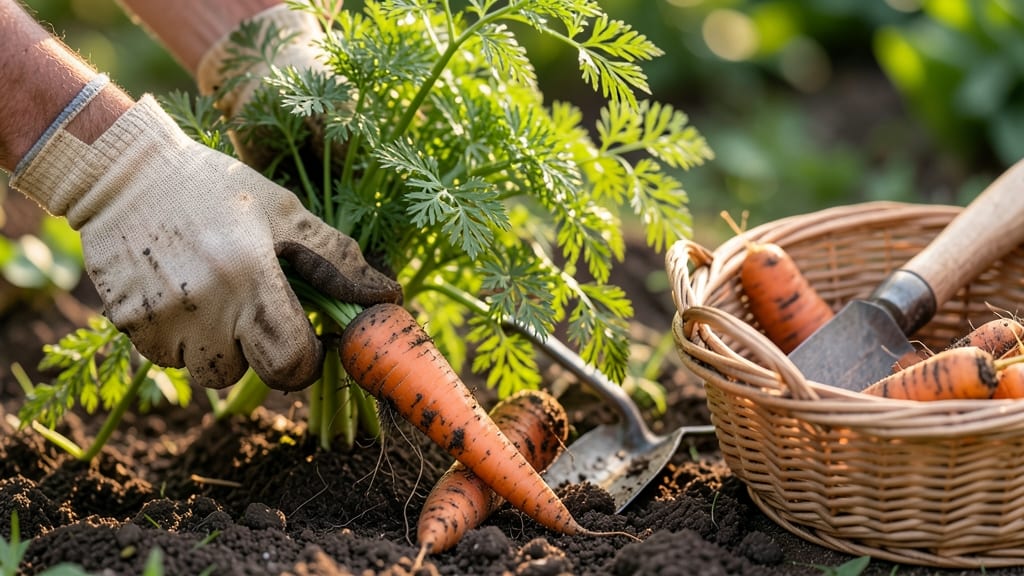
Harvesting carrots from your garden at the right time ensures sweet, crisp 🥕 roots that taste like summer at its peak.
Picture this: you’ve nurtured your carrots for months, only to pull them too early and end up with tiny, underdeveloped roots—or worse, wait too long and get tough, woody messes. The difference between a perfect harvest and a disappointing one comes down to knowing exactly when to dig.
Most gardeners wait for the tops to yellow or the roots to reach 1-2 inches in diameter, but the real secret lies in the soil.
A simple 3-finger-deep check reveals whether your carrots are ready to pull, and I’ll show you how to do it right in 3 easy steps—no guesswork required.
From regional timing cues to avoiding common mistakes, this guide covers everything you need to know to harvest carrots at their sweetest, store them properly, and keep your garden productive all season.


How to check carrot maturity using the 3 finger-deep soil test
Harvesting carrots at the wrong time can ruin their sweet flavor and crisp texture. The 3 finger-deep soil test is my foolproof method to determine when carrots are perfectly ripe. This technique combines soil depth, root size, and leaf health for foolproof results every time.
Most carrot varieties need 60-80 days to mature, but soil conditions and weather can shift this window. The finger test accounts for these variables by checking root development without digging. It’s especially useful for baby carrots (harvested at 2-3 inches) or full-sized roots (1-2 inches in diameter).
Before testing, ensure your carrots have received consistent moisture and full sun exposure. Dry soil or poor light can delay maturity, making the finger test less reliable. Water your bed lightly the day before testing to settle the soil for accurate measurements.
Step-by-Step: The 3 Finger-Deep Soil Test
- Step 1: Choose a healthy plant Select a carrot with 4-6 inch tall tops and no yellowing leaves. Avoid plants with green tops (indicates regrowth after partial harvest).
- Step 2: Gently loosen soil Use your fingers to part the soil around the base of the plant. Work slowly to avoid damaging roots. Aim for a 2-inch wide clearing around the stem.
- Step 3: Insert 3 fingers vertically Push your index, middle, and ring fingers into the soil beside the carrot. Press firmly but gently—no digging. Stop when you feel resistance (the carrot’s shoulder).
-
Step 4: Measure depth
Compare the depth of your fingers to these guidelines:
- Baby carrots: Fingers reach 1-1.5 inches (harvest now).
- Standard carrots: Fingers reach 2-3 inches (ready to pull).
- Overgrown: Fingers reach 3+ inches (roots may be woody).
- Step 5: Check root firmness Gently squeeze the exposed root tip. It should feel firm but yielding (like a ripe avocado). If it’s hard, leave it 5-7 more days. If mushy, it’s overripe.
-
Step 6: Inspect leaf health
Pull a test carrot and check:
- Yellowing tops = mature (natural process).
- Green tops = underripe or regrowing.
- Dry, brown leaves = overripe (bitter flavor).
For baby carrots, harvest when your fingers reach just 1 inch deep. These varieties (like 'Paris Market') are bred for early harvests and won’t reach the standard 2-3 inch depth. Their sweetness peaks at this size, so don’t wait!
If your carrots exceed the 3-inch mark, they’ve likely become woody and tough. This happens when roots outgrow their space or face drought stress. To salvage them, harvest immediately and use in stews or soups where texture matters less.
Regional differences matter! In cooler climates (USDA Zones 3-5), carrots may take 10-14 extra days to mature due to slower growth. Conversely, hot, dry zones (Zones 8-10) can speed up harvest by 7-10 days if soil stays moist.
After harvesting, trim the greens to 1/2 inch above the root. This prevents moisture loss and extends storage life. Store carrots in perforated bags in the fridge for up to 3 weeks while maintaining their sweetness.
Mastering the finger test ensures you’ll never miss the perfect harvest window again. Next time, grab your gloves and dig in—your taste buds will thank you for those crisp, sweet carrots! 🥕
Signs your carrots are overripe (and how to fix it)
Even with perfect growing conditions, carrots can easily become overripe if left too long in the ground. The key is recognizing the visual and texture cues that signal it's time to harvest before quality declines.
Overripe carrots lose their signature sweetness and develop a woody, bitter taste that even cooking can't fully mask.
One of the first warning signs is yellowing or browning foliage that starts at the leaf edges and spreads inward. This isn't just cosmetic—it indicates the plant has redirected all its energy to root development, often resulting in oversized, tough roots that split easily when pulled.
The tops may also flop over or appear wilted, even when soil moisture is adequate.
🚨
Harvest carrots when:
- Tops reach 4-6 inches (for standard varieties)
- Roots are 1-2 inches thick (varies by type)
- Skin resists gentle pressure (firm but not hard)
Waiting too long leads to bitter, woody roots and cracked surfaces from uneven growth.
If you've missed the perfect window, don't panic—overripe carrots can still be salvaged for cooking or storage. Start by trimming the leafy green tops down to 1 inch above the root.
This reduces moisture loss and helps preserve what sweetness remains. For immediate use, roast or boil them—the heat breaks down some of the starches that cause bitterness.
For a second crop, consider replanting in late summer using fast-maturing varieties like 'Paris Market' or 'Little Finger'. These types reach harvest size in just 50-60 days, giving you a fresh batch before winter sets in.
Just ensure your soil is well-draining and rock-free to prevent forked roots in the new planting.
To prevent future overripeness, adopt a gradual harvest strategy. Pull a few carrots every 2-3 days once they near maturity, leaving room for others to grow. This method extends your harvest window by 2-3 weeks and keeps your crop consistently sweet and tender.
Store any remaining overripe carrots in the crispest drawer of your refrigerator, wrapped in a damp paper towel to maintain moisture. With proper storage, they'll stay edible for up to 3 weeks, though flavor will continue to degrade over time.
For long-term preservation, consider freezing or canning—both methods work well with slightly overripe carrots.