
Picking
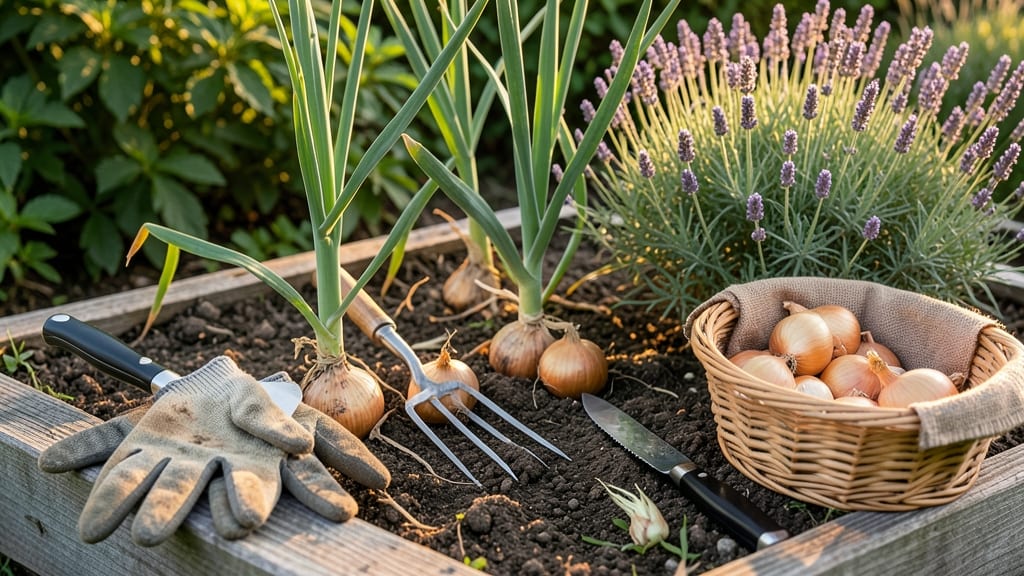
Harvesting onions from the garden at the right time ensures perfect flavor and long storage life—don’t miss these key signs that tell you when your 🧅 are ready.
Picture this: You’ve nurtured your onions all season, and now the tops are browning while the bulbs feel firm beneath your fingers. That’s the moment to pull them—too soon, and you’ll end up with small, pithy onions that won’t store well.
Timing matters because onions mature differently depending on your climate zone. In USDA Zone 6a, late summer to early fall is prime harvest season, but shorter-day varieties may need pulling earlier.
Below, I’ll walk you through the three foolproof signs your onions are ready, plus how to cure and store them for months of fresh flavor—no guesswork required.


3 Clear signs your onions are ready for harvesting
Knowing exactly when to harvest your onions can make the difference between sweet, flavorful bulbs and bland, watery ones. The key lies in watching for three visual and physical indicators that show your onions have reached peak maturity.
These signs apply to both short-day onions (common in warmer climates) and long-day onions (grown in cooler regions), though timing may vary slightly depending on your USDA zone.
If you've been eagerly checking your onion patch, you might be tempted to pull them too soon. But harvesting at the right moment ensures your onions store well and pack the best flavor. Let's break down the three unmistakable signs that your onions are ready for the harvest basket.
🌱
The most obvious sign is when the green tops of your onions turn straw-colored or yellow and fall over. This happens because the onion plant is redirecting its energy from leaf growth to bulb development. If you see 50% or more of the tops browned and flopping, it's time to harvest.
Gently squeeze a bulb near the base. If it feels plump, firm, and dry (not soft or squishy), it's ready. You should also notice the skin has thickened and feels papery. If the bulb feels soft, it's still growing, and harvesting now will result in poor storage quality.
The neck of the onion (the stem area above the bulb) will begin to shrink and tighten as the bulb matures. When you see this 1-inch gap between the bulb and the dying tops, it's a clear signal that the onion is fully mature. This narrowing helps prevent rot during storage.
Timing matters when it comes to regional differences. In cooler climates (USDA Zones 3-5), where long-day onions thrive, you'll likely harvest in late summer to early fall (around August to September).
Meanwhile, gardeners in warmer zones (USDA Zones 7-10) growing short-day onions can expect harvests as early as June or July, depending on your last frost date.
If you're growing green onions or scallions, the rules are different—you can harvest them when they reach 6-8 inches tall by cutting just above the soil line.
But for mature bulbs, these three signs are your best guide. Ignoring them could mean onions that sprout prematurely in storage or lack the sweetness you're craving.
Once you spot these signs, act quickly! Onions left too long in the ground can split or rot, especially after rain. Pull them on a dry, sunny day to allow proper curing, which is essential for long-term storage.
A well-cured onion can last for months in a cool, dark place, making your harvest last well into winter.
🧅
Pro tip: If you're unsure whether your onions are ready, dig up one bulb to check. This test harvest lets you inspect the bulb without committing to pulling the whole patch. If it's not ready, wait another week and check again. Patience now means better onions later!
Regardless of your climate, these three signs will never steer you wrong. When you see yellowing tops, firm bulbs, and a tight neck, grab your gardening shears and get ready to enjoy the fruits of your labor. Your kitchen—and your taste buds—will thank you!
How to harvest onions for best flavor vs. long-term storage
Harvesting onions at the right time ensures maximum flavor and storage potential. Mature onions should be harvested when their tops yellow and flop, while green onions can be picked repeatedly throughout the season. The method you choose depends on whether you prioritize immediate flavor or long-term storage.
For peak flavor, harvest mature onions when the tops are 50-70% browned and the bulbs feel firm.
If you wait too long, the bulbs may split or rot. Green onions, on the other hand, can be snipped as soon as they reach 6-8 inches tall—they’ll regrow for multiple harvests.
⚠️ callout warning ⚠️
⚠️ Critical Harvesting Mistake
Don’t harvest onions when the tops are still green and upright—this means the bulbs aren’t fully matured. Overwatering before harvest can also cause splitting. Always harvest on a dry, sunny day to prevent disease.
To harvest mature onions, use a garden fork to gently loosen the soil around the bulb, then lift it out. Shake off excess dirt and trim the tops to 1 inch above the bulb.
For green onions, simply snip the entire plant 1 inch above the soil—they’ll keep growing!
After harvesting, let mature onions cure in the sun for 3-5 days to toughen the skins.
Store them in a cool, dry place with good airflow, like a mesh bag or ventilated box. Green onions should be stored in the fridge for up to 2 weeks with the roots submerged in water.
For long-term storage, braid green onions and hang them in a dry, dark place. Mature onions will last 6-8 months if kept at 40-50°F with 50-60% humidity. Check periodically for soft spots or mold—discard any affected bulbs immediately.
If your onions start sprouting or softening, they’re past their prime. Use them in cooking immediately or freeze them for later. With proper timing and care, you’ll enjoy homegrown onions all winter long! 🧅