
Picking
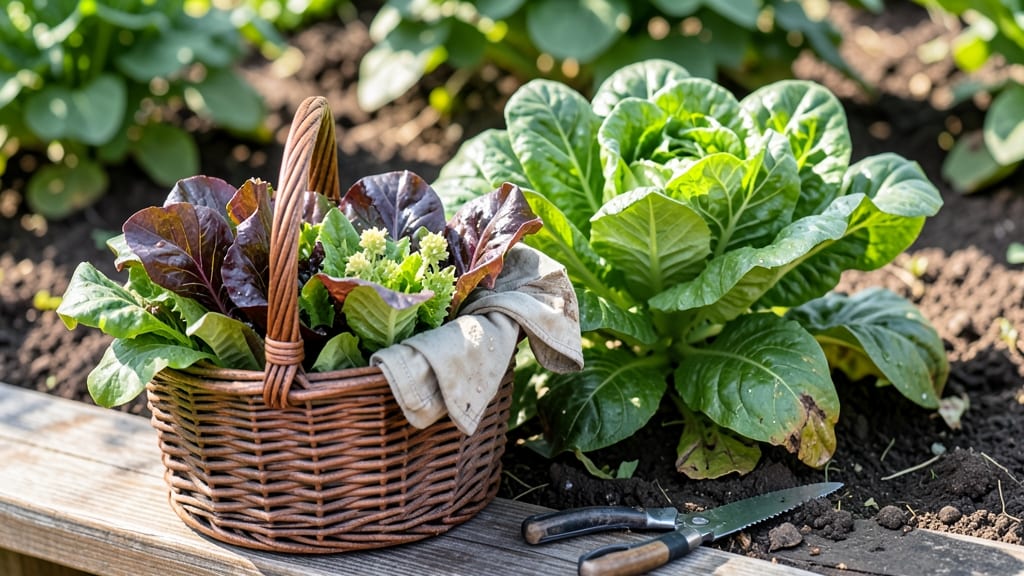
Picking lettuce from your garden at the right time means the difference between crisp, sweet leaves and bitter, tough stalks—so timing your harvest is everything.
Imagine spending weeks nurturing your 🥬 lettuce, only to pull it too late and end up with a sad, bolted mess. That’s why knowing when to harvest isn’t just about size—it’s about leaf texture, flavor, and even the weather.
Get it wrong, and you’re left with disappointment instead of a fresh salad.
In this guide, I’ll walk you through the key signs your lettuce is ready—like leaf size, firmness, and color—and how to avoid common mistakes that lead to bolting. Whether you’re growing loose-leaf or head varieties, these tips will help you harvest at peak freshness, season after season.
You’ll also discover how to extend your harvest window, prevent bolting, and even regrow your lettuce for a second crop. No more wasted effort—just crunchy, flavorful greens straight from your garden.


Signs your lettuce is ready for harvest: leaf size, texture, and flavor
Knowing when to harvest your lettuce transforms a simple garden task into a rewarding experience. The ideal harvest window depends on three key factors: leaf size, texture, and flavor. When these elements align, you'll enjoy crisp, sweet leaves at their peak.
For most varieties, this happens when leaves reach 4-6 inches in length, but the exact timing varies between loose-leaf and head lettuce types.
For loose-leaf varieties like buttercrunch or oakleaf, you can start harvesting as soon as the outer leaves reach 3-4 inches. These varieties are more forgiving and often regrow after a partial harvest.
In contrast, head lettuce like iceberg or romaine should be harvested when the entire head is firm and compact, typically after 45-60 days of growth.
Let’s break down the visual cues that signal your lettuce is ready to pick. First, examine the leaf size. For most varieties, harvest when leaves reach 4-6 inches in length. Smaller leaves may still be tender but lack the full flavor development.
Larger leaves can become tough and bitter, especially in hot weather. Use a ruler to check—this simple tool prevents guesswork and ensures consistency.
Next, assess the texture by gently squeezing a leaf between your fingers. Ready-to-harvest lettuce should feel crisp but not brittle. A leaf that crumbles easily is overripe, while one that feels soft or floppy hasn’t matured enough.
Pay special attention to the leaf edges, which should be slightly curled, indicating full growth. This visual cue is especially useful for romaine and leaf lettuce varieties.
Flavor is the final indicator of harvest readiness. Bite into a leaf to test its taste. At the perfect moment, lettuce should be mild and sweet, with no hint of bitterness. Bitterness is a sign of stress or overgrowth, often triggered by heat or drought.
If your lettuce tastes bitter, it’s already past its prime. To avoid this, harvest in the morning when flavors are at their peak and temperatures are cooler.
Overgrowth is one of the biggest mistakes gardeners make when harvesting lettuce. If you wait too long, the leaves will bolting, sending up a tall flower stalk and becoming bitter and tough. To avoid this, monitor your plants closely and harvest outer leaves first for loose-leaf varieties.
This practice encourages continuous regrowth and extends your harvest season. For head lettuce, remove the entire head once it reaches maturity to prevent bolting.
Seasonal conditions also play a role in harvest timing. In spring and fall, lettuce grows more slowly, so it may take longer to reach harvest size. In summer, heat can accelerate growth but also trigger bolting.
If your lettuce starts to bolt prematurely, provide shade cloth and keep the soil consistently moist. This simple adjustment can buy you an extra 2-3 weeks of harvestable leaves.
Finally, don’t overlook the importance of harvesting tools. Use a sharp knife or clean scissors to avoid damaging the plant. For loose-leaf varieties, snip leaves at the base, leaving the growth point intact.
For head lettuce, cut the entire head about 1 inch above the soil to prevent rot. After harvesting, rinse the leaves gently with cool water and store them in a perforated plastic bag in the refrigerator for up to 5
How to prevent bolting and extend your lettuce harvest season
Bolting—when lettuce sends up a bitter flower stalk—can end your harvest season prematurely. The key to preventing this is understanding your lettuce's stress triggers and adjusting your growing conditions accordingly. For me, the difference between a 3-month harvest and a 2-week disappointment comes down to smart planning and proactive care.
In spring and fall, cooler temperatures naturally delay bolting, giving you a longer harvest window. But in summer heat, lettuce bolts within weeks unless you take action.
I’ve learned that shade cloth, consistent watering, and succession planting are my top tools to keep lettuce productive well into the season.
Don’t wait until leaves turn bitter! Once your lettuce bolts, the flower stalk makes leaves tough and unpalatable. For loose-leaf varieties, harvest outer leaves when they reach 4-6 inches. For head lettuce, pick the whole head before the inner leaves tighten. Waiting just 3-5 days past maturity can trigger bolting, especially in hot weather.
Pro Tip: Check leaves in the morning for crispness—wilting by afternoon signals underwatering or heat stress, both of which speed up bolting.
One of my most effective strategies is using 30-50% shade cloth during peak summer months. This reduces soil and leaf temperatures by 10-15°F, slowing down the plant’s response to heat.
I install it as soon as daytime temps hit 80°F and remove it when evenings cool below 70°F. This simple step has extended my summer harvest by 4-6 weeks.
Watering plays a critical role too. Lettuce roots are shallow, so inconsistent moisture stresses plants and triggers bolting. I water deeply every morning at the base, avoiding wetting leaves to prevent fungal diseases.
During heatwaves, I add mulch to retain moisture and keep roots cool. Overwatering is just as harmful—waterlogged soil suffocates roots and accelerates bolting.
For spring and fall harvests, focus on soil temperature management. Lettuce bolts when soil temps exceed 75°F. I test soil temps with a thermometer and delay planting if readings are high.
In fall, I use row covers to protect young plants from early frost, which can also stress lettuce into bolting prematurely.
Finally, succession planting ensures a continuous harvest. Instead of planting all lettuce at once, I sow new seeds every 2 weeks in spring and every 3 weeks in fall. This way, when one batch bolts, another is ready to replace it.
I also mix heat-tolerant varieties like Jericho or Black Seeded Simpson with more sensitive types to maximize yield.
With these strategies, I’ve successfully grown lettuce for up to 12 weeks in summer and 16 weeks in spring/fall. The secret? Pay attention to your plants’ signals—leaf size, texture, and growth speed—and adjust your care before bolting starts. 🥬