
Picking
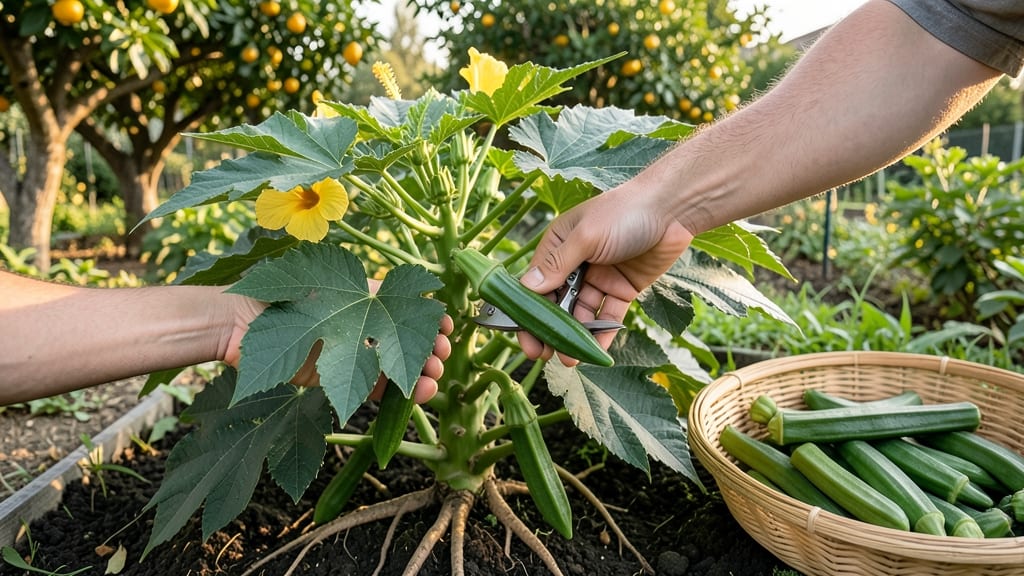
To pick okra from the garden at the perfect time, aim for pods that are 2 to 3 inches long and still tender — any longer, and you risk tough, woody texture that turns even the freshest dishes into a chewy challenge.
Okra lovers know the struggle: Pick it too early, and you get slimy pods; leave it too long, and the seeds harden into a tough, unappealing bite. Mastering the perfect harvest time transforms your garden into a crisp, flavorful okra factory.
This isn’t just about size — the color, firmness, and even the sound of the pod matter. A bright green, glossy okra that snaps cleanly when bent is your golden ticket to restaurant-quality texture. Miss these cues, and you’re stuck with pods that scream "overripe" at every bite.
Below, I’ll break down the exact finger-length rule, how to check ripeness without a guess, and why picking every 2 to 3 days keeps your plants producing like a well-oiled machine. No more wasted harvests — just perfect, tender okra every time.


The finger-length rule: how to determine okra’s perfect harvest window
Harvesting okra at the right time can make the difference between a delicate, crisp pod and a woody, seed-packed disappointment. The finger-length rule is my go-to method for timing harvests perfectly.
When pods reach about 3-4 inches long—roughly the length of my index finger—they’re at their peak flavor and texture. This is when okra’s mucilaginous coating (that slimy goodness) is at its best, and the seeds haven’t yet hardened.
Why does pod size matter so much? Texture and flavor degrade quickly as okra matures. A 2-inch pod might be too young and bland, while a 5-inch pod becomes tough and fibrous.
Even the seed development plays a role: Larger seeds mean less edible pod. Mastering this rule ensures you’re always harvesting at the sweet spot for eating or cooking.
Not all okra varieties follow the same timeline. Some, like ‘Clemson Spineless’, mature faster, while others, such as ‘Emerald’, take a few extra days. The finger-length rule is a universal guideline, but I always adjust slightly based on the specific variety I’m growing.
For example, heirloom okra might need a slightly shorter harvest window to avoid bitterness.
Here’s the visual cheat sheet I use to stay on track. It breaks down the ideal harvest window by variety and includes key visual cues to watch for.
| Variety | Ideal Harvest Length | Texture | Flavor Profile | Seed Stage |
|---|---|---|---|---|
| Clemson Spineless | 2.5–3.5 inches | Crisp, tender | Mild, slightly sweet | Small, soft |
| Emerald | 3–4 inches | Firm, slightly chewy | Earthy, nutty | Developing |
| Jumbo Red | 3.5–4.5 inches | Tender-crisp | Sweet, slightly tangy | Soft, plump |
| Blues | 2–3 inches | Delicate, silky | Mild, fresh | Minimal development |
| Perennial Okra | 3–4 inches | Firm, juicy | Rich, herbal | Early-stage |
Note: Harvest pods before they reach their max length to maintain tenderness.
When checking your okra pods, always run your thumb and forefinger along the length to gauge firmness. A slight give when pressed indicates readiness, while a hard, woody feel means it’s past its prime.
I also look for bright green color and a glossy sheen—dull or yellowing pods are a sign to harvest sooner rather than later.
Timing your harvests isn’t just about pod size, though. Environmental factors like temperature and humidity can speed up or slow down maturation. In hot, dry climates, okra may mature faster, while cooler, humid conditions can extend the window.
I’ve found that in my Zone 8a garden, I need to harvest every 2-3 days during peak summer to keep up with the pace.
One common mistake I see is waiting too long to harvest, thinking the pods will just "get better." In reality, the longer you wait, the tougher and seedier they become. Overripe okra can even develop a bitter taste and a fibrous texture that’s unappetizing.
The key is to stay consistent with your harvests—once you see those 3-4 inch pods, grab your pruners and get picking!
Pro tip: If you’re growing okra for seed saving, you’ll want to let a few pods mature fully—up to 6 inches or more. But for eating, always prioritize the finger-length rule to enjoy the best flavor and texture. Your taste buds (and your dinner guests) will thank you!
🌱
Signs of overripe and underripe okra: what to watch before picking
Knowing when to harvest your okra makes all the difference between a tender, delicious pod and one that's tough or slimy. The key lies in visual cues and physical texture—both tell you whether your okra is ready or past its prime.
Ignoring these signs can turn your garden's bounty into a culinary challenge.
Start by checking the pod length. Ideal okra should be between 2-3 inches long, roughly the size of your index finger. This is when the texture is crisp and flavorful. If you miss this window, the pods quickly transition from perfect to problematic.
Color is another dead giveaway. Bright, glossy green pods signal readiness, while dull or yellowing pods mean it's overripe. The seed development inside also changes dramatically—small, soft seeds indicate freshness, while large, hard seeds mean the pod has passed its prime.
Overripe vs. Underripe Okra
Overripe Okra
- Pod length: 4+ inches
- Texture: Tough, woody
- Color: Dull, yellowing
- Seeds: Large, hard
- Flavor: Bitter, fibrous
Underripe Okra
- Pod length: <2 inches
- Texture: Slimy, soft
- Color: Pale green
- Seeds: Tiny, undeveloped
- Flavor: Bland, watery
Ideal Okra: 2-3 inches, bright green, firm but tender
Run your thumb along the pod to test firmness. Ready-to-pick okra should feel firm but tender, almost snapping when bent slightly. If it bends easily, it's underripe; if it resists entirely, it's overripe. This tactile check is my go-to method for quick assessments in the garden.
Don't overlook the pod surface. Fresh okra has a smooth, glossy texture, while overripe pods develop a rough, bumpy feel. Even the stem attachment matters—a clean break near the base means the pod is ready, while a stubborn connection suggests it's still maturing.
Timing your harvests based on these signs ensures you're always picking peak okra. Check your plants every 2-3 days during the growing season to catch them at their best. With practice, you'll develop an instinct for when to reach for those shears.