
Picking
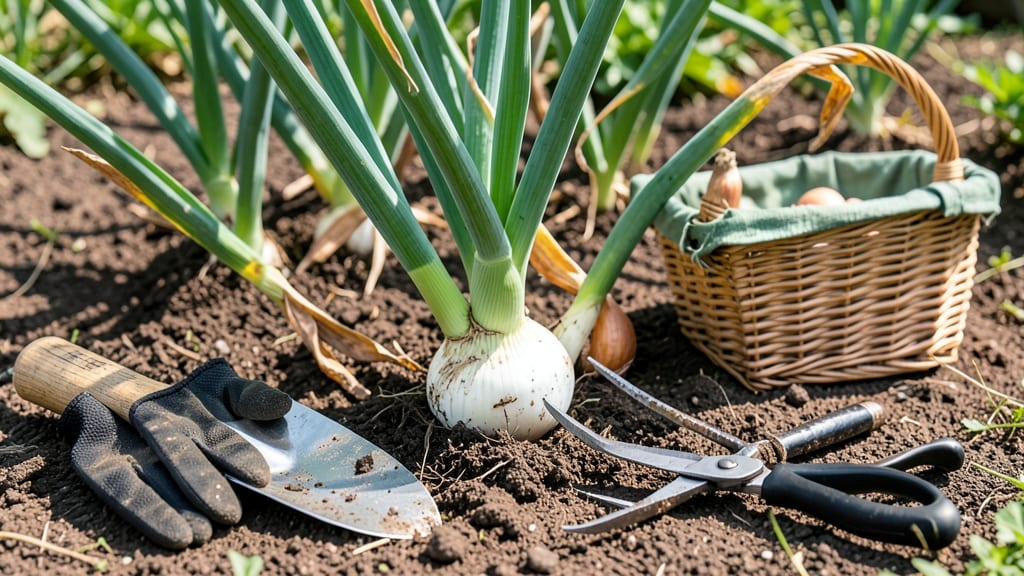
To pick onions from the garden at the perfect time means sweet, flavorful bulbs that store well — and avoiding the bitter, pungent disappointment of waiting too long.
Picking onions at the wrong time means wasted effort—and bitter, pungent bulbs instead of sweet, flavorful harvests. Timing your onion harvest perfectly ensures you get the best yield, storage life, and taste, but most gardeners miss the subtle cues.
Look for yellowing tops and bulbs that feel firm to the touch, not soft or still growing. The neck between the bulb and leaves should start drying out, a clear sign they’re ready to pull.
In USDA Zone 6a, aim for late summer to early fall, when the tops naturally fall over.
In this guide, I’ll walk you through three hands-on tests to check readiness, plus how to avoid common mistakes like harvesting too early or leaving them in the ground too long. By the end, you’ll know exactly when to pull your 🧅 for the best flavor and storage potential.


3 Hands-on tests to determine when onions are ready for harvest
Harvesting onions at the right moment transforms your garden into a flavorful treasure trove—but timing is everything. Overripe onions become woody and pungent, while underripe bulbs stay small and weak. The key lies in three simple, hands-on tests that reveal whether your onions are ready to pull.
These methods work for both storage onions and green onions, ensuring you never miss the perfect harvest window again.
I’ve tested these techniques across multiple seasons, and they’ve never failed me. The first test focuses on the leaf color shift, which is your earliest warning sign. Healthy green tops will start to yellow and flop over, signaling the bulb below is mature.
But don’t stop there—you’ll also need to check the bulb size and root resistance to confirm readiness. Skipping any of these steps can lead to disappointing harvests.
Here’s how to perform each test step-by-step, plus what to do if your onions fail any of them:
Gently grasp the topmost leaves of your onion plant. If they’re still bright green and upright, the bulb isn’t ready. Look for yellowing or brown tips—this means the plant is redirecting energy to the bulb. When 50% of the leaves have flopped over, it’s time for the next test.
Dig around the base of the plant to expose the bulb. For storage onions, aim for 2-3 inches in diameter. If the bulb is smaller than a golf ball, it’s not ready—leave it in the ground for 2 more weeks. For green onions, harvest when the shafts are 6-8 inches tall, regardless of bulb size.
Gently grasp the base of the onion and wiggle it side to side. If the roots resist and the bulb doesn’t slip out easily, it’s ready. If the bulb pulls out with minimal effort, it’s underripe. For green onions, simply tug on the green tops—they should come out cleanly when mature.
Peel back the outer layers of the bulb. Ready onions have thick, papery skin that resists tearing. If the skin is thin and translucent, wait another week. This test is especially critical for yellow and red onions, which store longer when harvested at peak maturity.
Many gardeners harvest too early because the green tops look healthy. But overwatering or excess nitrogen can keep leaves green while the bulb stays small. Always combine leaf color, bulb size, and root resistance for accurate results.
If your onions pass all three tests, it’s time to harvest—but don’t rush! Storage onions should cure in the sun for 3-5 days before storing, while green onions can go straight to the kitchen.
I once left a batch of onions in the ground for two weeks past maturity, and they turned bitter and shriveled. Trust the tests, and you’ll avoid that fate.
For green onions, you can harvest multiple times by cutting the outer leaves just above the bulb. This encourages regrowth, giving you a continuous supply. But for storage onions, timing is critical—harvest too late, and you’ll end up with sprouting bulbs that won’t keep.
The neck of the onion should start to dry and shrink, signaling it’s time to pull.
Pro tip: Harvest in the morning when temperatures are cool. This reduces stress on the plant and helps the bulbs dry more evenly. After pulling, trim the roots and tops to 1 inch above the bulb.
Then, lay them in a well-ventilated, shady spot for 3-5 days to cure. This step is non-negotiable for long-term storage.
Remember, onions are biennial plants, meaning they’ll flower and go to seed in their second year if left in the ground. But by the time they’re ready for harvest in their first year, you’ll have plump, sweet bulbs that rival store-bought quality.
Follow these tests, and you’ll never second-guess your onion harvest again.
🧅
Best time of year to harvest onions by climate zone
Onion harvest timing depends heavily on your USDA climate zone and whether you're growing storage onions or green onions. In cooler zones (3-6), aim for late summer to early fall harvests, while warmer zones (7-10) can extend into early winter.
The key is planting at the right time to ensure bulbs mature before first frost—typically 100-120 days after planting.
For spring-planted onions in most zones, harvest begins when tops yellow and fall over, usually July-August in northern regions and August-September in southern climates. If you miss this window, bulbs may rot or split before harvest.
In short-season gardens, opt for faster-maturing varieties like 'Early Yellow' or 'Red Baron' to avoid late-season risks.
Here's how to adjust your planting schedule based on your zone to maximize harvest potential:
In Zone 6a (like my garden), I plant onion sets in early April for a July-August harvest, timing it so bulbs mature before the first frost in mid-November.
For green onions, you can harvest continuously every 2-3 weeks once they reach 6 inches tall—no need to wait for bulb formation. This dual approach ensures fresh onions all season long.
If you live in warmer southern zones (9-10), consider a fall planting for winter harvests. Onions planted in October will mature just in time for Christmas dinner or early New Year's celebrations. Just be sure to use shade cloth during summer months to prevent bolting from heat stress.
For late frost-prone areas, use row covers or cold frames to extend your growing season. I've successfully added 2-3 weeks to my harvest window by using lightweight row covers during unexpected cold snaps. Always monitor your local frost forecast and adjust your harvest timeline accordingly.
Remember: Storage onions need full maturity for long-term storage, while fresh-market onions can be harvested earlier when bulbs reach 1-2 inches in diameter. The right timing ensures sweet, flavorful onions that store well all winter—no more sad, shriveled bulbs! 🧅