
Picking
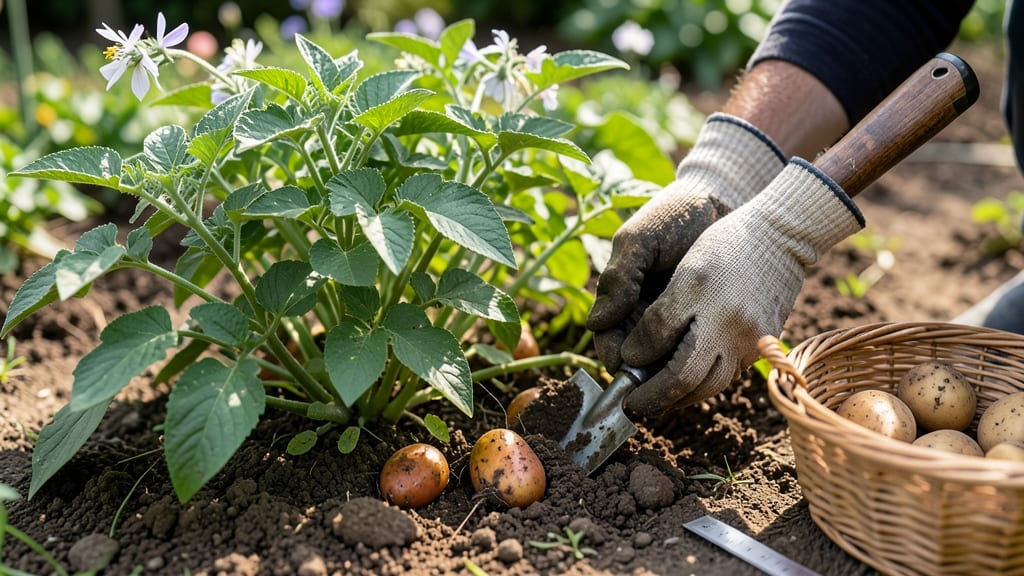
To pick potatoes from your garden at the perfect moment means crisp, flavorful tubers instead of mealy or underdeveloped ones—so timing is everything.
Picture this: you’ve spent weeks nurturing your 🥔 patch, and now the vines are yellowing, but is it really time to dig? Harvest too early, and you’ll miss out on full-sized potatoes; wait too long, and they’ll turn to mush in the soil.
The key is knowing when the tubers are ready—whether you’re after baby potatoes or storage-worthy spuds.
In this guide, I’ll walk you through the three foolproof tests to check potato readiness, plus how climate and variety affect your harvest window. No more guessing—just perfect, restaurant-quality potatoes every time.
By the end, you’ll know exactly when to pull the shovel, how to tell if they’re still cooking underground, and the one mistake that ruins even the best harvest. Let’s get started.


3 Finger-poke tests to determine perfect potato harvest timing
Knowing when to harvest potatoes is an art—and science! The finger-poke test is my go-to method for determining tuber readiness without guessing. Unlike relying solely on days after planting, this hands-on approach accounts for soil conditions, variety differences, and even weather quirks.
I’ve used these tests for years, and they’ve saved me from digging up underdeveloped spuds or waiting too long for mealy tubers.
Potatoes mature underground, so you can’t judge them by their leaves alone. The three finger-poke tests I’ll share today combine visual cues with tactile checks to give you the most accurate harvest timing. Whether you’re growing new potatoes or storing varieties, these methods work for both. Let’s dig in!
🌱
When your potato plants start flowering, use a finger to gently poke into the soil around the base of the stems. Aim for a depth of 4-6 inches.
👉 Ready when: You feel small, firm tubers (about golf-ball size for new potatoes) or larger ones for storage varieties.
Watch for foliage yellowing and wilting, which signals the plant is redirecting energy to tuber development. This usually happens 2-3 weeks before harvest.
👉 Ready when: The stems turn brown and crispy, and the plant looks "dead" (even if it’s not). This is prime time for mature potatoes!
Dig up a few test potatoes and check their skin thickness. For storage varieties, the skin should be thick and hard to puncture with a thumbnail.
👉 Ready when: The skin resists pressure, and the tuber feels firm but slightly yielding (not rock-hard or squishy).
Timing matters more than you think! Harvesting too early means small, underdeveloped potatoes, while waiting too long can lead to sprouting tubers or mealy texture. The finger-poke tests help you avoid both extremes.
For new potatoes, harvest when they’re golf-ball sized (around 50-60 days after planting), while storage varieties need 90-120 days to reach full maturity.
Seasonal variations also play a role. In cool climates (USDA Zones 1-5), aim for harvest in late summer to early fall, while warm climates (Zones 6-10) may need to harvest earlier to avoid heat stress. Always adjust based on your local frost dates—potatoes won’t survive freezing!
Pro tip: If you’re unsure, do a partial harvest! Dig up a few test tubers to check their size and skin hardness. This lets you confirm readiness without committing to full harvest. I’ve saved many a crop by testing first—don’t skip this step!
🌿
One common mistake is harvesting based on foliage color alone. While yellowing leaves are a sign, they don’t always mean the tubers are ready. Combine the finger-poke tests with visual cues for the most accurate results.
For example, if your plants are dying back but the tubers feel soft when poked, wait a few more days.
For storage potatoes, cure them in a dark, humid place (like a garage) for 7-10 days after harvest to thicken their skins. This step is crucial for long-term storage success. If you’re eating them fresh, you can skip curing, but the flavor improves with a little time!
✂️
Best harvest times by potato variety and climate zone
Not all potatoes ripen on the same schedule—early varieties need quick harvests, while late varieties can wait. Your climate zone also shifts timing, especially in warm vs. cool regions.
Miss the window, and you risk underdeveloped tubers or overripe, mealy potatoes. Let’s break down the best harvest strategies for your garden.
First, understand that early potatoes (like Red Pontiac) mature in 60-70 days, mid-season (e.g., Yukon Gold) take 70-90 days, and late varieties (such as Russet) need 90-120 days.
In cool climates (USDA Zones 1-4), harvest early to avoid frost damage, while warm climates (Zones 8+) may need staggered harvests to prevent heat stress.
| Variety Type | Days to Maturity | Best Harvest Time | Climate Adjustments |
|---|---|---|---|
| Early (e.g., Red Pontiac) | 60-70 days | Late June-July | Harvest before vines die back; avoid frost. |
| Mid-Season (e.g., Yukon Gold) | 70-90 days | July-August | Wait for foliage yellowing; harvest before heat stress. |
| Late (e.g., Russet) | 90-120 days | August-September | Harvest after first frost in cool zones; mulch in warm zones. |
In cool climates, prioritize early varieties for spring harvests. Plant late varieties in early summer to extend your season. For warm climates, stagger plantings every 2-3 weeks to ensure a continuous supply.
Watch for foliage yellowing—this signals tubers are ready, but don’t wait too long or they’ll toughen.
For new potatoes, harvest when tubers are golf-ball sized (about 50 days for early varieties). Dig carefully with a fork to avoid damaging small tubers. Mature potatoes should have thick, rough skins and a dry stem end.
If left too long, they’ll sprout or shrivel, ruining storage potential.
Pro tip: In Zone 5 or colder, harvest before the first frost or mulch heavily to protect tubers. In Zones 7-10, heat stress can trigger early harvests—watch for wilted foliage even if days to maturity aren’t met.
Adjust your schedule based on soil temperature (ideal: 60-70°F for tuber development).
Timing is everything—miss the window, and you’ll end up with underdeveloped tubers or overripe, mealy potatoes. Use this guide to sync your harvest with your variety type and local climate, and you’ll always dig up perfect, crisp potatoes ready for the table. 🥔