
Picking
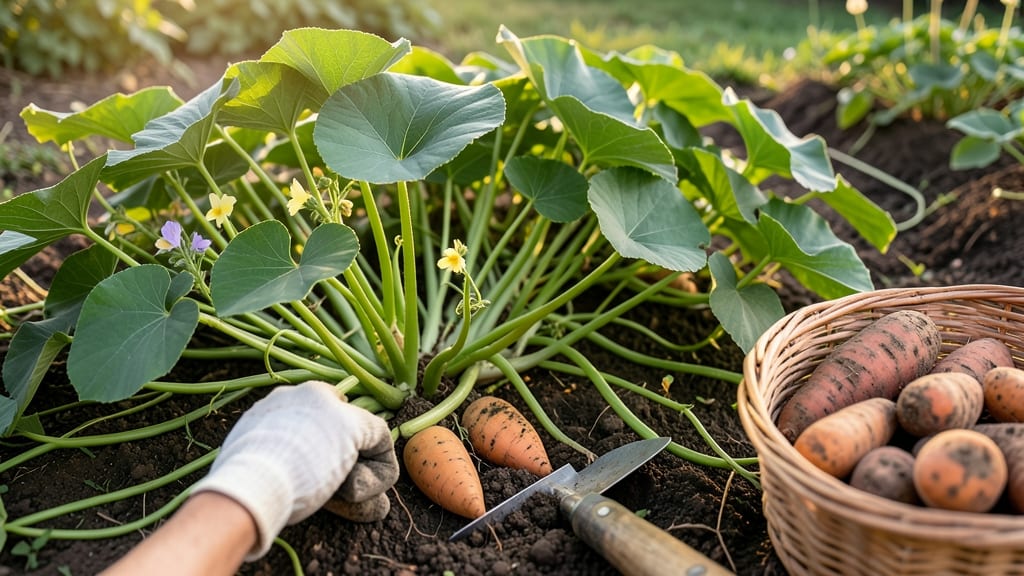
Picking sweet potatoes from the garden at the right time means the difference between tender, flavorful tubers and tough, woody ones that won’t store well.
You’ve spent months nurturing your 🍠 plants, only to wonder: Is it too soon? or Did I wait too long? The answer lies in two key signals—vine color shifts and the skin slip test—that most gardeners overlook until it’s too late.
In Zone 6a, the harvest window runs from mid-September to mid-November, but regional frost dates and soil conditions can shift that timeline by weeks. A single late frost or early yellowing can turn a perfect crop into a bust.
This guide breaks down the exact cues to watch for—from leaf yellowing to the foolproof skin test—and how to adjust for your climate, so you never dig up a harvest too early or too late.


How to perform the skin slip test for perfect sweet potato harvest timing
If you've ever dug up sweet potatoes only to find them small, woody, or underdeveloped, you're not alone. The skin slip test is the most reliable way to determine when your sweet potatoes are truly ready for harvest.
This simple method saves you from guessing and ensures you get the starchy, flavorful tubers you've been waiting for.
The skin slip test focuses on the toughness of the tuber skin—a clear indicator that the sweet potato has reached maturity. Unlike checking vine color or days since planting, this test gives you an immediate answer right in your garden.
Mastering this technique will help you avoid both early harvest disappointment and late-season frost damage.
-
1Choose a healthy vine with fully developed leaves. Avoid testing near the edges of the bed where tubers may be smaller.
-
2Locate a tuber by gently probing the soil with your fingers about 6 inches deep. Sweet potatoes typically form just below the surface.
-
3Gently grasp the tuber between your thumb and forefinger. Apply light pressure—just enough to feel resistance without crushing it.
-
4Attempt to slip your fingers off the tuber. If the skin resists slipping and feels firm, the sweet potato is ready. If it slips easily, it needs more time.
-
5Repeat the test on 3-5 tubers for accuracy. Consistency across multiple tubers confirms harvest readiness.
-
6Harvest within 1-2 weeks once you confirm the skin slip. Waiting too long risks frost damage or tuber deterioration.
This test works because sweet potato skins naturally thicken and toughen as the tubers mature. When the skin resists your fingers, it means the starch content is at its peak—giving you that sweet, creamy texture we all love.
I've used this method for years, and it's saved me from digging up underripe potatoes during early fall rains.
For gardeners in warmer climates (like USDA zones 8-11), the skin slip test is especially valuable because sweet potatoes can continue growing well into winter months. In these regions, harvest timing is less about frost and more about avoiding over-mature tubers, which can become woody and less flavorful.
If you're growing multiple varieties, pay attention to their specific maturity rates. For example, Beauregard sweet potatoes typically mature in 90-100 days, while Jewel varieties may take 110-120 days.
The skin slip test standardizes the process regardless of variety, ensuring you don't rely solely on days-to-maturity estimates.
One common mistake is testing tubers too close to the plant's base, where smaller, underdeveloped potatoes often form. Always test midway along the vine where the largest tubers typically develop. This ensures you're getting an accurate reading of the main crop you've been nurturing all season.
After performing the skin slip test, mark your calendar for harvest day. Sweet potatoes are sensitive to soil disturbance, so avoid testing the same area repeatedly.
Once you've confirmed readiness, plan to harvest on a dry, sunny day to minimize soil sticking to the tubers and reduce the risk of rot during curing.
Pro tip: If you're unsure about the test results, dig up one tuber for immediate testing. Cut it open to check the flesh color and starch development.
A deep orange color with firm texture confirms you're ready for full harvest. This extra step gives you peace of mind before committing to a full dig.
Remember, the skin slip test is your best friend for timing. It's faster than waiting for vine yellowing and more reliable than counting days. Once you master it, you'll never second-guess your sweet potato harvest timing again. Happy digging! 🍠
Sweet potato vine color shifts: what they reveal about ripeness
Sweet potato vines send clear signals about tuber ripeness through their color shifts. Understanding these visual cues helps you harvest at the perfect moment—before frost damage or woody tubers ruin your crop. The most reliable indicators appear in the foliage, not the soil.
Start watching for yellowing leaves about 100-120 days after planting. This shift from deep green to golden hues marks the plant redirecting energy to tuber development. In USDA Zone 6a, this typically occurs in late September, but timing varies by regional climate.
| Vine Color | What It Means | Action |
|---|---|---|
| Bright green leaves | Active growth phase; tubers still small | Wait 2-4 weeks |
| Yellowing edges | Early ripening signal; tubers forming | Monitor daily |
| Full yellow/brown | Peak ripeness; ideal harvest window | Harvest within 1-2 weeks |
| Wilting/dry vines | Late harvest; risk of frost damage | Harvest immediately |
In southern climates with longer growing seasons, vines may stay green until December. Conversely, northern gardens often see full yellowing by October. Pay attention to nighttime temperatures—when they dip below 50°F, vines yellow faster, signaling urgency.
Browning leaves indicate the final stage before harvest. This occurs when the plant's photosynthesis slows due to reduced sunlight or cooler temps. If you see brown patches combined with dry vines, act within 3-5 days to avoid tuber shrinkage.
Never harvest based solely on vine color—always combine with the skin slip test. Gently press a fingernail into the tuber's skin. If it doesn't puncture easily, your sweet potatoes are ready. This test confirms the visual cues from your vines.
Regional variations matter: In Zone 8+, vines may stay green until first frost, while Zone 5 gardens need to harvest by mid-September. Adjust your timing based on your last frost date and local weather patterns. 🍠