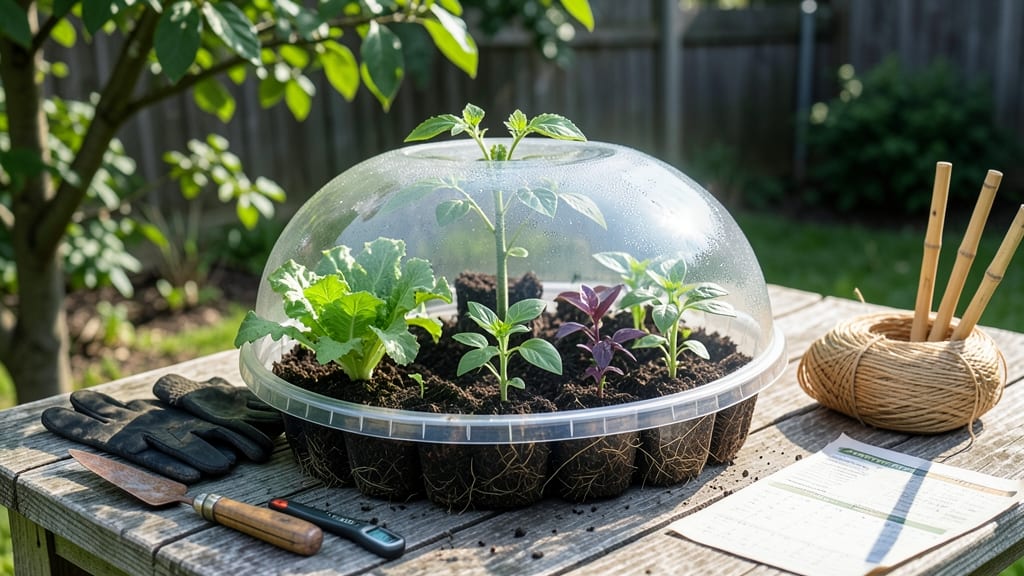
Planting garden plants at the right time means the difference between a thriving 🌱 harvest and a season of disappointment.
Timing your garden planting perfectly can mean the difference between a bountiful harvest and wasted effort—get these frost-free deadlines wrong, and your hard work could vanish overnight.
In Zone 6a, where spring arrives around mid-April and frost lingers until October, knowing when to start seeds indoors or transplant seedlings outdoors is the key to success.
Below, I’ll break down the exact planting windows for cool-season crops (like lettuce and peas), warm-season favorites (tomatoes and peppers), and even perennials that need a head start.
🌱
When to Plant General Garden Plants Garden Plants
Jan
❄️
Feb
🌱
Mar
🌱
Apr
🌱
May
🌱
Jun
🌱
Jul
☀️
Aug
☀️
Sep
🍂
Oct
🍂
Nov
🍂
Dec
❄️
Frost-free planting deadlines by USDA Hardiness zones (with regional variations)
Understanding your local frost-free dates is the first step to a thriving garden. These deadlines determine when to plant warm-season crops like tomatoes and peppers, as well as when to start cool-season vegetables such as spinach or kale.
The USDA Hardiness Zone Map provides a baseline, but regional microclimates can shift these dates by weeks—sometimes even months.
For example, a garden in Zone 5 might have a last frost date around May 15, while just 50 miles away in a sheltered valley, frost could linger until June 1.
Similarly, first frost dates in fall vary dramatically—from early October in Zone 7 to late November in Zone 4. To pinpoint your exact window, check local weather records or use tools like the National Oceanic and Atmospheric Administration (NOAA) frost calculator.
Here’s how to use this guide: Find your USDA Zone (3-10), then adjust for your specific microclimate. Urban areas often warm up faster than rural zones, while high elevations may delay planting by weeks.
Always plant after the last frost for tender annuals, but cool-season crops can handle light frosts and may even thrive with an early start.
🌱
| USDA Zone |
Avg. Last Frost |
Avg. First Frost |
Spring Planting Window |
Fall Planting Window |
Microclimate Adjustment |
| Zone 3 |
May 10–20 |
September 20–30 |
After May 20 |
Before August 15 |
+2 weeks in valleys, -2 weeks on hills |
| Zone 4 |
May 1–10 |
October 5–15 |
After May 10 |
Before August 30 |
+1 week near water, -1 week in open fields |
| Zone 5 |
April 25–May 10 |
October 10–20 |
After May 1 |
Before September 1 |
+1 week in cities, -2 weeks in high elevations |
| Zone 6 |
April 15–25 |
October 20–30 |
After April 25 |
Before September 15 |
+1 week near buildings, -1 week in open areas |
| Zone 7 |
April 1–15 |
November 1–15 |
After April 10 |
Before October 1 |
+2 weeks in urban heat islands |
| Zone 8 |
March 15–April 1 |
November 15–December 1 |
Best planting times for 12 most popular garden vegetables (cool vs warm season crops)
Knowing when to plant garden plants is the secret to a thriving vegetable garden. Cool-season crops like lettuce and peas love the chill, while warm-season plants such as tomatoes and peppers need heat to flourish.
Planting at the wrong time can mean stunted growth or even crop failure—so let’s get your timing right!
Your last frost date is the golden rule: plant cool-season crops 4-6 weeks before it, and warm-season crops 2-4 weeks after. But don’t worry—even if you miss the window, row covers and cold frames can extend your growing season by weeks (or even months!).
Comparison table below breaks down the ideal planting windows for 12 popular vegetables, plus tips to extend your harvest using protective gear. Whether you’re in Zone 5 or Zone 9, these deadlines will help you maximize your garden’s potential.
| Vegetable |
Type |
Planting Window |
Extend Season With |
Notes |
| Lettuce |
Cool-season |
4-6 weeks before last frost (spring) or 8-10 weeks before first frost (fall) |
Row covers, cold frames |
Bolt-resistant varieties for summer |
| Carrots |
Cool-season |
2-3 weeks before last frost (spring) or 10-12 weeks before first frost (fall) |
Row covers for early spring |
Loose soil prevents forking |
| Peas |
Cool-season |
4-6 weeks before last frost (spring) or late summer for fall harvest |
Cold frames for late fall |
Trellis for support |
| Tomatoes |
Warm-season |
2-4 weeks after last frost (or start indoors 6-8 weeks before) |
Black plastic mulch, row covers |
Wait until soil is 60°F+ |
| Peppers |
Warm-season |
2-4 weeks after last frost (or start indoors 8-10 weeks before) |
Row covers for early start |
Slow to germinate—keep warm |
| Beans |
Warm-season |
1-2 weeks after last frost (soil 60°F+) |
None needed |
Succession plant every 2 weeks |
| Spinach |
Cool-season |
4-6 weeks before last frost (spring) or 8 weeks before first frost (fall) |
Row covers for late fall |
Bolt-resistant varieties |
| Cucumbers |
Warm-season |
2 weeks after last frost (soil 70°F+) |
Black plastic mulch |
Trellis for better air flow |
| Broccoli |
Cool-season |
4-6 weeks before last frost (spring) or 10 weeks before first frost (fall) |
Cold frames for late fall |
Harvest before bolting |
| Basil |
Warm-season |
2-3 weeks after last frost (soil 65°F+) |
Row covers for early start |
Pinch back for bushier growth |
| Onions |
Cool-season |
4-6 weeks before last frost (spring) or late summer for green onions |
Row
★★★★★4.7(8 reviews)
| |