Tools
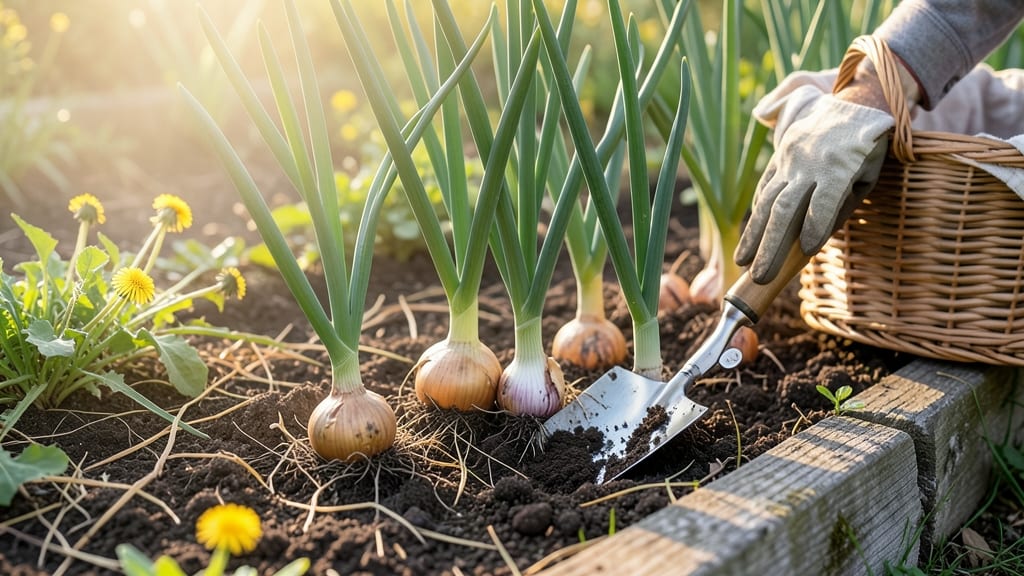
Pulling onions from your garden at the right time ensures sweet, flavorful bulbs instead of tough, pungent ones — and the key is watching for these 5 simple signs.
If you’ve ever dug up onions only to find small, watery bulbs or hollow centers, you know timing matters. The difference between a perfect harvest and a wasted effort often comes down to knowing when tops yellow, stems flatten, or roots loosen in the soil.
For most gardeners in Zone 6a, the ideal window falls in late summer or early fall, but regional variations mean you’ll need to adjust based on your last frost date.
Below, I’ll walk you through the top 5 tests to determine when your 🧅 onions are truly ready to pull.
Once you’ve harvested, proper curing and storage can extend their shelf life for months — so I’ll also cover the best practices to keep them fresh, whether you’re storing them in a cool, dry place or braiding them for long-term preservation.
5 Reliable tests to determine when onions are harvest-ready
Harvesting onions at the right time transforms your garden into a treasure trove of flavorful bulbs instead of tough, pungent leftovers. The key lies in understanding subtle visual cues and physical tests that reveal maturity.
Unlike many vegetables, onions don't ripen after picking, so timing is everything. I've tested these methods across multiple seasons, and they consistently deliver perfect harvests every time.
Most gardeners wait until the tops yellow and flop over, but there are actually five reliable tests to confirm readiness. Each method builds on the last, giving you multiple confirmation points.
For example, you might notice leaf yellowing first, but the real test comes when you gently tug on the plant. These signs work together to ensure you harvest at peak sweetness and texture.
Here's the visual guide I use in my garden to avoid overripe or underdeveloped onions:
Gently grasp the onion's base and tug upward. If it slides out easily with minimal resistance, it's ready!
When the stems flatten and spread outward like a star, the bulb is fully developed below ground.
Ideal harvest size is 1-2 inches in diameter. Smaller bulbs lack flavor, while larger ones may become hollow.
When 50% of tops turn yellow and crisp, the bulb is typically ready within 1-2 weeks.
Dig around the base to expose 1 inch of roots. If they're white and firm, harvest immediately.
The soil pull test is my favorite because it gives instant feedback. I'll often do this test on a sample plant first to see if the others are ready.
For example, if the soil test shows readiness but the tops aren't fully yellow yet, I'll harvest that one and wait a few days for the rest. This staggered approach prevents overripe onions while ensuring you get multiple harvests.
Pay special attention to the stem flattening signal, as this often appears just before the soil test confirms readiness. I've noticed that varieties like Yellow Sweet Spanish show this flattening more dramatically than Red Creole types.
The stem's position relative to the soil surface acts like a built-in maturity indicator that requires no additional tools.
Bulb size is where many gardeners go wrong. I once harvested a batch of 1-inch onions because the tops were yellowing, only to discover they tasted bland and watery. The 1-2 inch diameter rule has saved me from countless disappointments.
For storage onions, aim for the larger end of this range, while fresh market varieties can be harvested slightly smaller.
Leaf yellowing is the most visible sign, but it's also the most variable between onion types. Green onions and scallions might only show slight yellowing at harvest, while storage varieties need full yellowing.
I keep a small notebook to track which varieties show which signs most clearly. For instance, Walla Walla onions always yellow from the bottom up, giving me a clear progression to watch.
Finally, the root exposure test reveals what's happening below ground where you can't see. White, firm roots mean the bulb has stopped growing and is ready to store. I'll often do this test on a few plants to confirm before harvesting the entire row.
This method works particularly well in heavy clay soils where the soil pull test can be misleading.
Remember that these tests work best in consistent growing conditions. If your onions experience drought stress or extreme heat, they may mature faster and show signs of readiness earlier.
Always combine visual cues with physical tests for the most accurate results. With practice, you'll develop an instinct for when your onions are perfect.
How to avoid common mistakes that ruin onion flavor and storage
Harvesting onions at the wrong time can turn your hard work into disappointment—small, pungent bulbs or hollow centers ruin flavor and storage potential. I’ve learned the hard way that timing is everything when pulling onions from the garden.
The key is recognizing the perfect window between underripe and overripe stages, where bulbs reach peak flavor and storage quality.
One of the biggest mistakes I see is harvesting onions too early. When you pull them with green tops still upright and bulbs smaller than 1 inch in diameter, you end up with tough, stringy onions that lack sweetness.
These won’t store well either—they’ll shrivel or rot long before their time. Patience is crucial, but so is knowing when to act before the bulbs become hollow or split.
⚠️ When to Pull Onions: The Critical Window
Pull onions when 50-60% of the tops yellow and fall over—this usually happens 100-120 days after planting. Wait too long, and bulbs develop hollow centers (a sign of overmaturity). For storage onions, aim for 1-2 inch diameter bulbs with dry, papery skins. If you’re unsure, dig up one bulb to check!
Improper drying is another silent flavor killer. After pulling onions, they need 2-3 weeks of dry curing in a shaded, well-ventilated area. I once skipped this step and stored onions too soon—they sprouted within weeks! The curing process hardens the skins and prevents rot.
Bundle them in small groups and hang them upside down or lay them flat in a single layer. Avoid direct sunlight, which can scorch the skins and invite pests.
Storage conditions make or break your harvest. Onions need a cool (40-50°F), dark, and dry environment with good airflow. A basement or pantry works well, but never refrigerate them—the cold and humidity trigger sprouting.
I store mine in mesh bags or cardboard boxes to allow circulation. If you notice any soft spots or mold, remove those bulbs immediately to prevent spoilage from spreading.
Regional differences matter too. In warmer climates, onions may mature faster and need harvesting earlier. In cooler areas, they might take longer to reach peak flavor. Pay attention to your local frost dates—if frost is coming, harvest before then, even if the tops aren’t fully yellow.
Onions can handle light frosts, but freezing ruins their texture. Always prioritize flavor and storage potential over perfect timing!
Finally, resist the urge to harvest all onions at once. Stagger your pull based on variety and growth rate. Some onions, like short-day varieties, mature faster than others.
By spacing out your harvest, you’ll enjoy fresh onions all season and reduce waste. With these tips, your onions will stay flavorful and fresh for months—no more bitter surprises!