
Tools
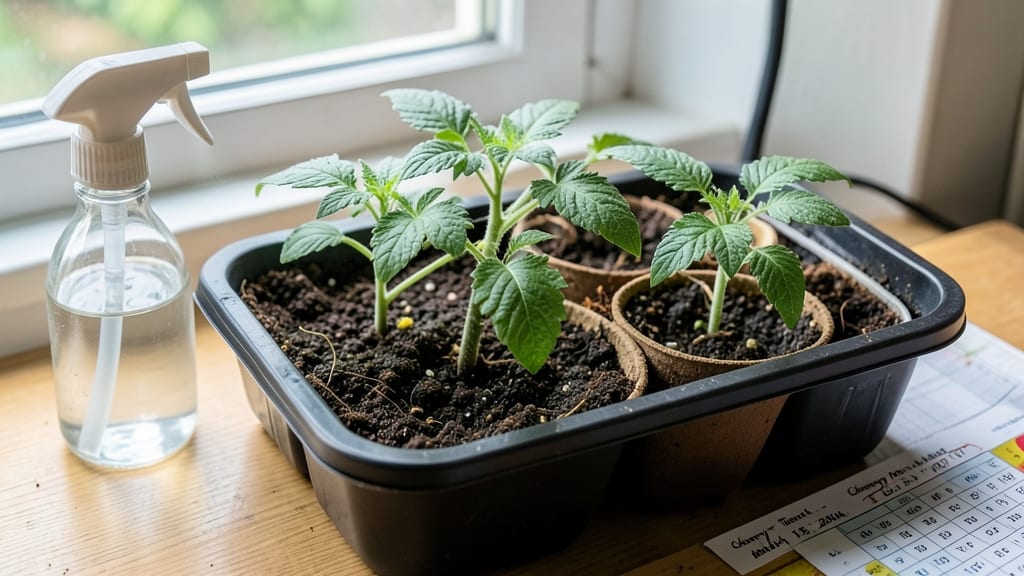
Starting garden seeds indoors 4-8 weeks before your last frost date is the secret to avoiding leggy, weak transplants that struggle outdoors.
Picture this: you’ve spent weeks nurturing your 🌱 General Garden Seeds under grow lights, only to rush them outside too soon—where they wilt in the wind or bolt in the heat. That’s the difference between a thriving garden and a lesson in transplant shock.
The right timing isn’t just about counting backward from frost dates; it’s about matching your plants’ growth cycles to your climate.
In USDA Zone 6a, where frost lingers until mid-April, early starters like broccoli and lettuce need a head start by February, while tomatoes and peppers can wait until March. But here’s the catch: not all seeds play by the same rules.
Fast growers like radishes might only need 3 weeks indoors, while slow starters like cabbage could need 8 weeks—and that’s before you account for transplant shock.
Below, I’ll break down the exact math for your region, plus how to adjust for early starts, late frosts, and the one lighting trick that saves seedlings from stretching like overcaffeinated toddlers. No more guesswork—just strong, ready-to-thrive plants.
How to calculate your exact indoor seed starting dates by plant type
Getting your indoor seed starting dates right means the difference between lush, thriving transplants and leggy, weak seedlings that struggle outdoors. The key? A simple formula using your last frost date, each plant's days-to-maturity, and a transplant shock buffer.
Let's break it down so you can plan with precision—no guesswork needed.
First, find your average last frost date (check your local USDA hardiness zone or ask your cooperative extension service). For example, in Zone 6a, the last frost typically falls around April 15.
This date is your launchpad for calculating when to start seeds indoors for each plant type.
Next, work backward using the plant's days-to-maturity. This is the total time from seed to harvest. For instance, basil takes 60 days to mature, while tomatoes need 80 days.
Subtract this number from your last frost date to find the ideal transplant date. But here's the catch: seedlings need time to harden off and adjust to outdoor conditions.
Add a transplant shock buffer of 2-4 weeks to your transplant date. This accounts for hardening off (acclimating seedlings to outdoor conditions) and potential weather delays.
For example, if your last frost is April 15 and you're growing peppers (90 days to maturity), subtract 90 days to get January 15 as your transplant date. Then, subtract 3 weeks for hardening off, landing on December 25 as your indoor seed start date.
Not all plants follow the same rules. Cool-season crops like lettuce and spinach can handle cooler temperatures, so you can start them 6-8 weeks before last frost. Warm-season crops like tomatoes and peppers, however, need to wait until soil temperatures are above 55°F, so they often start 8-12 weeks before last frost.
For herbs like basil, which mature in 60 days, start seeds 6 weeks before last frost. If your last frost is April 15, begin sowing around March 1.
This gives you enough time to transplant hardened-off seedlings by April 15 and harvest before summer heat stresses the plant.
Adjust your
Common seed starting mistakes that cause transplant failure (and how to fix them)
Even the most experienced gardeners can fall into seed-starting traps that lead to leggy seedlings or stunted growth. Overcrowding and nutrient deficiencies are two of the most common culprits, often caused by well-intentioned but misinformed practices.
For example, I once watched my basil seedlings stretch toward a dim window, thinking they were thriving—until they toppled over during transplanting.
Another frequent mistake is ignoring temperature swings in your seed-starting space. A cool basement or a sunny windowsill that gets too hot can both stress young plants.
I learned this the hard way when my tomato seeds sprouted unevenly because the heat mat fluctuated between 65°F and 80°F. Consistency is key for even germination.
⚠️ callout-warning
Most gardeners assume 6 weeks before last frost works for all plants—but it doesn’t. Peppers and eggplants need 8-10 weeks indoors, while lettuce only requires 4-6 weeks. Use a plant-specific timeline to avoid transplant shock.
Pro Tip: Check your last frost date (find it via USDA zone maps) and subtract the days to maturity for each seed packet. Add 2 extra weeks for hardy crops like kale or broccoli.
Let’s tackle the top four mistakes head-on. First, overcrowding happens when seedlings compete for light and nutrients. I’ve seen trays packed so tightly that roots tangle like spaghetti.
The fix? Space seeds according to their mature size—tomatoes need 2-3 inches apart, while carrots can start just ¼ inch apart but will need thinning.
Next, improper lighting is a silent killer. Seedlings stretched toward a window? That’s etiolation, a sign they’re starving for light. Grow lights or a south-facing window with 12-16 hours of light daily are non-negotiable.
I upgraded to a LED grow light last year, and my herbs grew 3x faster without leaning.
Temperature swings throw off germination rates. Most seeds need 65-75°F for consistent sprouting. A heat mat set to 70°F under trays solves this. I keep mine plugged in until seeds sprout, then switch to a cool-white LED bulb to maintain warmth without overheating.
Finally, nutrient deficiencies show up as yellow leaves or stunted growth. Young seedlings don’t need fertilizer—just sterile seed-starting mix and a weak fish emulsion tea (1 tsp per gallon) after the first true leaves appear.
Over-fertilizing burns tender roots. I now use a balanced 5-5-5 mix sparingly to avoid shocking my peppers.
Fix these four issues, and your transplants will be stocky, vibrant, and ready to handle the outdoors. The secret? Pay attention to your seedlings’ signals—they’ll tell you exactly what they need. 🌱