
Planting
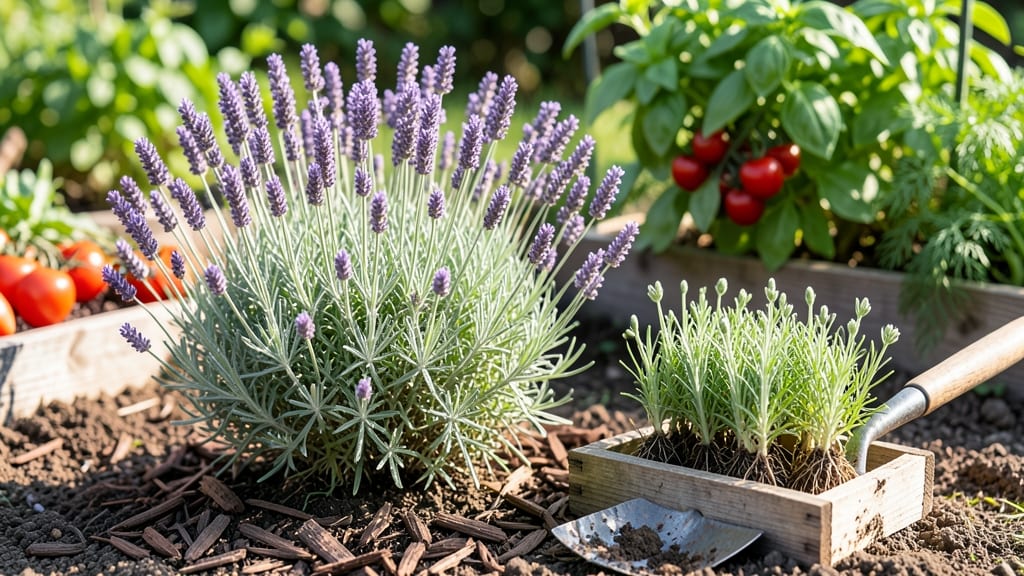
To plant lavender in a vegetable garden, choose sunny spots with at least 6 to 8 hours of direct sunlight daily and well-draining, slightly alkaline soil (pH 6.5–7.5). Position it along garden borders, near pathways, or in dedicated herb sections to prevent root competition with heavy-feeding crops like carrots or potatoes.
Lavender thrives where most vegetables struggle—it demands bright, unfiltered sunlight and soil that drains so quickly it feels almost barren. 🌞 The key is mimicking its Mediterranean homeland: poor, rocky soil with minimal organic matter.
I’ve found that planting lavender near the garden’s edges or in raised beds works best, as these spots often get more sun and less moisture competition. Avoid areas where water pools, since soggy roots lead to rot within days.
For extra protection, group lavender with other drought-tolerant herbs like rosemary or thyme—they share similar needs and help deter pests. Space plants 18–24 inches apart to ensure good airflow, which prevents fungal issues. In humid climates, consider adding a 1–2 inch sand layer to the planting hole to improve drainage.
💡 In This Article
- Lavender’s Sunlight and Soil Needs Explained
- Strategic Placement Tips for Lavender in Mixed Gardens
Lavender’s sunlight and soil needs explained
Lavender’s love affair with sunlight isn’t just about aesthetics—it’s a biological necessity. This Mediterranean native evolved under 10+ hours of sun daily, and its survival depends on it.
The plant’s waxy leaves and compact growth habit actually help reflect excess heat, but without 6-8 hours of direct sunlight, its essential oils (which give lavender its fragrance and medicinal properties) won’t develop properly.
In shady spots, you’ll get leggy stems and weak, pale foliage that’s more prone to fungal diseases like powdery mildew.
The soil story is equally critical: lavender thrives in sandy, mineral-rich soil with a pH between 6.5 and 7.5—think of it as the opposite of a lush vegetable garden bed.
Its roots need oxygen, which is why heavy clay or organic-rich soils suffocate it. 🌱 To mimic ideal conditions, mix 50% native soil with 50% coarse sand or perlite (never compost or peat moss).
For clay-heavy gardens, add a 3-inch layer of gravel at the bottom of the planting hole to create natural drainage pathways. Even a slight improvement in drainage can extend lavender’s lifespan from 2-3 years to 5+ years.
Climate plays a surprising role in lavender’s soil needs. In humid regions (like the Southeast U.S.), the soil should be even more alkaline (pH 7.0–7.5) to prevent root rot, while cooler climates (Pacific Northwest) can handle slightly acidic soil (pH 6.0–6.5) as long as drainage is perfect.
The key is avoiding moisture retention—lavender’s roots will rot within 48 hours of sitting in wet soil. That’s why raised beds or slopes work so well: water drains away immediately, keeping roots dry.
What most gardeners miss is lavender’s nutrient-averse nature. Unlike vegetables, it doesn’t need fertilizer—too much nitrogen produces weak, floppy growth. Instead, focus on mineral amendments like crushed granite or limestone to boost pH naturally.
I’ve seen lavender planted in pure sand with just a handful of crushed eggshells (for calcium) thrive beautifully, while nearby vegetable beds needed regular compost. The lesson? Treat lavender like a rock garden plant, not a vegetable.
For visual clues, look at the leaves: healthy lavender has silvery-gray, fuzzy foliage that stands upright.
Yellowing or drooping leaves signal overwatering or poor drainage, while stunted growth often means insufficient sunlight. 💫 Even in partial shade, lavender will grow, but it won’t produce those signature 10-inch spikes of purple blooms that attract bees and repel pests—making it a far less valuable garden companion.