
Vegetables
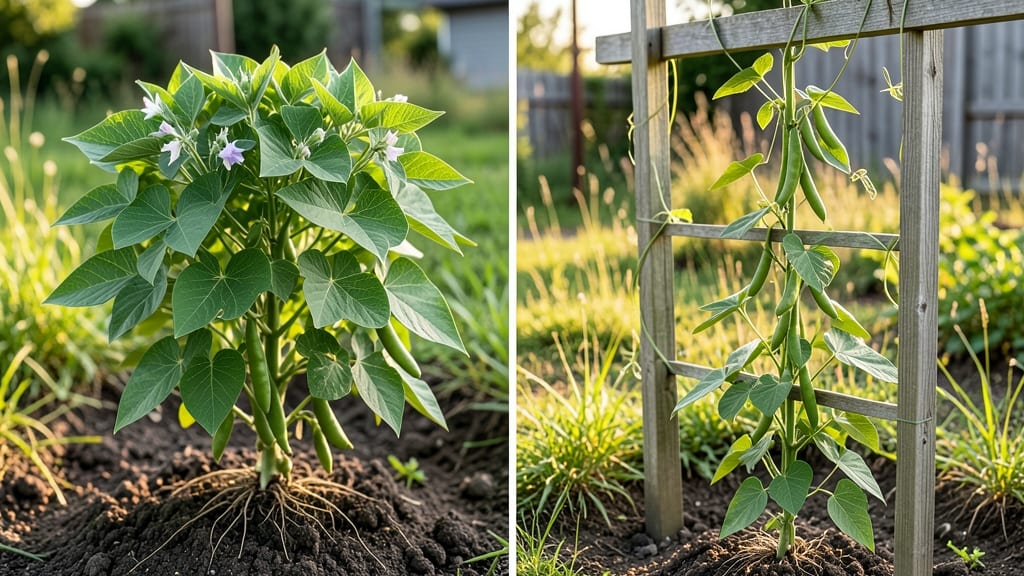
Garden beans and green beans aren't the same: garden beans refer to mature, dried varieties like kidney or pinto beans, while green beans are the young, unripe pods harvested fresh for eating. Though they share the same botanical family, their growth stages and culinary uses create distinct differences.
When you see "garden beans" on a menu or in a recipe, it's usually referring to dried beans that come from fully mature pods. 🌱 These include varieties like kidney beans, pinto beans, or black beans, which are harvested when the pods are completely dry and the seeds inside are fully developed.
On the other hand, green beans are the tender, crisp pods harvested early in their growth cycle before the seeds inside have a chance to mature.
This distinction matters in cooking because dried garden beans need soaking and longer cooking times to soften, while green beans can be used fresh and cook in just minutes.
The flavor profile also shifts—green beans offer a fresh, grassy taste, while dried garden beans develop a heartier, earthier flavor when properly prepared.
💡 In This Article
- Botanical and Growth Stage Differences Between Garden and Green Beans
- Culinary Uses and Substitutions for Garden vs Green Beans
Botanical and growth stage differences between garden and green beans
The confusion between these two terms stems from their shared botanical family: both garden beans and green beans belong to the Phaseolus vulgaris species, which includes over 100 varieties of beans. However, the key difference lies in their growth stages and how they're harvested.
Green beans are harvested when the pods are still tender and crisp, typically 5-7 weeks after planting, while garden beans refer to the fully mature seeds inside the dried pods.
When green beans are left to mature on the vine, their pods harden and turn brown as the seeds inside develop. At this stage, the pods are no longer edible, but the seeds inside become the dried beans we know as garden beans.
The texture transformation is dramatic: fresh green beans have a crisp, snappy bite with a moisture content of about 85-90%, while dried garden beans are hard and starchy when raw, requiring rehydration to become tender. 🌱
The color difference also provides a clue: green beans maintain their vibrant green hue due to chlorophyll, while mature pods turn brown as they dry. This color change is part of the plant's natural maturation process, where sugars convert to starches and the pod's cell structure hardens.
What's fascinating is that both forms come from the same plant—it's just a matter of when you harvest them.
Another botanical detail is the seed development: green beans contain underdeveloped seeds that are too small and hard to eat, while garden beans feature fully formed seeds that are rich in starch and protein.
This is why dried garden beans need soaking (often 8-12 hours) or cooking (typically 45-60 minutes) to break down their tough outer skins and make them digestible.
Consider this visual comparison: a green bean pod is like a young banana—firm but tender, with bright green skin and juicy flesh inside. A dried garden bean pod is like an old banana—wrinkled, brown, and containing fully developed seeds that need preparation to become edible.
The same plant produces both, but their culinary applications couldn't be more different.